Nel tempo dei narcisi, Edward Estlin Cummings

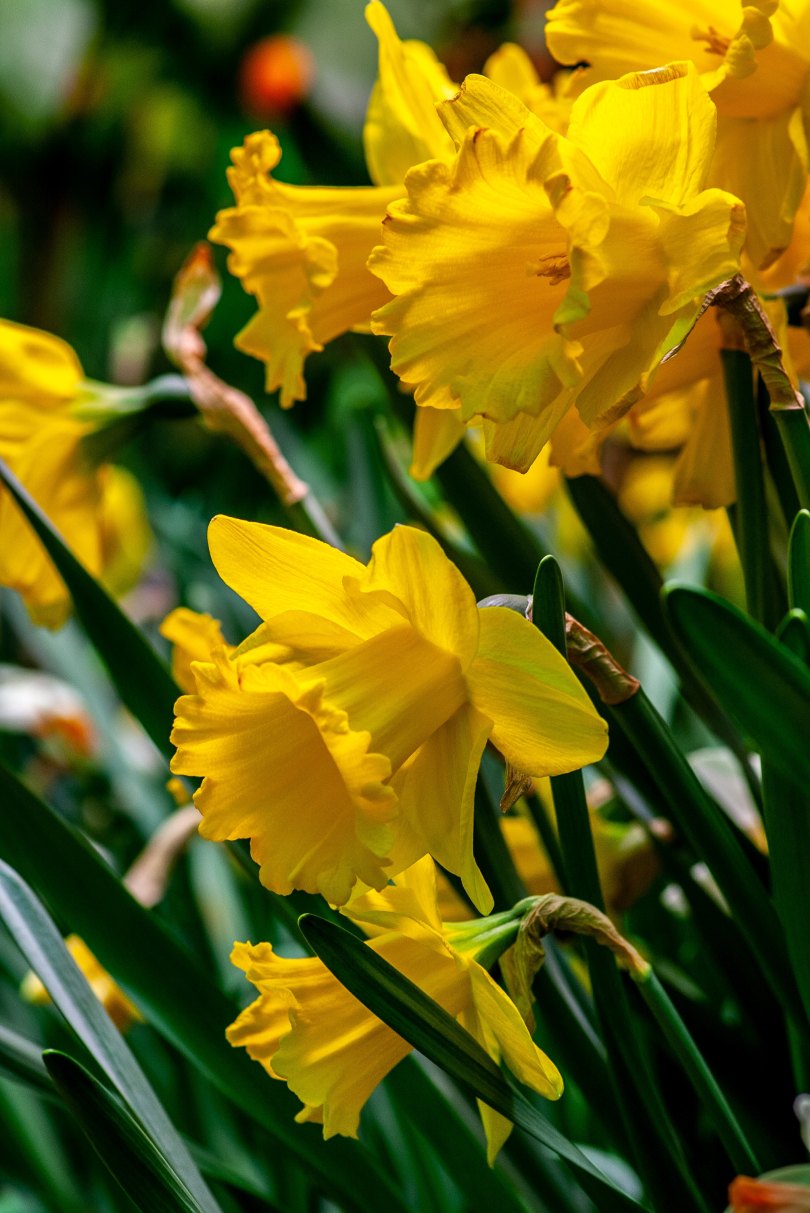
Nel tempo dei narcisi ( che sanno
che lo scopo di vivere è crescere)
dimenticando il perché, ricorda come

nel tempo dei lillà che proclamano
che il fine della veglia è sognare,
ricordalo (mostra di dimenticare)

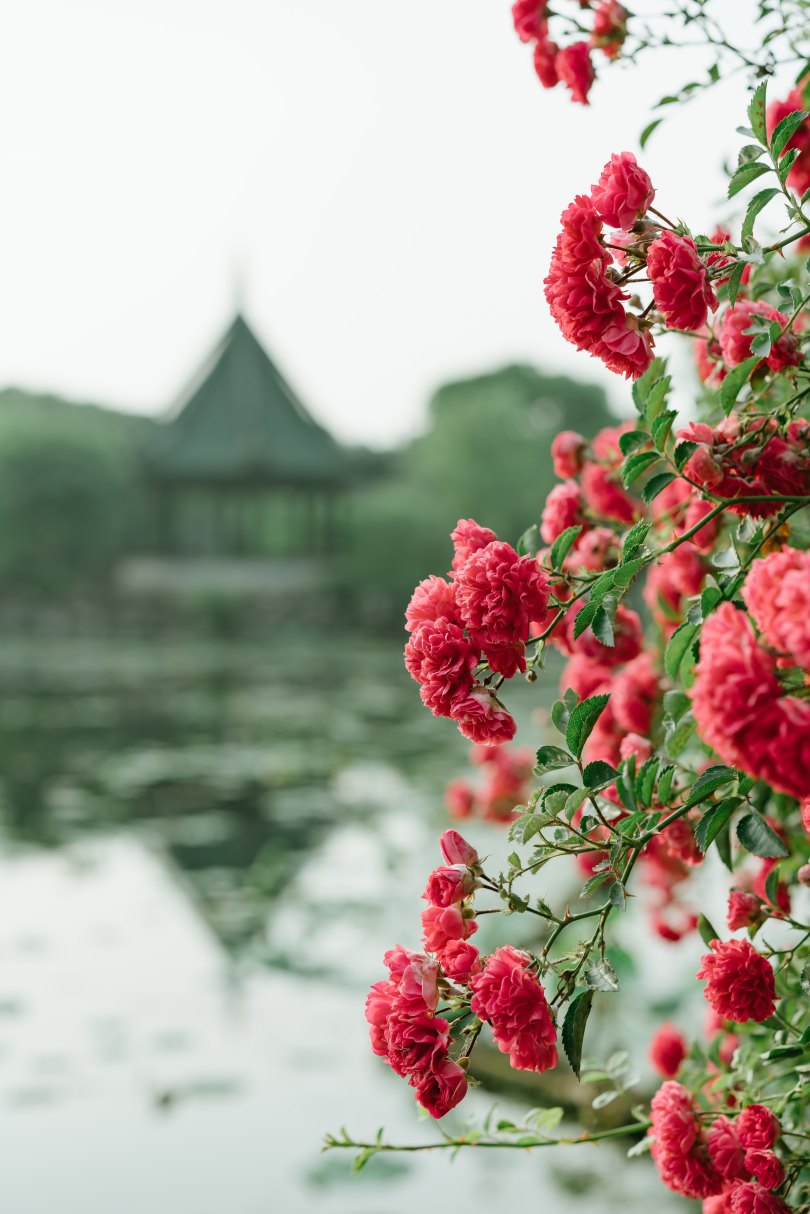
nel tempo delle rose (che ci meravigliano
qui ed ora col paradiso)
dimenticando il se, ricorda il sì

nel tempo d’ogni cosa dolce oltre
tutto quanto la mente può comprendere
ricorda cerca (dimenticando trova)

e in un mistero a venire
(quando il tempo dal tempo ci salverà)
tu ricordati di me, dimenticandomi.

In time of Daffodils

in time of daffodils(who know
the goal of living is to grow)
forgetting why,remember how

in time of lilacs who proclaim
the aim of waking is to dream,
remember so(forgetting seem)

in time of roses(who amaze
our now and here with paradise)
forgetting if,remember yes

in time of all sweet things beyond
whatever mind may comprehend,
remember seek(forgetting find)

and in a mystery to be
(when time from time shall set us free)
forgetting me,remember me.

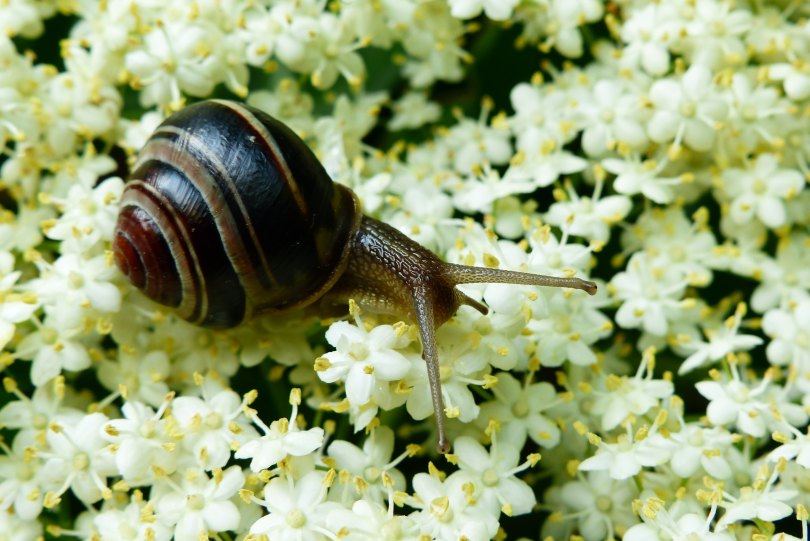
A una lumaca, da “Le poesie” (1991), Marianne Moore

Se “la concentrazione è il primo dono dello stile”,
tu la possiedi. La contrattilità è una virtù,
così come modestia è una virtù.
Non già l’acquisizione di una cosa qualsiasi
capace di adornare,
o la qualità incidentale che per avventura
si accompagni a qualcosa di ben detto,
non questo apprezziamo nello stile,
ma il principio nascosto:
nell’assenza di piedi, “un metodo di conclusioni”;
“una conoscenza di princìpi”,
nel curioso fenomeno della tua antenna occipitale.

(Traduzione di G. Forti e L. Angioletti)

To a Snail

If “compression is the first grace of style,”
you have it. Contractility is a virtue
as modesty is a virtue.
It is not the acquisition of any one thing
that is able to adorn,
or the incidental quality that occurs
as a concomitant of something well said,
that we value in style,
but the principle that is hid:
in the absence of feet, “a method of conclusions”;
“a knowledge of principles,”
in the curious phenomenon of your occipital horn.

Trippa alla maniera di Oporto, Fernando Pessoa

Un giorno in un ristorante fuori del tempo e dello spazio,
mi servirono l’amore come trippa fredda.
Dissi delicatamente all’inviato della cucina
che la preferivo calda,
che la trippa (ed era alla maniera di Oporto) non si mangia fredda.

Si irritarono con me.
Non si può mai avere ragione, nemmeno al ristorante.
Non mangiai, non chiesi altro, pagai il conto,
e me ne andai a passeggio per l’intera strada.

Chi lo sa cosa vuol dire questo?
Io non lo so, ed è capitato a me…

(So benissimo che nell’infanzia di ognuno c’è stato un giardino,
privato o pubblico, o del vicino.
So benissimo che il fatto di giocarci era il padrone del giardino.
E che la tristezza è di oggi).

So questo molte volte,
ma, se io chiesi amore, perché mi portarono
trippa alla maniera di Oporto fredda?
Non è un piatto che si possa mangiare freddo,
ma me lo portarono freddo,
non si può mai mangiare freddo, ma arrivò freddo.

Dobrada à Moda do Porto

Um dia, num restaurante, fora do espaço e do tempo,
Serviram-me o amor como dobrada fria.
Disse delicadamente ao missionário da cozinha
Que a preferia quente,
Que a dobrada (e era à moda do Porto) nunca se come fria.

Impacientaram-se comigo.
Nunca se pode ter razão, nem num restaurante.
Não comi, não pedi outra coisa, paguei a conta,
E vim passear para toda a rua.

Quem sabe o que isto quer dizer?
Eu não sei, e foi comigo …

(Sei muito bem que na infância de toda a gente houve um jardim,
Particular ou público, ou do vizinho.
Sei muito bem que brincarmos era o dono dele.
E que a tristeza é de hoje).

Sei isso muitas vezes,
Mas, se eu pedi amor, porque é que me trouxeram
Dobrada à moda do Porto fria?
Não é prato que se possa comer frio,
Mas trouxeram-mo frio.
Não me queixei, mas estava frio,
Nunca se pode comer frio, mas veio frio.

Poesias de Álvaro de Campos. Fernando Pessoa, Lisboa: Ática, 1944 

Oporto-style Tripe

On day in a restaurant, outside of space and time,
I was served up love as a dish of cold tripe.
I politely told the missionary of the kitchen
That I preferred it hot,
Because tripe (and it was Oporto-style) is never eaten cold.

They got impatient with me.
You can never be right, even in a restaurant.
I didn’t eat it, I ordered nothing else, I paid the bill,
And I decided to take a walk down the street.

Who knows what this might mean?
I don’t know, and it happened to me . . .

(I know very well that in everyone’s childhood there was a garden,
Private or public, or belonging to the neighbor.
I know very well that our playing was the owner of it
And that sadness belongs to today.)

I know this many times over
But if I asked for love, why did they bring me
Oporto-style tripe that was cold?
It is not a dish that can be eaten cold,
But they served it to me cold.
I didn’t make a fuss, but it was cold.
It can never be eaten cold, but it came cold.

11 April 1928

Translated from Portuguese by Richard Zenith

__________________________________________

If you want to try Oporto-style tripe you can find it here: RECIPE
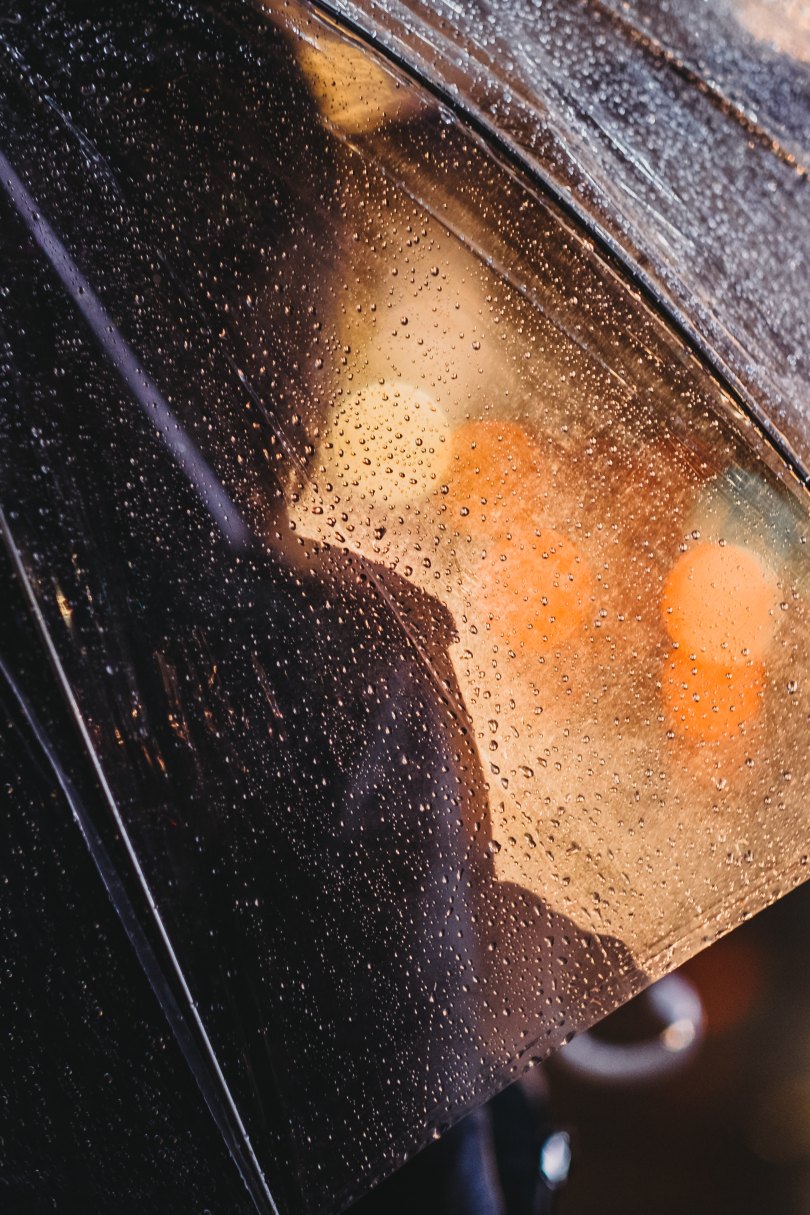
Lascia che la pioggia ti baci, Langston Hughes

Lascia che la pioggia ti baci
Lascia che la pioggia batta sopra la tua testa
con liquide gocce d’argento
Lascia che la pioggia ti canti una ninna nanna

La pioggia crea quiete pozzanghere sul marciapiede
La pioggia crea pozzanghere che scorrono nella grondaia
La pioggia canta una piccola canzone per dormire
sul nostro tetto di notte

E io amo la pioggia.

April Rain Song

Let the rain kiss you.
Let the rain beat upon your head with silver liquid drops.
Let the rain sing you a lullaby.

The rain makes still pools on the sidewalk.
The rain makes running pools in the gutter.
The rain plays a little sleep-song on our roof at night—

And I love the rain.

Langston Hughes from Collected Poems, 1994

Se la mia voce morisse sulla terra, Rafael Alberti

Se la mia voce morisse sulla terra
portatela al livello del mare
e lasciatela sulla spiaggia.

Portatela al livello del mare
e nominatela capitana
di un bianco vascello da guerra.

Oh! La mia voce decorata
con le insegne marinaresche:
sopra il cuore un’ancora
sopra l’ancora una stella
e sopra la stella il vento
e sopra il vento una vela!

Si mi voz muriera en tierra

Si mi voz muriera en tierra,
llevadla al nivel del mar
y dejadla en la ribera.

Llevadla al nivel del mar
y nombradla capitana
de un blanco bajel de guerra.

¡Oh mi voz condecorada
con la insignia marinera:
sobre el corazon un ancla
y sobre el ancla una estrella
y sobre la estrella el viento
y sobre el viento una vela!

Rafael Alberti, Marinero en tierra (1924)

If my voice dies on land

If my voice dies on land,
take it down to the sea
and leave it on the shore.

Take it down to the sea
and make it captain
of a white man-of-war.

Honor it with
a sailor’s medal:
over its heart an anchor,
and on the anchor a star,
and on the star the wind,
and on the wind a sail!

Translated by Mark Strand

Il silenzio, Federico Garcia Lorca

Ascolta, figlio, il silenzio.
È un silenzio ondulato,
un silenzio,
dove scivolano valli ed echi
e che piega le fronti
al suolo.

El silencio 

Oye, hijo mío, el silencio.
Es un silencio ondulado,
un silencio,
donde resbalan valles y ecos
y que inclina las frentes
hacia el suelo.

Poema de la seguiriya gitana (Cante Jondo) 1921

The Silence

Listen, my child, to the silence.
It’s an undulating silence,
a silence
that brings valleys and echoes down
and bows foreheads
to the ground.

Translated by Scott Keeney

___________________________________

Andrea Bocelli & Lola Astanova – The Journey to the Theatre of Silence (Full film), 2017

Rose, Mary Oliver

Tutti di tanto in tanto si interrogano su
quelle domande che non hanno delle risposte
pronte: la Causa Prima, l’esistenza di Dio,
cosa succede quando il sipario
cala e nulla lo ferma, non baciando,
non andando al centro commerciale, non al Super Bowl.

“Rose selvatiche,” dissi loro una mattina.
“Avete le risposte? E se le aveste,
vorreste dirmele?”

Le rose risero dolcemente “Perdonaci,”
dissero. “Ma come puoi vedere, al momento siamo
completamente occupate ad essere rose”.

Roses

Everyone now and again wonders about
those questions that have no ready
answers: first cause, God’s existence,
what happens when the curtain goes
down and nothing stops it, not kissing,
not going to the mall, not the Super
Bowl.

“Wild roses,” I said to them one morning.
“Do you have the answers? And if you do,
would you tell me?”

The roses laughed softly. “Forgive us,”
they said. “But as you can see, we are
just now entirely busy being roses.”

From Felicity – New York, Penguin, 2016

Ieri è storia, Emily Dickinson

Ieri è Storia,
È così remoto –
Ieri è Poesia –
è Filosofia –

Ieri è mistero –
Dove sia Oggi
Mentre acutamente speculiamo
Entrambi volano via

(Traduzione di Giuseppe Ierolli)

Yesterday is History

Yesterday is History,
‘Tis so far away –
Yesterday is Poetry –
‘tis Philosophy –

Yesterday is mystery –
Where it is Today
While we shrewdly speculate
Flutter both away

Sorrisi, da “Grande numero” (1976), Wislawa Szymborska

Il mondo vuol vedere la speranza sul viso.
Per gli statisti si fa d’obbligo il sorriso.
Sorridere vuol dire non darsi allo sconforto.
Anche se il gioco è complesso, l’esito incerto,
gli interessi contrastanti – è sempre consolante
che la dentatura sia bianca e ben smagliante.

Devono mostrare una fronte rasserenata
sulla pista e nella sala delle conferenze.
Un’andatura svelta, un’espressione distesa.
Quello dà il benvenuto, quest’altro si accomiata.
E’ quanto mai opportuno un volto sorridente
per gli obiettivi e tutta la gente lì in attesa.

La stomatologia in forza alla diplomazia
garantisce sempre un risultato impressionante.
Canini di buona volontà e incisivi lieti
non possono mancare quando l’aria è pesante.
I nostri tempi non sono ancora così allegri
perché sui visi traspaia la malinconia.

Un’umanità fraterna, dicono i sognatori,
trasformerà la terra nel paese del sorriso.
Ho qualche dubbio. Gli statisti, se fosse vero,
non dovrebbero sorridere il giorno intero.
Solo a volte: perché è primavera, tanti i fiori,
non c’è fretta alcuna, né tensione in viso.
Gli esseri umani sono tristi per natura.
È quanto mi aspetto, e non è poi così dura.

(Traduzione di Pietro Marchesani)

Smiles

The world would rather see hope than just hear
its song. And that’s why statesmen have to smile.
Their pearly whites mean they’re still full of cheer.
The game’s complex, the goal’s far out of reach,
the outcome’s still unclear – once in a while,
we need a friendly, gleaming set of teeth.

Heads of state must display unfurrowed brows
on airport runways, in the conference room.
They must embody one big, toothy “Wow!”
while pressing flesh or pressing urgent issues.
Their faces’ self-regenerating tissues
make our hearts hum and our lenses zoom.

Dentistry turned to diplomatic skill
promises us a Golden Age tomorrow.
The going’s rough, and so we need the laugh
of bright incisors, molars of good will.
Our times are still not safe and sane enough
for faces to show ordinary sorrow.

Dreamers keep saying, “Human brotherhood
will make this place a smiling paradise.”
I’m not convinced. The statesman, in that case,
would not require facial exercise,
except from time to time: he’s feeling good,
he’s glad it’s spring, and so he moves his face.
But human beings are, by nature, sad.
So be it, then. It isn’t all that bad

(Translated from Polish by Stanislaw Baranczak and Clare Cavanagh)

We Ain’t Got No Money, Honey, But We Got Rain, Charles Bukowski

call it the greenhouse effect or whatever
but it just doesn’t rain like it used to.
I particularly remember the rains of the
depression era.
there wasn’t any money but there was
plenty of rain.
it wouldn’t rain for just a night or
a day,
it would RAIN for 7 days and 7
nights
and in Los Angeles the storm drains
weren’t built to carry off that much
water
and the rain came down THICK and
MEAN and
STEADY
and you HEARD it banging against
the roofs and into the ground
waterfalls of it came down
from roofs
and there was HAIL
big ROCKS OF ICE
bombing
exploding smashing into things
and the rain
just wouldn’t
STOP
and all the roofs leaked-
dishpans,
cooking pots
were placed all about;
they dripped loudly
and had to be emptied
again and
again.
the rain came up over the street curbings,
across the lawns, climbed up the steps and
entered the houses.
there were mops and bathroom towels,
and the rain often came up through the
toilets:bubbling, brown, crazy,whirling,
and all the old cars stood in the streets,
cars that had problems starting on a
sunny day,
and the jobless men stood
looking out the windows
at the old machines dying
like living things out there.
the jobless men,
failures in a failing time
were imprisoned in their houses with their
wives and children
and their
pets.
the pets refused to go out
and left their waste in
strange places.
the jobless men went mad
confined with
their once beautiful wives.
there were terrible arguments
as notices of foreclosure
fell into the mailbox.
rain and hail, cans of beans,
bread without butter;fried
eggs, boiled eggs, poached
eggs; peanut butter
sandwiches, and an invisible
chicken in every pot.
my father, never a good man
at best, beat my mother
when it rained
as I threw myself
between them,
the legs, the knees, the
screams
until they
separated.
“I’ll kill you,” I screamed
at him. “You hit her again
and I’ll kill you!”
“Get that son-of-a-bitching
kid out of here!”
“no, Henry, you stay with
your mother!”
all the households were under
siege but I believe that ours
held more terror than the
average.
and at night
as we attempted to sleep
the rains still came down
and it was in bed
in the dark
watching the moon against
the scarred window
so bravely
holding out
most of the rain,
I thought of Noah and the
Ark
and I thought, it has come
again.
we all thought
that.
and then, at once, it would
stop.
and it always seemed to
stop
around 5 or 6 a.m.,
peaceful then,
but not an exact silence
because things continued to
drip
drip
drip

and there was no smog then
and by 8 a.m.
there was a
blazing yellow sunlight,
Van Gogh yellow-
crazy, blinding!
and then
the roof drains
relieved of the rush of
water
began to expand in the warmth:
PANG!PANG!PANG!
and everybody got up and looked outside
and there were all the lawns
still soaked
greener than green will ever
be
and there were birds
on the lawn
CHIRPING like mad,
they hadn’t eaten decently
for 7 days and 7 nights
and they were weary of
berries
and
they waited as the worms
rose to the top,
half drowned worms.
the birds plucked them
up
and gobbled them
down;there were
blackbirds and sparrows.
the blackbirds tried to
drive the sparrows off
but the sparrows,
maddened with hunger,
smaller and quicker,
got their
due.
the men stood on their porches
smoking cigarettes,
now knowing
they’d have to go out
there
to look for that job
that probably wasn’t
there, to start that car
that probably wouldn’t
start.
and the once beautiful
wives
stood in their bathrooms
combing their hair,
applying makeup,
trying to put their world back
together again,
trying to forget that
awful sadness that
gripped them,
wondering what they could
fix for
breakfast.
and on the radio
we were told that
school was now
open.
and
soon
there I was
on the way to school,
massive puddles in the
street,
the sun like a new
world,
my parents back in that
house,
I arrived at my classroom
on time.
Mrs. Sorenson greeted us
with, “we won’t have our
usual recess, the grounds
are too wet.”
“AW!” most of the boys
went.
“but we are going to do
something special at
recess,” she went on,
“and it will be
fun!”
well, we all wondered
what that would
be
and the two hour wait
seemed a long time
as Mrs.Sorenson
went about
teaching her
lessons.
I looked at the little
girls, they looked so
pretty and clean and
alert,
they sat still and
straight
and their hair was
beautiful
in the California
sunshine.
the the recess bells rang
and we all waited for the
fun.
then Mrs. Sorenson told us:
“now, what we are going to
do is we are going to tell
each other what we did
during the rainstorm!
we’ll begin in the front row
and go right around!
now, Michael, you’re first!. . .”
well, we all began to tell
our stories, Michael began
and it went on and on,
and soon we realized that
we were all lying, not
exactly lying but mostly
lying and some of the boys
began to snicker and some
of the girls began to give
them dirty looks and
Mrs.Sorenson said,
“all right! I demand a
modicum of silence
here!
I am interested in what
you did
during the rainstorm
even if you
aren’t!”
so we had to tell our
stories and they were
stories.
one girl said that
when the rainbow first
came
she saw God’s face
at the end of it.
only she didn’t say which end.
one boy said he stuck
his fishing pole
out the window
and caught a little
fish
and fed it to his
cat.
almost everybody told
a lie.
the truth was just
too awful and
embarrassing to tell.
then the bell rang
and recess was
over.
“thank you,” said Mrs.
Sorenson, “that was very
nice.
and tomorrow the grounds
will be dry
and we will put them
to use
again.”
most of the boys
cheered
and the little girls
sat very straight and
still,
looking so pretty and
clean and
alert,
their hair beautiful in a sunshine that
the world might never see
again.
and

From The Last Night of the Earth Poems
Published in 1992 by Black Sparrow Press