A uno sconosciuto nato in un paese lontano tra centinaia di anni, da “A vela in solitaria intorno alla stanza” (2013), Billy Collins

Scrivo poesie per uno sconosciuto che nascerà in un
paese lontano tra centinaia di anni.

MARY OLIVER

A nessuno qui piace una cagna bagnata.
Nessuno qui vuole avere a che fare con una cagna
che è bagnata per essere stata fuori alla pioggia
o per aver riportato un bastoncino dal lago.
Guardatela mentre gira attorno a un bar pieno di gente stasera
andando da una persona all’altra
sperando in una carezza sul capo, una grattatina dietro le orecchie
qualcosa che si potrebbe dare con una mano
senza neppure increspare la conversazione.

Ma tutti la spingono via,
chi col ginocchio, chi con la suola di uno stivale.
Anche i bambini, che non si accorgono che è bagnata
fin quando si avvicinano per accarezzarla,
la spingono via
poi si puliscono le mani nei vestiti.
E ogni volta che viene verso di me,
io le mostro il palmo della mano, e lei si allontana.

O sconosciuto del futuro!
O essere inconcepibile!
Qualunque sarà la forma della tua casa,
o la velocità con cui sfreccerai da un posto all’altro,
indipendentemente dagli abiti strani e incolori che indosserai,
scommetto che anche là a nessuno piacerà una cagna bagnata.
Scommetto che tutti nel tuo pub,
anche i bambini, la spingeranno via.

(Traduzione di Franco Nasi)

To a Stranger Born in Some Distant Country Hundreds of Years from Now

I write poems for a stranger who will be born in some
distant country hundreds of years from now.
MARY OLIVER

Nobody here likes a wet dog.
No one wants anything to do with a dog
that is wet from being out in the rain
or retrieving a stick from a lake.
Look how she wanders around the crowded pub tonight
going from one person to another
hoping for a pat on the head, a rub behind the ears,
something that could be given with one hand
without even wrinkling the conversation.

But everyone pushes her away,
some with a knee, others with the sole of a boot.
Even the children, who don’t realize she is wet
until they go to pet her,
push her away,
then wipe their hands on their clothes.
And whenever she heads toward me,
I show her my palm, and she turns aside.

O stranger of the future!
O inconceivable being!
whatever the shape of your house,
however you scoot from place to place,
no matter how strange and colorless the clothes you
may wear,
I bet nobody there likes a wet dog either.
I bet everybody in your pub,
even the children, pushes her away.

Agosto a Parigi, da “Balistica” (2011), Billy Collins

Mi sono fermato qui, in rue des Écoles
a due passi dal boulevard St-Germain
per guardare da dietro le spalle un uomo
con una camicia di flanella e un cappello di paglia
che ha disposto un cavalletto e una sedia di tela
sul marciapiede per dipingere da una buffa angolatura
una vista laterale della Chiesa di San Tommaso d’Aquino.

Ma dove sei lettore,
che non ti sei fermato nella tua passeggiata
a guardami da dietro le spalle
per vedere che cosa sto appuntando su questo quadernetto.

Da solo in questa città,
mi chiedo a volte come sei,
se uomo con addosso una camicia di flanella
o donna avvolta in una gonna azzurra fermata da una spilla.

Ma ogni volta che mi giro, lettore,
sei volato via, attraverso una piega dell’aria,
in una quieta stanza dove le imposte sono chiuse
a contrastare la calura del pomeriggio,
dove c’è solo il suono del tuo respiro
e, ogni tanto, del girarsi di una pagina.

(Traduzione di Franco Nasi)

August in Paris

I have stopped here on the rue des Écoles
just off the boulevard St-Germain
to look over the shoulder of a man
in a flannel shirt and a straw hat
who has set up an easel and a canvas chair
on the sidewalk in order to paint from a droll angle
a side-view of the Church of Saint Thomas Aquinas.

But where are you, reader,
who have not paused in your walk
to look over my shoulder
to see what I am jotting in this notebook?

Alone in this city,
I sometimes wonder what you look like,
if you are wearing a flannel shirt
or a wraparound blue skirt held together by a pin.

But every time I turn around
you have fled through a crease in the air
to a quiet room where the shutters are closed
against the heat of the afternoon,
where there is only the sound of your breathing
and every so often, the turning of a page.

Consolazione, da “A vela in solitaria intorno alla stanza” (2013), Billy Collins

Quant’è bello non visitare l’Italia quest’estate,
vagare per le sue città o scalare i suoi torridi paesi di collina.
Quant’è più bello guidare per queste familiari strade locali,
afferrando appieno il senso di ogni segnale stradale, di ogni manifesto,
di ogni improvviso gesto della mano dei miei connazionali.

Qui non ci sono abbazie né affreschi che si sbriciolano o cupole
famose, e non c’è bisogno di mandare a memoria una successione
di re o visitare gli angoli sgocciolanti di una prigione.
Non c’è bisogno di stare attorno a un sarcofago, di vedere
il lettino di Napoleone all’Elba, o le ossa di un santo sotto vetro.

Quant’è più bello disporre dei semplici spazi di casa
che sentirsi schiacciato da un pilastro, un arco, una basilica.
Perché nascondere la testa in libri di frasi fatte e mappe spiegazzate?
Perché dare in pasto panorami a un’affamata macchina fotografica
impaziente di mangiarsi, un monumento alla volta, il mondo?

Anziché ciondolare in un caffé senza sapere dire ghiaccio,
punterò dritto verso il coffee shop e la cameriera
di nome Dot. Scivolerò nel flusso del giornale
del mattino, con tutte le barriere della lingua abbattute,
fiumi di idiomi che scorrono liberi, e uova al tegamino in arrivo.

E dopo colazione, non dovrò cercare qualcuno
disposto a fotografarmi, col braccio sulla spalla del proprietario.
Non mi romperò la testa sul conto né registrerò su un diario
che cosa ho mangiato e come il sole è entrato dalla finestra.
Basterà risalire in auto

come se fosse la grande auto della stessa lingua inglese
e suonando il mio rumoroso clacson vernacolare, prendere il volo
lungo una strada che non porterà mai a Roma, e nemmeno a Bologna.

(Traduzione di Franco Nasi)

Consolation

How agreeable it is not to be touring Italy this summer,
wandering her cities and ascending her torrid hilltowns.
How much better to cruise these local, familiar streets,
fully grasping the meaning of every roadsign and billboard
and all the sudden hand gestures of my compatriots.

There are no abbeys here, no crumbling frescoes or famous
domes and there is no need to memorize a succession
of kings or tour the dripping corners of a dungeon.
No need to stand around a sarcophagus, see Napoleon’s
little bed on Elba, or view the bones of a saint under glass.

How much better to command the simple precinct of home
than be dwarfed by pillar, arch, and basilica.
Why hide my head in phrase books and wrinkled maps?
Why feed scenery into a hungry, one-eyes camera
eager to eat the world one monument at a time?

Instead of slouching in a café ignorant of the word for ice,
I will head down to the coffee shop and the waitress
known as Dot. I will slide into the flow of the morning
paper, all language barriers down,
rivers of idiom running freely, eggs over easy on the way.

And after breakfast, I will not have to find someone
willing to photograph me with my arm around the owner.
I will not puzzle over the bill or record in a journal
what I had to eat and how the sun came in the window.
It is enough to climb back into the car

as if it were the great car of English itself
and sounding my loud vernacular horn, speed off
down a road that will never lead to Rome, not even Bologna.

__________________________________
In questa poesia, leggera e ironica, Billy Collins ci racconta il suo modo di consolarsi per un mancato viaggio in Italia.
La dedico a chi, per i più disparati motivi, quest’anno deve rinunciare ad una vacanza, un viaggio.

Mattino, da “A vela in solitaria intorno alla stanza” (2013), Billy Collins

Perché darsi pena per il resto della giornata,
la valle del pomeriggio,
il precipizio improvviso nella sera,

poi la notte con i soliti profumi,
e le stelle a più punte?

Questo è il massimo:
togliersi di dosso le coperte leggere,
i piedi sul pavimento freddo,
e sfrecciare per casa ebbri di caffè –

magari una sciacquata alla faccia,
una manciata di vitamine –
ma soprattutto sfrecciare per la casa ebbri di caffè,

dizionario e atlante aperti sul tappeto,
la macchina da scrivere in attesa della chiave per la testa,
un violoncello alla radio,

e, se necessario, le finestre:
con gli alberi di cinquanta, cent’anni
là fuori,
nubi cariche in arrivo
e il prato che trasuda vapore come un cavallo
di prima mattina.

(Traduzione di Franco Nasi)

Morning

Why do we bother with the rest of the day,
the swale of the afternoon,
the sudden dip into evening,

then night with his notorious perfumes,
his many-pointed stars?

This is the best—
throwing off the light covers,
feet on the cold floor,
and buzzing around the house on espresso—

maybe a splash of water on the face,
a palmful of vitamins—
but mostly buzzing around the house on espresso,

dictionary and atlas open on the rug,
the typewriter waiting for the key of the head,
a cello on the radio,

and, if necessary, the windows—
trees fifty, a hundred years old
out there,
heavy clouds on the way
and the lawn steaming like a horse
in the early morning.

Billy Collins, “Morning” from Picnic, Lightning (1998) 

Litania, Billy Collins

Tu sei il pane e il coltello,
il calice di cristallo e il vino…
—Jacques Crickillon

Tu sei il pane e il coltello,
il calice di cristallo e il vino.
Tu sei la rugiada sull’erba del mattino,
la ruota di fuoco del sole.
Tu sei il grembiule del fornaio
e gli uccelli delle paludi subito in volo.

Non sei tuttavia il vento nell’orto,
le prugne alla cassa,
o il castello di carte.
E di sicuro neanche il profumo di pino nell’aria.
Non c’è verso tu sia il profumo di pino nell’aria.

E’ possibile invece tu sia il pesce sotto al ponte,
finanche il piccione sul capo del generale,
ma non sei per niente vicino ad essere
il campo di fiordalisi all’imbrunire.

E un’occhiata rapida allo specchio ti dirà
che non sei neanche gli stivali in quell’angolo
né la barca che dorme nella rimessa.

Ti interesserà forse sapere,
a proposito della ricchezza del linguaggio figurato,
che io sono il suono della pioggia sui tetti.

Sono, per caso, anche una stella cadente,
il giornale della sera portato dal vento in una stradina
e la cesta di castagne sul tavolo della cucina.

Sono anche la luna tra gli alberi
e la tazza di tè di una donna cieca.
Ma non ti preoccupare, non sono io il pane e il coltello.

Tu sei il pane e il coltello.
E sempre sarai il pane e il coltello,
per non dire il calice di cristallo e, non so come, il vino.

Traduzione Abele Longo, 2009

Litany

You are the bread and the knife,
The crystal goblet and the wine…
-Jacques Crickillon

You are the bread and the knife,
the crystal goblet and the wine.
You are the dew on the morning grass
and the burning wheel of the sun.
You are the white apron of the baker,
and the marsh birds suddenly in flight.

However, you are not the wind in the orchard,
the plums on the counter,
or the house of cards.
And you are certainly not the pine-scented air.
There is just no way that you are the pine-scented air.

It is possible that you are the fish under the bridge,
maybe even the pigeon on the general’s head,
but you are not even close
to being the field of cornflowers at dusk.

And a quick look in the mirror will show
that you are neither the boots in the corner
nor the boat asleep in its boathouse.

It might interest you to know,
speaking of the plentiful imagery of the world,
that I am the sound of rain on the roof.

I also happen to be the shooting star,
the evening paper blowing down an alley
and the basket of chestnuts on the kitchen table.

I am also the moon in the trees
and the blind woman’s tea cup.
But don’t worry, I’m not the bread and the knife.
You are still the bread and the knife.
You will always be the bread and the knife,
not to mention the crystal goblet and–somehow–the wine.

_____________________________________
“Litany” recitata da un bambino di 3 anni (2010)

Lo scoubidou, da “The Trouble with Poetry” (2005), Billy Collins

L’altro giorno mentre rimbalzavo lentamente
tra le pareti azzurre di questa stanza,
saltando dalla macchina da scrivere al piano,
dalla libreria a una busta caduta sul pavimento,
mi sono trovato nella sezione S del dizionario
dove i miei occhi sono caduti sulla parola Scoubidou.

Nessun biscotto sgranocchiato da un romanziere francese
avrebbe spedito qualcuno più in fretta nel passato –
un passato dove io stavo seduto a un tavolo in un campeggio
accanto a un lago profondo dell’Adirondack
e imparavo a intrecciare con strisce sottili di plastica
uno scoubidou, un regalo per mia madre.

Non avevo mai visto nessuno usare uno scoubidou
né indossarne uno, se è così che si usano,
ma questo non mi trattenne dall’incrociare
filo con filo, e poi di nuovo,
fino a farne uno scoubidou
quadrato, bianco e rosso, per mia madre.

Lei mi diede la vita e il latte dal seno,
io le diedi uno scoubidou.
Si prendeva cura di me, quand’ero a letto ammalato:
mi avvicinava alle labbra cucchiai di medicine,
mi appoggiava alla fronte freddi panni bagnati,
poi mi portava fuori alla luce delicata;

e mi insegnò a camminare e nuotare,
io in cambio le regalai uno scoubidou.
Ecco qui migliaia di pasti, disse,
ed ecco i vestiti e una buona scuola.
Ed ecco il tuo scoubidou, le risposi,
che ho fatto con l’aiuto dell’istruttore.

Ecco un corpo che respira e un cuore che batte,
gambe, ossa, denti forti,
e due occhi chiari per leggere il mondo, sussurrò.
Ed ecco, dissi, lo scoubidou, che ho fatto in campeggio.
Ed ecco, vorrei dirle ora,
un dono più piccolo: non l’antica verità

che non si può mai ripagare una madre,
ma la triste confessione che quando lei prese
lo scoubidou a due colori dalle mie mani,
ero certo come certo può essere un bambino
che quell’oggetto inutile e senza valore, che avevo intrecciato
per pura noia, bastava per pareggiare i conti.

(Traduzione di Franco Nasi)

The Lanyard

The other day as I was ricocheting slowly
off the pale blue walls of this room,
bouncing from typewriter to piano,
from bookshelf to an envelope lying on the floor,
I found myself in the L section of the dictionary
where my eyes fell upon the word lanyard.

No cookie nibbled by a French novelist
could send one more suddenly into the past —
a past where I sat at a workbench at a camp
by a deep Adirondack lake
learning how to braid thin plastic strips
into a lanyard, a gift for my mother.

I had never seen anyone use a lanyard
or wear one, if that’s what you did with them,
but that did not keep me from crossing
strand over strand again and again
until I had made a boxy
red and white lanyard for my mother.

She gave me life and milk from her breasts,
and I gave her a lanyard.
She nursed me in many a sickroom,
lifted teaspoons of medicine to my lips,
set cold face-cloths on my forehead,
and then led me out into the airy light

and taught me to walk and swim,
and I, in turn, presented her with a lanyard.
Here are thousands of meals, she said,
and here is clothing and a good education.
And here is your lanyard, I replied,
which I made with a little help from a counselor.

Here is a breathing body and a beating heart,
strong legs, bones and teeth,
and two clear eyes to read the world, she whispered,
and here, I said, is the lanyard I made at camp.
And here, I wish to say to her now,
is a smaller gift-not the archaic truth

that you can never repay your mother,
but the rueful admission that when she took
the two-tone lanyard from my hands,
I was as sure as a boy could be
that this useless, worthless thing I wove
out of boredom would be enough to make us even.

Carpe diem, da “Balistica” (2011), Billy Collins

Forse erano le nuvole che si spostavano in fretta
o i fiori di primavera che fremevano fra le foglie secche
ma ero certo di essere nato proprio per cogliere questo giorno –

non solo un’altra carta nel mazzo dell’anno,
ma proprio il 19 marzo,
che appare chiaro e fresco come il dieci di quadri.

Vivere la vita appieno è l’unico modo,
pensavo mentre sedevo accanto a un finestrone
e picchiettavo con la matita la cupola di un fermacarte di vetro.

Bere fino all’ultima goccia dal calice della vita
era un consiglio irresistibile,
dicevo a me stesso mentre guardavo le date di qualcuno

nel Dizionario Biografico Nazionale
e poco dopo, mentre scrivevo alcune parole
sul retro di una cartolina.

Passare sfondando i cancelli di ferro della vita,
si tratta solo di questo,
avevo concluso mentre mi sdraiavo sulla moquette

con le mani intrecciate dietro la testa,
e riflettevo su quanto fosse unico questo giorno
e quanto io fossi diverso dagli uomini

del hara-kiri per i quali è un disonore
finire sdraiati sulla schiena.
Meglio, pensano, essere trovati a faccia in giù

con una camicia intrisa di sangue,
che essere scoperti con lo sguardo senza vita
fisso in alto sull’elegante soffitto di teak,

e ora posso quasi udire il silenzio
delle campane del tempio e il silenzio più leggero
degli uccelli che si nascondono nel buio di una siepe.

(Traduzione di Franco Nasi)

Carpe Diem

Maybe it was the fast-moving clouds
or the spring flowers quivering among the dead leaves,
but I knew this was one day I was born to seize –

not just another card in the deck of a year,
but March 19th itself,
looking as clear and fresh as the ten of diamonds.

Living life to the fullest is the only way,
I thought as I sat by a tall window
and tapped my pencil on the dome of a glass paperweight.

To drain the cup of life to the dregs
was a piece of irresistible advice,
I averred as I checked someone’s dates

in the Dictionary of National Biography
and later, as I scribbled a few words
on the back of a picture postcard.

Crashing through the iron gates of life
is what it is all about,
I decided as I lay down on the carpet,

locked my hands behind my head,
and considered how unique this day was
and how different I was from the men

of hari-kari for whom it is disgraceful
to end up lying on your back.
Better, they think, to be found facedown

in a blood-soaked shirt
than to be discovered with lifeless eyes
fixed on the elegant teak ceiling above you,

and now I can almost hear the silence
of the temple bells and the lighter silence
of the birds hiding in the darkness of a hedge.

____________________________________________

«E il corollario del carpe diem è la gratitudine, la gratitudine per essere semplicemente vivi, per avere un giorno da cogliere.
La presa del respiro, il battito del cuore. Gratitudine per il mondo naturale che ci circonda – le nuvole che si ammassano, l’ibis bianco vicino alla riva.
A Barcellona si tiene ogni anno un concorso di poesia. Ci sono tre premi: il terzo premio è una rosa d’argento, il secondo premio è una rosa d’oro e il primo premio: una rosa. Una vera rosa. Il fiore stesso.
Pensate a ciò la prossima volta che sentite il termine “priorità”.»

Dalla cerimonia di apertura a cui è intervenuto Billy Collins (Poeta Laureato 2001-2003) presso il Colorado College, 19 maggio 2008.

Il passero di Natale, Billy Collins

La prima cosa che ho sentito stamattina è
stato un leggero, insistente fruscio,
il rapido battito delle ali
contro il vetro che si è rivelato,

un uccellino che si agitava
nella cornice di un’alta finestra,
cercando di lanciarsi attraverso
l’enigma della trasparenza nella luce spaziosa.

Un rumore nella gola del gatto
rannicchiato sul tappeto
mi ha detto come l’uccello fosse entrato,
trasportato nella fredda notte
attraverso lo sportello di una porta del seminterrato,
e in seguito liberato dalla lieve stretta dei denti.

Su una sedia, ho intrappolato le sue pulsazioni
in un piccolo asciugamano e l’ho portato verso la porta,
così leggero che sembrava
essere svanito nel nido di stoffa.

Ma fuori, è scoppiato
dalle mie mani schiuse nel suo elemento,
immergendosi nel giardino dormiente
in uno spasmo di battiti d’ali
e scomparendo oltre un alto filare di abeti.

Tuttavia, per il resto della giornata,
ho potuto sentire il suo selvaggio battito
contro i miei palmi ogni volta che pensavo
alle ore che l’uccello doveva aver speso
confinato nelle ombre di quella stanza,
nascosto tra i rami appuntiti
del nostro albero decorato, respirando lì
tra angeli metallici, mele di ceramica, stelle di filo,

gli occhi aperti, come i miei mentre giaccio qui stasera
immaginando questo raro, fortunato passero
ora nascosto in un cespuglio di agrifoglio,
una neve leggera che cade attraverso il buio senza vento.

Christmas Sparrow

The first thing I heard this morning
was a soft, insistent rustle,
the rapid flapping of wings
against glass as it turned out,

a small bird rioting
in the frame of a high window,
trying to hurl itself through
the enigma of transparency into the spacious light.

A noise in the throat of the cat
hunkered on the rug
told me how the bird had gotten inside,
carried in the cold night
through the flap in a basement door,
and later released from the soft clench of teeth.

Up on a chair, I trapped its pulsations
in a small towel and carried it to the door,
so weightless it seemed
to have vanished into the nest of cloth.

But outside, it burst
from my uncupped hands into its element,
dipping over the dormant garden
in a spasm of wingbeats
and disappearing over a tall row of hemlocks.

Still, for the rest of the day,
I could feel its wild thrumming
against my palms whenever I thought
about the hours the bird must have spent
pent in the shadows of that room,
hidden in the spiky branches
of our decorated tree, breathing there
among metallic angels, ceramic apples, stars of yarn,

its eyes open, like mine as I lie here tonight
picturing this rare, lucky sparrow
tucked into a holly bush now,
a light snow tumbling through the windless dark.

Sintassi d’inverno, da “A vela, in solitaria intorno alla stanza”, Billy Collins

Una frase parte come un viaggiatore solitario
che va verso una tormenta di neve a mezzanotte,
e lotta contro il vento, un braccio a schermare il volto
e i lembi del cappotto leggero che sbattono dietro di lui.
Ci sono modi più semplici per costruire senso,
la conoscenza dei gesti, per esempio.
Si tiene il volto di una ragazza fra le mani come un vaso.
Si prende una pistola dal cruscotto dell’auto
e la si getta dal finestrino nella calura del deserto.
Questi freddi momenti risplendono di silenzio.
La luna piena ha senso. Quando una nuvola le passa davanti
diventa eloquente quanto una bicicletta appoggiata
a una farmacia o un cane che dorme tutto il pomeriggio
in un angolo del divano.
I rami spogli d’inverno sono una forma di scrittura.
Il corpo svestito è un’autobiografia.
Ogni lago è una vocale, ogni isola un nome.
Ma il viaggiatore insiste nella sua fatica,
lotta per tutta la notte nella neve sempre più alta,
lascia un tenue alfabeto di orme
sulle bianche colline e sui piani bianchi delle valli,
un messaggio ai topi di campagna e ai corvi di passaggio.
All’alba vedrà il rampicante di fumo
alzarsi dal tuo camino, e quando tremante
sarà davanti a te, rivestito di gelo che brilla,
fra la sua barba di ghiaccioli comparirà un sorriso,
e l’uomo esprimerà un pensiero compiuto.

(Traduzione di Franco Nasi)

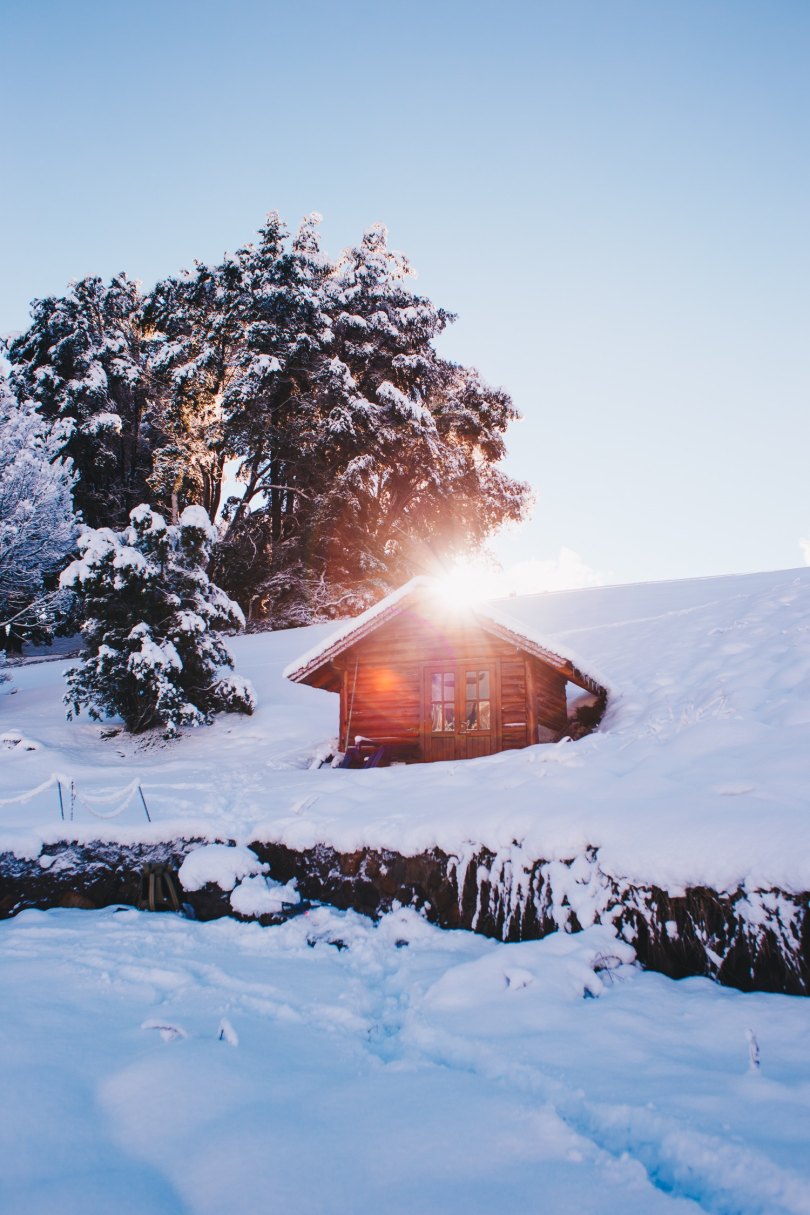
Winter Syntax

A sentence starts out like a lone traveler
heading into a blizzard at midnight,
tilting into the wind, one arm shielding his face,
the tails of his thin coat flapping behind him.

There are easier ways of making sense,
the connoisseurship of gesture, for example.
You hold a girl’s face in your hands like a vase.
You lift a gun from the glove compartment
and toss it out the window into the desert heat.
These cool moments are blazing with silence.

The full moon makes sense. When a cloud crosses it
it becomes as eloquent as a bicycle leaning
outside a drugstore or a dog who sleeps all afternoon
in a corner of the couch.

Bare branches in winter are a form of writing.
The unclothed body is autobiography.
Every lake is a vowel, every island a noun.

But the traveler persists in his misery,
struggling all night through the deepening snow,
leaving a faint alphabet of bootprints
on the white hills and the white floors of valleys,
a message for field mice and passing crows.

At dawn he will spot the vine of smoke
rising from your chimney, and when he stands
before you shivering, draped in sparkling frost,
a smile will appear in the beard of icicles,
and the man will express a complete thought.

Consiglio agli scrittori, da “A vela, in solitaria, attorno alla stanza”, Billy Collins

Anche se ti tiene in piedi per tutta la notte,
lava a fondo le pareti e pulisci i pavimenti
dello studio prima di comporre una sillaba.

Pulisci come se il Papa stesse arrivando.
Il candore è nipote dell’ispirazione.

Più pulisci, più brillante
sarà la tua scrittura, e allora non esitare a prendere
per i campi e a sfregare il fondo
dei sassi o spolverare sui rami più alti
della buia foresta i nidi pieni di uova.

Quando ritroverai la strada di casa
e riporrai spugne e spazzole sotto il lavello
vedrai alla luce dell’alba
l’altare immacolato della tua scrivania,
una superficie pulita al centro di un mondo pulito.

Da un vasetto, azzurro splendente, solleva
una matita gialla, la più appuntita del mazzo,
e ricopri pagine di piccole frasi
come lunghe file di fedeli formiche
che ti hanno seguito fin qui dal bosco.

(Traduzione di Franco Nasi)

Advice to Writers

Even if it keeps you up all night,
wash down the walls and scrub the floor
of your study before composing a syllable.

Clean the place as if the Pope were on his way.
Spotlessness is the niece of inspiration.

The more you clean, the more brilliant
your writing will be, so do not hesitate to take
to the open fields to scour the undersides
of rocks or swab in the dark forest
upper branches, nests full of eggs.

When you find your way back home
and stow the sponges and brushes under the sink,
you will behold in the light of dawn
the immaculate altar of your desk,
a clean surface in the middle of a clean world.

From a small vase, sparkling blue, lift
a yellow pencil, the sharpest of the bouquet,
and cover pages with tiny sentences
like long rows of devoted ants
that followed you in from the woods.