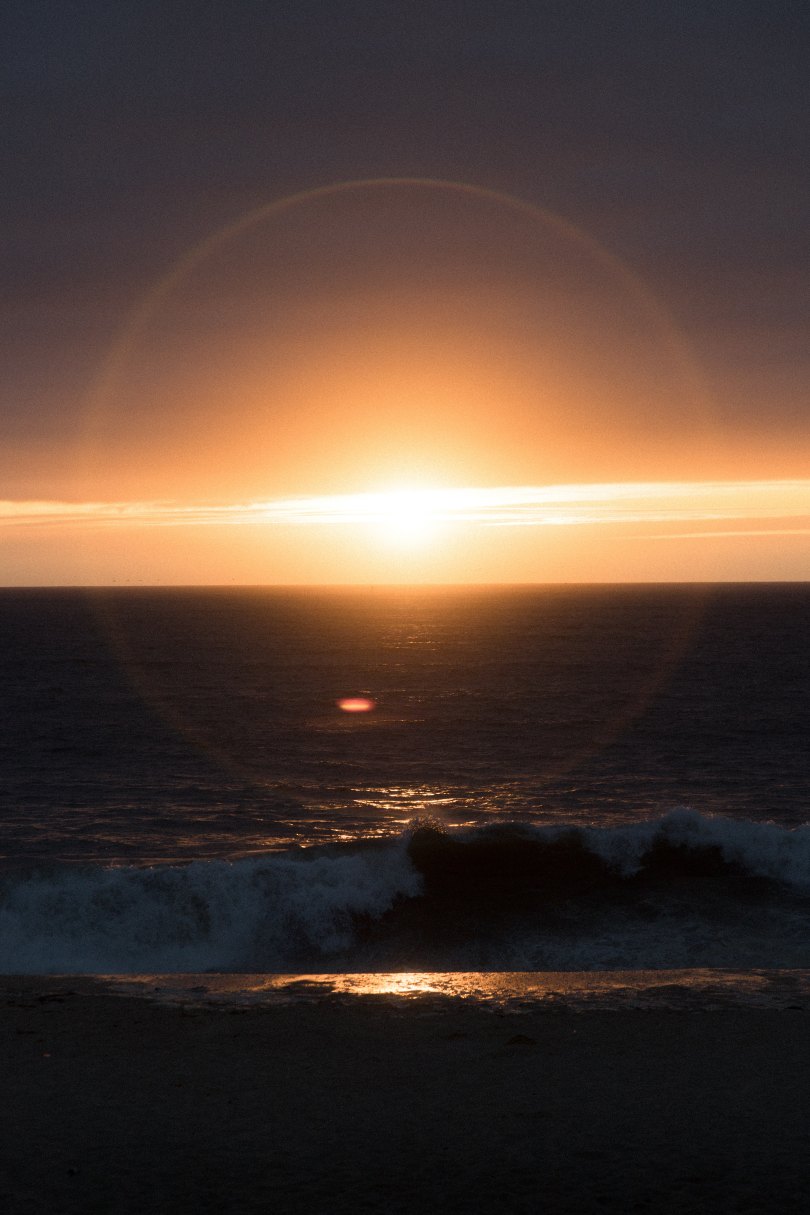
Se la mia voce morisse sulla terra, Rafael Alberti

Se la mia voce morisse sulla terra
portatela al livello del mare
e lasciatela sulla spiaggia.

Portatela al livello del mare
e nominatela capitana
di un bianco vascello da guerra.

Oh! La mia voce decorata
con le insegne marinaresche:
sopra il cuore un’ancora
sopra l’ancora una stella
e sopra la stella il vento
e sopra il vento una vela!

Si mi voz muriera en tierra

Si mi voz muriera en tierra,
llevadla al nivel del mar
y dejadla en la ribera.

Llevadla al nivel del mar
y nombradla capitana
de un blanco bajel de guerra.

¡Oh mi voz condecorada
con la insignia marinera:
sobre el corazon un ancla
y sobre el ancla una estrella
y sobre la estrella el viento
y sobre el viento una vela!

Rafael Alberti, Marinero en tierra (1924)

If my voice dies on land

If my voice dies on land,
take it down to the sea
and leave it on the shore.

Take it down to the sea
and make it captain
of a white man-of-war.

Honor it with
a sailor’s medal:
over its heart an anchor,
and on the anchor a star,
and on the star the wind,
and on the wind a sail!

Translated by Mark Strand

Tre volte – ci separammo – il respiro – e io, Emily Dickinson

Tre volte – ci separammo – il Respiro – ed io –
Tre volte – non volle andarsene –
Ma si sforzava per smuovere il soffio fluttuante
Che le Acque – si sforzavano di arrestare.

Tre volte – Le Ondate mi scagliarono in alto –
Poi mi afferrarono – come una Palla –
Poi fecero Azzurre smorfie sulla mia faccia –
E spinsero via una vela

Che procedeva a Leghe di distanza – mi piaceva vederla –
Perché pensavo – Mentre muoio –
Com’è piacevole guardare una Cosa
In cui – ci sono volti Umani –

Le Onde si fecero sonnolente – il Respiro – no –
I Venti – come Bambini – si quietarono –
Poi l’Aurora baciò la mia Crisalide –
Ed io mi drizzai – e vissi –

(Traduzione di Giuseppe Ierolli)

Three times – we parted – Breath – and I –

Three times – we parted – Breath – and I –
Three times – He would not go –
But strove to stir the lifeless fan
The Waters – strove to stay.

Three Times – the Billows tossed me up –
Then caught me – like a Ball –
Then made Blue faces in my face –
And pushed away a sail

That crawled Leagues off – I liked to see –
For thinking – while I die –
How pleasant to behold a Thing
Where Human faces – be –

The Waves grew sleepy – Breath – did not –
The Winds – like Children – lulled –
Then Sunrise kissed my Chrysalis –
And I stood up – and lived –

Uve di mare, Derek Walcott

Quella vela piegata dalla luce,
stanca d’isole,
una goletta che batte il Mar dei Caraibi

per ritornare, potrebbe essere Odisseo
diretto a casa attraverso l’Egeo:
quel desiderio di padre e di marito,

sotto l’aspro livore della vecchiezza,
è come l’adultero che sente il nome di Nausicaa
in ogni grido di gabbiano.

E questo non assicura la pace. L’antica guerra
tra ossessione e responsabilità
non può finire ed è la stessa

per il naufrago e per chi sul lido
ora infila i piedi nei sandali per rientrare
da quando Troia ha spirato l’ultima fiamma

e il macigno del cieco ciclope ha alzato le acque
dalle cui ondate i grandiosi esametri giungono
alle conclusioni dell’esausta risacca.

I classici possono consolare. Ma non abbastanza.

Sea Grapes

That sail which leans on light,
tired of islands,
a schooner beating up the Caribbean

for home, could be Odysseus,
home-bound on the Aegean;
that father and husband’s

longing, under gnarled sour grapes, is like
the adulterer hearing Nausicaa’s name in
every gull’s outcry.
This brings nobody peace. The ancient war
between obsession and responsibility will
never finish and has been the same

for the sea-wanderer or the one on shore now
wriggling on his sandals to walk home, since
Troy sighed its last flame,

and the blind giant’s boulder heaved the trough from
whose groundswell the great hexameters come to the
conclusions of exhausted surf.

The classics can console. But not enough.