Questa mattina, Raymond Carver

Questa mattina è stata portentosa. Un po’ di neve
copriva il terreno. Il sole galleggiava in un limpido
cielo azzurro. Anche il mare era azzurro e verde azzurro
fino all’orizzonte.
Neanche un’increspatura. Calmo. Mi sono vestito e sono
uscito
a fare una passeggiata – deciso a non tornare indietro
prima d’aver assorbito tutto quello che la Natura aveva da
offrirmi.
Sono passato accanto a vecchi alberi curvi.
Ho attraversato un campo disseminato di pietre
dove la neve s’era ammucchiata in banchi. Ho proseguito
fino ad arrivare alla scogliera.
Da lì ho guardato il mare e il cielo e
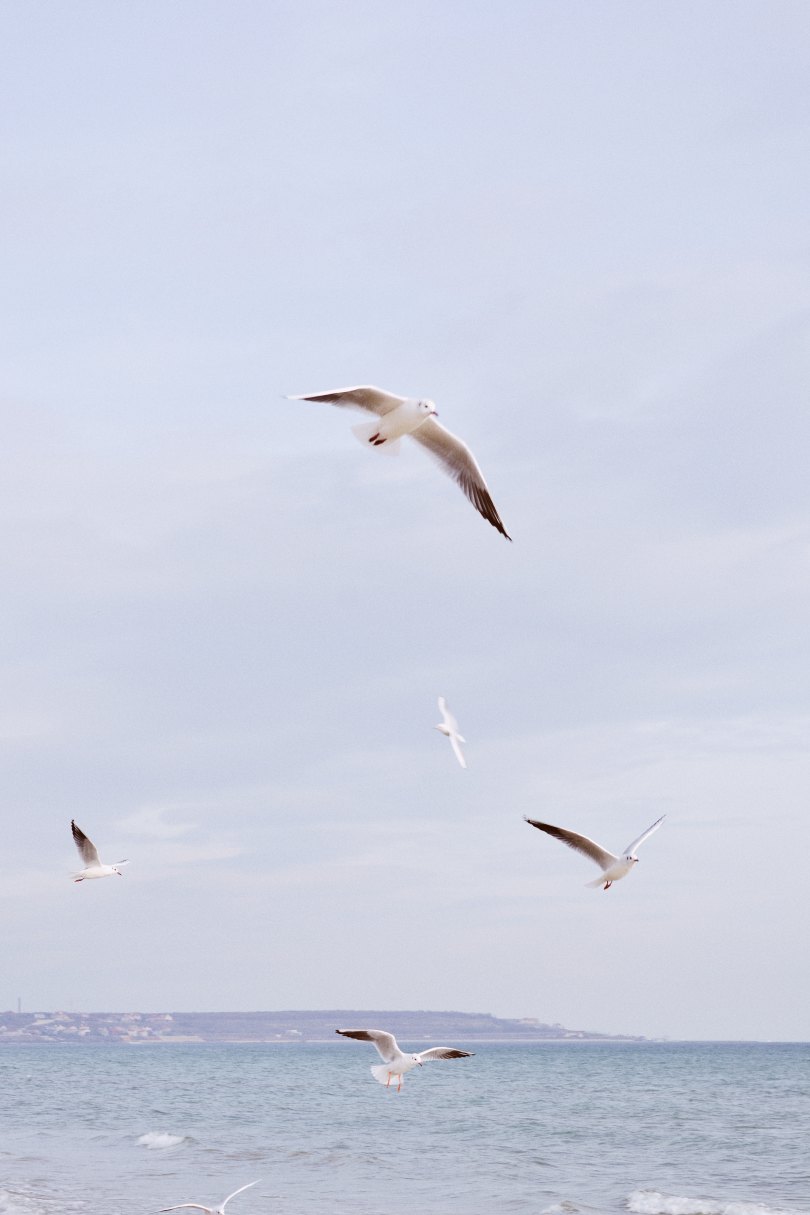
i gabbiani che volteggiavano sulla spiaggia bianca
laggiù. Tutto bello. Tutto immerso in una luce
pura e fredda. Ma poi, al solito, i miei pensieri
hanno cominciato a vagare. Con uno sforzo di volontà
ho cercato di vedere quel che vedevo
e nulla più. Mi sono dovuto dire che era questo
che contava, non le altre cose. (E ci sono riuscito,
per qualche istante!) Per qualche istante
sono riuscito a scacciare i soliti pensieri su
quel che è giusto o sbagliato – il dovere,
i teneri ricordi, i pensieri di morte, come dovrei comportarmi
con la mia ex moglie. Tutte le cose
che speravo sparissero questa mattina.
Le cose con cui convivo ogni giorno. Quel che
ho calpestato per continuare a vivere.
Per qualche istante mi sono distratto
da me stesso e da tutto il resto. Ne sono sicuro.
Perché quando mi sono voltato non sapevo più
dov’ero. Finché alcuni uccelli non si sono alzati
dagli alberi contorti. E sono volati
nella direzione in cui dovevo andare.

(Traduzione di Riccardo Duranti e Francesco Durante)

This Morning

This morning was something. A little snow
lay on the ground. The sun floated in a clear
blue sky. The sea was blue, and blue-green,
as far as the eye could see.
Scarcely a ripple. Calm. I dressed and went
for a walk — determined not to return
until I took in what Nature had to offer.
I passed close to some old, bent-over trees.
Crossed a field strewn with rocks
where snow had drifted. Kept going
until I reached the bluff.
Where I gazed at the sea, and the sky, and
the gulls wheeling over the white beach
far below. All lovely. All bathed in a pure
cold light. But, as usual, my thoughts
began to wander. I had to will
myself to see what I was seeing
and nothing else. I had to tell myself this is what
mattered, not the other. (And I did see it,
for a minute or two!) For a minute or two
it crowded out the usual musings on
what was right, and what was wrong — duty,
tender memories, thoughts of death, how I should treat
with my former wife. All the things
I hoped would go away this morning.
The stuff I live with every day. What
I’ve trampled on in order to stay alive.
But for a minute or two I did forget
myself and everything else. I know I did.
For when I turned back i didn’t know
where I was. Until some birds rose up
from the gnarled trees. And flew
in the direction I needed to be going.
Autotomia, da “Ogni caso” (1972), Wislawa Szymborska

Alla memoria di Halina Poświatowska

In caso di pericolo, l’oloturia si divide in due:
dà un sé in pasto al mondo,
e con l’altro fugge.

Si scinde d’un colpo in rovina e salvezza,
in ammenda e premio, in ciò che è stato e ciò che sarà.

Nel mezzo del suo corpo si apre un abisso
con due sponde subito estranee.

Su una la morte, sull’altra la vita.
Qui la disperazione, là la fiducia.

Se esiste una bilancia, ha piatti immobili.
Se c’è una giustizia, eccola.

Morire quanto necessario, senza eccedere.
Ricrescere quanto occorre da ciò che si è salvato.

Già, anche noi sappiamo dividerci in due.
Ma solo in corpo e sussurro interrotto.
In corpo e poesia.

Da un lato la gola, il riso dall’altro,
un riso leggero, di già soffocato.

Qui il cuore pesante, là non omnis moriar,
tre piccole parole, soltanto, tre piume d’un volo.

L’abisso non ci divide.
L’abisso circonda.

(Traduzione di Pietro Marchesani)

Autotomy

In memoriam Halina Poświatowska

In danger, the holothurian cuts itself in two.
It abandons one self to a hungry world
and with the other self it flees.

It violently divides into doom and salvation,
retribution and reward, what has been and what will be.

An abyss appears in the middle of its body
between what instantly become two foreign shores.

Life on one shore, death on the other.
Here hope and there despair.

If there are scales, the pans don’t move.
If there is justice, this is it.

To die just as required, without excess.
To grow back just what’s needed from what’s left.

We, too, can divide ourselves, it’s true.
But only into flesh and a broken whisper.
Into flesh and poetry.

The throat on one side, laughter on the other,
quiet, quickly dying out.

Here the heavy heart, there non omnis moriar—
just three little words, like a flight’s three feathers.

The abyss doesn’t divide us.
The abyss surrounds us.

(Translated from Polish by Stanislaw Baranczak and Clare Cavanagh)

Figli dell’epoca, da “Gente sul ponte” (1986), Wislawa Szymborska

Siamo figli dell’epoca,
l’epoca è politica.

Tutte le tue, nostre, vostre
faccende diurne, notturne
sono faccende politiche.

Che ti piaccia o no,
i tuoi geni hanno un passato politico,
la tua pelle una sfumatura politica,
i tuoi occhi un aspetto politico.

Ciò di cui parli ha una risonanza,
ciò di cui taci ha una valenza
in un modo o nell’altro politica.

Perfino per campi, per boschi
fai passi politici
su uno sfondo politico.

Anche le poesie apolitiche sono politiche,
e in alto brilla la luna,
cosa non più lunare.
Essere o non essere, questo è il problema.
Quale problema, rispondi sul tema.
Problema politico.

Non devi neppure essere una creatura umana
per acquistare un significato politico.
Basta che tu sia petrolio,
mangime arricchito o materiale riciclabile.
O anche il tavolo delle trattative, sulla cui forma
si è disputato per mesi:
se negoziare sulla vita e la morte
intorno a uno rotondo o quadrato.

Intanto la gente moriva,
gli animali crepavano,
le case bruciavano e i campi inselvatichivano
come nelle epoche remote
e meno politiche.

(Traduzione di Pietro Marchesani)

Children of the Age

We are children of our age,
it’s a political age.

All day long, all through the night,
all affairs—yours, ours, theirs—
are political affairs.

Whether you like it or not,
your genes have a political past,
your skin, a political cast,
your eyes, a political slant.

Whatever you say reverberates,
whatever you don’t say speaks for itself.
So either way you’re talking politics.

Even when you take to the woods,
you’re taking political steps
on political grounds.

Apolitical poems are also political,
and above us shines a moon
no longer purely lunar.
To be or not to be, that is the question.
and though it troubles the digestion
it’s a question, as always, of politics.

To acquire a political meaning
you don’t even have to be human.
Raw material will do,
or protein feed, or crude oil,

or a conference table whose shape
was quarreled over for months:
Should we arbitrate life and death
at a round table or a square one.

Meanwhile, people perished,
animals died,
houses burned,
and the fields ran wild
just as in times immemorial
and less political.

(Translated by Stanisław Baranczak and Clare Cavanagh)

La cometa, il percorso, la coda, Peter Hammill

Dicono che siamo dotati del Libero Arbitrio –
almeno ciò giustifica il nostro bisogno di indecisione
Ma fra i nostri istinti e la brama di uccidere
chiniamo la testa in segno di sottomissione.
Dicono che nessun uomo è un’isola
ma poi dicono che le nostre case sono fortezze in cui rinchiuderci;
sentiamo che, tra pace e violenza, la scelta è nostra.
Oh, sì, scegliamo, ma da soli?
Mentre la cometa dispiega la sua coda attraverso il cielo
essa non definisce in alcun luogo il proprio percorso
né riesce ad trovare la propria direzione.
Anche se la traiettoria della cometa è certa
la sua composizione non lo è
così è possibile che sia qualcosa in più
della traccia di una coda
in una breve fiammata verso la gloria.
Amore e pace ed individualità,
così come l’ordine e la società, sono una creazione dell’uomo?
Guerra, odio ed oscura depravazione
o siamo schiavi?
Incanalare le energie aggressive,
il Desiderio di Morte e la Volontà di sopravvivere,
nel trovare e risparmiare i nostri nemici,
è forse questo l’unico modo che abbiamo per sentirci vivi?
Nel mattatoio tutte le salme hanno lo stesso odore
siano state regine o pedoni o innocenti nel gioco;
nel cimitero le tombe sono avvolte dalla stessa uniforme
ad eccezione di un superficiale fasto cerimoniale.
C’è un’ora segnata sul calendario
nella quale la ragione sembra appena sufficiente
per ammettere tutte le stelle cadenti:
sono tempi duri.
Sto aspettando che qui accada qualcosa
come se debba succedere da un bel pezzo
forse una riaffermazione dell’anno passato
o qualcosa di totalmente nuovo.
E la conoscenza che in parte conquistiamo
ci porta sempre più vicini alla partenza
e alle domande fondamentali:
Come posso capire se la strada assegnata all’inferno
non porti invece su al paradiso?
Cosa posso dire quando, in qualche oscura maniera,
Io sono la mia direzione?

The Comet, The Course, The Tail

They say we are endowed with Free Will –
At least that justifies our need for indecision.
But between our insticts and the lust to kill
We bow our heads in submission.
They say that no man is an island
But then they say our castles are our homes;
It’s felt the choice is ours, between peace and violence…
Oh, yes, we choose, alone?
While the comet spreads its tail across the sky
It nowhere near defines the course it flies,
Nor does it find its own direction.
Though the path of the comet be sure,
Its constitution is not
So its meaning is possibly more
Than the tracing of a tail
In one brief shot at glory.
Love and peace and individuality,
So order and society are man-made?
War and hate and dark depravity,
Or are we slaves?
Channeling aggressive energies,
The Death Wish and the Will to survive,
Into finding and preserving enemies,
Is that the only way we know that we’re alive?
In the slaughterhouse all corpses smell the same,
Whether queens or pawns or innocents at the game;
In the cemetery a uniform cloaks the graves
Except for outward pomp and circumstance.
There is a time set in the calendar
When all reason seems barely enough
To sustain all the shooting stars:
Times are rough.
I’m waiting for something to happen here,
It feels as though it’s long overdue…
Maybe a restatement of yesteryear
Or something entirely new.
And the knowledge that we gain in part
Always leads us closer to the very start,
And to the founding questions:
How can I tell that the road signed to hell
Doesn’t lead up to heaven?
What can I say when, in some obscure way,
I am my own direction?

_______________________________
Grazie a Mauro De Candia per la segnalazione di questo testo

Felicità, Raymond Carver

Talmente presto che fuori è ancora quasi buio.
Sto alla finestra con il caffè
e le solite cose della mattina presto
che passano per pensieri.
A un tratto vedo il ragazzo e il suo amico
venire su per la strada
per consegnare il giornale.
Portano il berretto e il maglione
e uno la borsa a tracolla.
Sono così felici
che non dicono niente, questi ragazzi.
Mi sa che se potessero, si prenderebbero sottobraccio.
Il mattino è appena sorto
e stanno facendo questa cosa insieme.
Avanzano lentamente.
Il mattino si fa più luminoso,
anche se la luna pende ancora pallida sul mare.
Una tale bellezza che per un attimo
la morte e l’ambizione, perfino l’amore
non riescono a intaccarla.
Felicità. Arriva
inaspettata. E va al di là, davvero,
di qualsiasi chiacchiera mattutina sull’argomento.

(Traduzione di Riccardo Duranti e Francesco Durante)

Happiness

So early it’s still almost dark out.

I’m near the window with coffee,
and the usual early morning stuff
that passes for thought.

When I see the boy and his friend
walking up the road
to deliver the newspaper.

They wear caps and sweaters,
and one boy has a bag over his shoulder.

They are so happy
they aren’t saying anything, these boys.

I think if they could, they would take
each other’s arm.

It’s early in the morning,
and they are doing this thing together.

They come on, slowly.

The sky is taking on light,
though the moon still hangs pale over the water.

Such beauty that for a minute
death and ambition, even love,
doesn’t enter into this.

Happiness.
It comes on
unexpectedly.
And goes beyond, really,
any early morning talk about it.

Monologo di un cane coinvolto nella storia, Wislawa Szymborska

Ci sono cani e cani. Io ero un cane eletto.
Con un buon pedigree e sangue di lupo nelle vene.
Abitavo su un’altura, inalando profumi di vedute
su prati soleggiati, abeti bagnati dalla pioggia
e zolle di terra tra la neve.

Avevo una bella casa e servitù.
Ero nutrito, lavato, spazzolato,
condotto a fare belle passeggiate.
Ma, con rispetto, senza confidenze.
Tutti sapevano bene chi ero.

Ogni bastardo rognoso è capace di avercelo un padrone.
Attenti però – lungi dai paragoni.
Il mio padrone era unico nel suo genere.
Una muta imponente lo seguiva a ogni passo
fissandolo con ammirazione timorosa.

Per me c’erano sorrisetti
di malcelata invidia.
Perché solo io avevo diritto
di accoglierlo con salti veloci,
solo io – di salutarlo tirandogli i calzoni.
Solo a me era permesso,
con la testa sulle sue ginocchia,
accedere a carezze e a tirate di orecchie.
Solo io con lui potevo far finta di dormire,
e allora si chinava sussurrandomi qualcosa.

Con gli altri si arrabbiava spesso, ad alta voce.
Ringhiava, latrava contro di loro,
correva da una parete all’altra.
Penso che solo a me volesse bene,
e a nessun altro, mai.

Avevo anche doveri: aspettare, fidarmi.
Perché compariva per poco e spariva per molto.
non so cosa lo trattenesse lì, nelle valli.
Intuivo però che si trattava di faccende pressanti,
perlomeno pressanti
quanto per me lottare con i gatti
e tutto ciò che si muove inutilmente.

C’è destino e destino. Il mio mutò di colpo.
Giunse una primavera,
e lui non era accanto a me.
In casa si scatenò uno strano andirivieni.
Bauli, valigie, cofani cacciati nelle auto.
Le ruote sgommando scendevano giù in basso
e si zittivano dietro la curva.

Sulla terrazza bruciavano vecchiumi, stracci,
casacche gialle, fasce con emblemi neri
e molti, moltissimi cartoni fatti a pezzi
da cui cadevano fuori bandierine.

Gironzolavo in quel caos
più stupito che irato.
Sentivo sul pelo sguardi sgradevoli.
Quasi io fossi un cane abbandonato,
un randagio molesto
che già dalle scale si scaccia con la scopa.

Uno mi strappò il collare borchiato d’argento.
Uno mi diede un calcio alla ciotola da giorni vuota.
E poi l’ultimo, prima di partire,
si sporse dalla cabina di guida
e mi sparò due volte.

Neanche capace di colpire nel segno,
così la mia morte fu lenta e dolorosa
nel ronzio di mosche spavalde.
Io, il cane del mio padrone.

Monologue of a Dog Ensnared in History

There are dogs and dogs. I was among the chosen.
I had good papers and wolf’s blood in my veins.
I lived upon the heights inhaling the odors of views:
meadows in sunlight, spruces after rain,
and clumps of earth beneath the snow.

I had a decent home and people on call,
I was fed, washed, groomed,
and taken for lovely strolls.
Respectfully, though, and comme il faut.
They all knew full well whose dog I was.

Any lousy mutt can have a master.
Take care, though — beware comparisons.
My master was a breed apart.
He had a splendid herd that trailed his every step
and fixed its eyes on him in fearful awe.

For me they always had smiles,
with envy poorly hidden.
Since only I had the right
to greet him with nimble leaps,
only I could say good-bye by worrying his trousers with my teeth.
Only I was permitted
to receive scratching and stroking
with my head laid in his lap.
Only I could feign sleep
while he bent over me to whisper something.

He raged at others often, loudly.
He snarled, barked,
raced from wall to wall.
I suspect he liked only me
and nobody else, ever.

I also had responsibilities: waiting, trusting.
Since he would turn up briefly, and then vanish.
What kept him down there in the lowlands, I don’t know.
I guessed, though, it must be pressing business,
at least as pressing
as my battle with the cats
and everything that moves for no good reason.

There’s fate and fate. Mine changed abruptly.
One spring came
and he wasn’t there.
All hell broke loose at home.
Suitcases, chests, trunks crammed into cars.
The wheels squealed tearing downhill
and fell silent round the bend.

On the terrace scraps and tatters flamed,
yellow shirts, armbands with black emblems
and lots and lots of battered cartons
with little banners tumbling out.

I tossed and turned in this whirlwind,
more amazed than peeved.
I felt unfriendly glances on my fur.
As if I were a dog without a master,
some pushy stray
chased downstairs with a broom.

Someone tore my silver-trimmed collar off,
someone kicked my bowl, empty for days.
Then someone else, driving away,
leaned out from the car
and shot me twice.

He couldn’t even shoot straight,
since I died for a long time, in pain,
to the buzz of impertinent flies.
I, the dog of my master.

(From the collection “Monologue of a Dog: New Poems (2005)”, translated into English by Clare Cavanagh and Stanislaw Baranczak, and published by Harcourt Inc, in 2006)

Dinosauria, noi, da “The Last Night of the Earth Poems”, Charles Bukowski

Nati così
in mezzo a tutto questo
tra facce di gesso che ghignano
e la signora Morte che se la ride
mentre gli ascensori si rompono
mentre gli orizzonti politici si dissolvono
mentre il ragazzo della spesa del supermercato ha una laurea
mentre i pesci sporchi di petrolio sputano la loro preda oleosa
e il sole è mascherato

siamo nati così
in mezzo a tutto questo
tra queste guerre attentamente matte
tra la vista di finestre di fabbrica rotte di vuoto
in mezzo a bar dove le persone non non si parlano più
nelle risse che finiscono tra sparatorie e coltellate
siamo nati così
in mezzo a tutto questo
tra ospedali così costosi che conviene lasciarsi morire
tra avvocati talmente esosi che è meglio dichiararsi colpevoli
in un Paese dove le galere sono piene e i manicomi chiusi
in un posto dove le masse trasformano i cretini in eroi di successo
nati in mezzo a tutto questo
ci muoviamo e viviamo in tutto ciò
a causa di tutto questo moriamo
castrati
corrotti
diseredati
per tutto questo
ingannati da questo
usati da questo
pisciati addosso da questo
resi pazzi e malati da questo
resi violenti
resi inumani
da questo
il cuore è annerito
le dita cercano la gola
la pistola
il coltello
la bomba
le dita vanno in cerca di un dio insensibile
le dita cercano la bottiglia
le pillole
qualcosa da sniffare
siamo nati in questo essere letale triste
siamo nati in un governo in debito di 60 anni
che presto non potrà nemmeno pagare gli interessi su quel debito
e le banche bruceranno
il denaro sarà inutile
ammazzarsi per strada in pieno giorno non sarà più un crimine
resteranno solo pistole e folle di sbandati
la terra sarà inutile
il cibo diventerà un rendimento decrescente
l’energia nucleare finirà in mano alle masse
il pianeta sarà scosso da un’esplosione dopo l’altra
uomini robot radioattivi si inseguiranno l’un l’altro
il ricco e lo scelto staranno a guardare da piattaforme spaziali
l’inferno di Dante sarà fatto per somigliare a un parco giochi per bambini
il sole sarà invisibile e sarà la notte eterna
gli alberi moriranno
e tutta la vegetazione morirà
uomini radioattivi si nutriranno della carne di uomini radioattivi
il mare sarà avvelenato
laghi e fiumi spariranno
la pioggia sarà il nuovo oro
la puzza delle carcasse di uomini e animali si propagherà nel vento oscuro
gli ultimi pochi superstiti saranno oppressi da malattie nuove ed orrende
e le piattaforme spaziali saranno distrutte dalla collisione
il progressivo esaurimento di provviste
l’effetto naturale della decadenza generale
e il più bel silenzio mai ascoltato
nascerà da tutto questo.
il sole nascosto
attenderà il capitolo successivo.

Dinosauria, we

born like this
into this
as the chalk faces smile
as Mrs. Death laughs
as the elevators break
as political landscapes dissolve
as the supermarket bag boy holds a college degree
as the oily fish spit out their oily prey
as the sun is masked

we are
born like this
into this
into these carefully mad wars
into the sight of broken factory windows of emptiness
into bars where people no longer speak to each other
into fist fights that end as shootings and knifings
born into this
into hospitals which are so expensive that it’s cheaper to die
into lawyers who charge so much it’s cheaper to plead guilty
into a country where the jails are full and the madhouses closed
into a place where the masses elevate fools into rich heroes
born into this
walking and living through this
dying because of this
muted because of this
castrated
debauched
disinherited

because of this
fooled by this
used by this
pissed on by this
made crazy and sick by this
made violent
made inhuman
by this

the heart is blackened
the fingers reach for the throat
the gun
the knife
the bomb
the fingers reach toward an unresponsive god

the fingers reach for the bottle
the pill
the powder

we are born into this sorrowful deadliness
we are born into a government 60 years in debt
that soon will be unable to even pay the interest on that debt
and the banks will burn
money will be useless
there will be open and unpunished murder in the streets
it will be guns and roving mobs
land will be useless
food will become a diminishing return
nuclear power will be taken over by the many
explosions will continually shake the earth
radiated robot men will stalk each other
the rich and the chosen will watch from space platforms
Dante’s Inferno will be made to look like a children’s playground

the sun will not be seen and it will always be night
trees will die
all vegetation will die
radiated men will eat the flesh of radiated men
the sea will be poisoned
the lakes and rivers will vanish
rain will be the new gold

the rotting bodies of men and animals will stink in the dark wind

the last few survivors will be overtaken by new and hideous diseases
and the space platforms will be destroyed by attrition
the petering out of supplies
the natural effect of general decay

and there will be the most beautiful silence never heard

born out of that.

the sun still hidden there

awaiting the next chapter.

Tira i fili, la marionetta balla, da “Burning in Water, Drowning in Flame”, Charles Bukowski

ogni uomo deve capire
che tutto può sparire molto
in fretta:
il gatto, la donna, il lavoro,
la ruota davanti,
il letto, le pareti, la
stanza; tutte le nostre necessità
amore compreso,
poggiano su fondamenta di sabbia –
e ogni causa determinata,
per sconnessa che sia:
la morte d’un ragazzo a Hong Kong
o una tormenta a Omaha…
può essere la tua rovina.
tutte le tue stoviglie che si spaccano
sul pavimento della cucina, la tua ragazza entra
e tu sei là, ubriaco,
in mezzo alla stanza e lei domanda:
mio dio, cosa succede?
e tu rispondi: non so,
non so….

Pull A String, A Puppet Moves

each man must realize
that it can all disappear very
quickly:
the cat, the woman, the job,
the front tire,
the bed, the walls, the
room; all our necessities
including love,
rest on foundations of sand –
and any given cause,
no matter how unrelated:
the death of a boy in Hong Kong
or a blizzard in Omaha …
can serve as your undoing.
all your chinaware crashing to the
kitchen floor, your girl will enter
and you’ll be standing, drunk,
in the center of it and she’ll ask:
my god, what’s the matter?
and you’ll answer: I don’t know,
I don’t know …

Vita minore, da “Cuore numeroso”, Carlos Drummond de Andrade

La fuga dal reale,
ancora più lontano la fuga dal fantastico,
più lontano di tutto, la fuga da se stesso,
la fuga dalla fuga, l’esilio
senza acqua e parola, la perdita
volontaria di amore e memoria,
l’eco
che non corrisponde più all’appello, e questo che si fonde,
la mano che diviene enorme e che sparisce
sfigurata, tutti i gesti insomma impossibili,
se non inutili,
l’inutilità del canto, la purezza
del colore, né un braccio che si muova né un’unghia che cresca.
Non la morte tuttavia.

Ma la vita: captata nella sua forma irriducibile,
senza più ornamento o commento melodico,
vita a cui aspiriamo come pace nella stanchezza
(non la morte),
vita minima, essenziale; un inizio; un sonno;
meno che terra, senza calore; senza scienza né ironia;
quello che si possa desiderare di meno crudele: vita
in cui l’aria, non respirata, mi avvolga;
nessuno spreco di tessuti; loro assenza;
confusione tra mattino e sera, senza più dolore,
perché il tempo non si divide più in sezioni; il tempo
eliminato, domato.
Non ciò che è morto né l’eterno o il divino,
soltanto quello che è vivo, piccolo, silenzioso, indifferente
e solitario vivo.
Questo io cerco.

(Trad. di Vincenzo Arsillo)

Vida menor

A fuga do real,
ainda mais longe a fuga do feérico,
mais longe de tudo, a fuga da si mesmo,
a fuga da fuga, o exìlio
sem àgua e palavra, a perda
voluntària de amor e memòria,
o eco
jà não correspondendo ao apelo, e este fundindo-se,
a mão tornando-se enorme e desaparecendo
desfigurada, todos os gestos afinal impossìveis,
senão inùteis,
a desnecessidade do canto, a limpideza
da cor, nem braço a mover-se nem unha crescendo.
Não a morte, contudo.

Mas a vida: captada em sua forma irridutìvel,
jà sem ornato ou comentàrio melòdico,
vida a que aspiramos como paz no cansaço
(não a morte),
vida mìnima, essencial; um inìcio; um sono;
menos que terra, sem calor; sem ciência nem ironia;
o que se possa desejar de menos cruel: vida
em que o ar, não respirando, mas me envolva;
nenhum gasto de tecidos; ausência deles;
confusão entre manhã e tarde, jà sem dor,
porque o tempo não mais se divide em seções; o tempo
elidido, domado.
Não o morto nem o eterno ou o divino,
apenas o vivo, o pequenino, calado, indiferente
e solitàrio vivo.
Isso eu procuro.

Rischiando continuamente assurdità, Lawrence Ferlinghetti

Rischiando continuamente assurdità
e morte
dovunque si esibisce
sulle teste
del suo pubblico
il poeta come un acrobata
s’arrampica sul bordo
della corda che s’è costruita
ed equilibrandosi sulle travi degli occhi
sopra un mare di volti
marcia per la sua strada
verso l’altra sponda del giorno
facendo salti mortali
trucchi magici coi piedi
e altri mirabili gesti teatrali
e tutto senza sbagli
ogni cosa
per ciò che forse non esiste
Perché egli è il super realista
che deve per forza capire
una tersa verità
prima di affrontare passi e posizioni
nel suo supposto procedere
verso quell’ancor più alto posatoio
dove la Bellezza sta e aspetta
gravemente
l’avvio della sua girandola di morte
E lui
un piccolo Charlot
che potrà cogliere o no
la sua dolce forma eterna
con le braccia distese in croce nell’aria vuota
dell’esistenza

(Trad. di Raffaella Marzano)

Constantly Risking Absurdity

Constantly risking absurdity
and death
whenever he performs
above the heads
of his audience
the poet like an acrobat
climbs on rime
to a high wire of his own making
and balancing on eyebeams
above a sea of faces
paces his way
to the other side of the day
performing entrachats
and sleight-of-foot tricks
and other high theatrics
and all without mistaking
any thing
for what it may not be
For he’s the super realist
who must perforce perceive
taut truth
before the taking of each stance or step
in his supposed advance
toward that still higher perch
where Beauty stands and waits
with gravity
to start her death-defying leap
And he
a little charleychaplin man
who may or may not catch
her fair eternal form
spreadeagled in the empty air
of existence