Lode della cattiva considerazione di sé, da “Grande numero” (1976), Wislawa Szymborska

La poiana non ha nulla da rimproverarsi.
Gli scrupoli sono estranei alla pantera nera.
I piranha non dubitano della bontà delle proprie azioni.

Il serpente a sonagli si accetta senza riserve.

Uno sciacallo autocritico non esiste.
La locusta, l’alligatore, la trichina e il tafano
vivono come vivono e ne sono contenti.

Il cuore dell’orca pesa cento chili,
ma sotto un altro aspetto è leggero.

Non c’è nulla di più animale
della coscienza pulita,
sul terzo pianeta del sistema solare.

(Traduzione di Pietro Marchesani)

In Praise of Feeling Bad about Yourself

The buzzard never says it is to blame.
The panther wouldn’t know what scruples mean.
When the piranha strikes, it feels no shame.
If snakes had hands, they’d claim their hands were clean.

A jackal doesn’t understand remorse.
Lions and lice don’t waver in their course.
Why should they, when they know they’re right?

Though hearts of killer whales may weigh a ton,
in every other way they’re light.

On this third planet of the sun
among the signs of bestiality
a clear conscience is Number One.

(Translated from Polish by Stanislaw Baranczak and Clare Cavanagh)

Inverno, da “Jardin de invierno”, Pablo Neruda

Giunge l’inverno. Splendido dettato
mi dan le foglie lente
vestite di giallo e di silenzio.

Sono un libro di neve,
una mano spaziosa, una prateria,
un circolo che attende,
appartengo alla terra e al suo inverno.

Crebbe il rumor del mondo nel fogliame,
arse poi il frumento costellato
di fiori rossi come scottature,
quindi venne l’autunno a stabilire
la scrittura del vino:
tutto passò, fu cielo passeggero
la coppa dell’estate,
e si spense la nube navigante.

Ho atteso sul balcone così funebre,
come ieri con l’edera della mia infanzia,
che la terra distendesse
le sue ali sul mio amore disabitato.

Ho saputo che la rosa sarebbe caduta
e che il nocciolo della pesca transitoria
sarebbe tornato a dormire e a germinare:
mi sono inebriato con la coppa dell’aria
fino a che tutto il mare divenne notturno
e il rosso delle nubi fu cenere.

La terra vive ora
tranquillizzando il suo interrogatorio,
distesa la pelle del suo silenzio.
Io torno a essere ora
il taciturno che venne da lontano
avvolto di pioggia fredda e di campane:
debbo alla morte pura della terra
la volontà delle mie germinazioni.

Jardín de invierno

Llega el invierno. Espléndido dictado
me dan las lentas hojas
vestidas de silencio y amarillo.

Soy un libro de nieve,
una espaciosa mano, una pradera,
un círculo que espera,
pertenezco a la tierra y a su invierno.

Creció el rumor del mundo en el follaje,
ardió después el trigo constelado
por flores rojas como quemaduras,
luego llegó el otoño a establecer
la escritura del vino:
todo pasó, fue cielo pasajero
la copa del estío,
y se apagó la nube navegante.

Yo esperé en el balcón tan enlutado,
como ayer con las yedras de mi infancia,
que la tierra extendiera
sus alas en mi amor deshabitado.

Yo supe que la rosa caería
y el hueso del durazno transitorio
volvería a dormir y a germinar:
y me embriagué con la copa del aire
hasta que todo el mar se hizo nocturno
y el arrebol se convirtió en ceniza.

La tierra vive ahora
tranquilizando su interrogatorio,
extendida la piel de su silencio.

Yo vuelvo a ser ahora
el taciturno que llegó de lejos
envuelto en lluvia fría y en campanas:
debo a la muerte pura de la tierra
la voluntad de mis germinaciones.

Winter Garden

The winter comes. Splendid dictation
the slow leaves give me
dressed in silence and yellow.

I am a book of snow
a spacious hand, a meadow,
a circle that waits,
I belong to the earth and to its’ winter.

It grew the rumor of the world in the foliage,
then it burned the starry wheat
by red flowers like burns
then came the autumn to establish
the writing of the wine:
everything passed, was sky passenger
the cup of the summer
and it extinguished the cloud navigator.

I waited on the balcony very in mourning,
like yesterday with the ivies of my infancy,
that the earth extended
its wings in my uninhabited love.

I knew that the rose would fall
and the bone of the transitory peach
I would go back to sleep and to germinate:
and me drunk with the cup of air
until all the sea became night
and the glow turned into ash.

The earth lives now
reassuring its interrogation
outstretched the skin of its silence.

I return to being now
the taciturn one who came from far
wrapped in cold rain and in bells:
I owe to the pure death of the land
the will of my seedlings.

(English translation by Thayne Tuason, 2013)
Ultimo frammento, da “Orientarsi con le stelle”, Raymond Carver

E hai ottenuto quello che
volevi da questa vita, nonostante tutto?
Sì.
E cos’è che volevi?
Potermi dire amato, sentirmi
amato sulla terra.

(Traduzione di Riccardo Duranti e Francesco Durante)

Late Fragment

And did you get what
you wanted from this life, even so?
I did.
And what did you want?
To call myself beloved, to feel myself
beloved on the earth.

Sintassi d’inverno, da “A vela, in solitaria intorno alla stanza”, Billy Collins

Una frase parte come un viaggiatore solitario
che va verso una tormenta di neve a mezzanotte,
e lotta contro il vento, un braccio a schermare il volto
e i lembi del cappotto leggero che sbattono dietro di lui.
Ci sono modi più semplici per costruire senso,
la conoscenza dei gesti, per esempio.
Si tiene il volto di una ragazza fra le mani come un vaso.
Si prende una pistola dal cruscotto dell’auto
e la si getta dal finestrino nella calura del deserto.
Questi freddi momenti risplendono di silenzio.
La luna piena ha senso. Quando una nuvola le passa davanti
diventa eloquente quanto una bicicletta appoggiata
a una farmacia o un cane che dorme tutto il pomeriggio
in un angolo del divano.
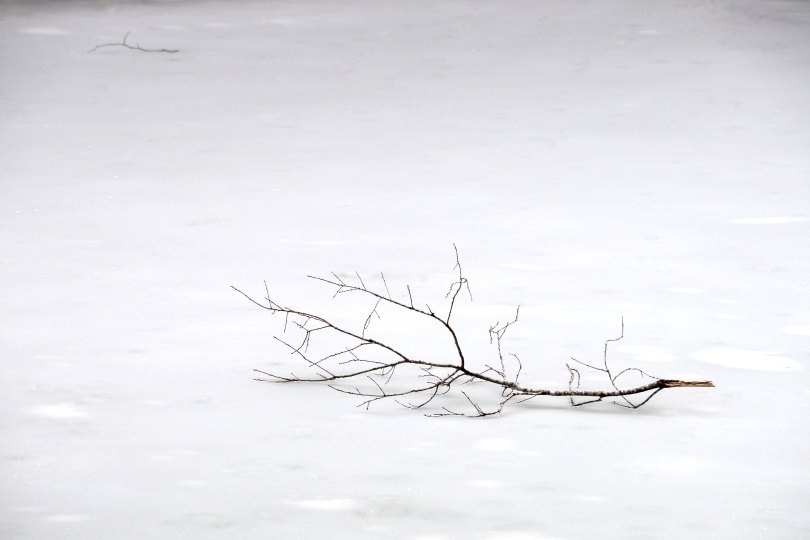
I rami spogli d’inverno sono una forma di scrittura.
Il corpo svestito è un’autobiografia.
Ogni lago è una vocale, ogni isola un nome.
Ma il viaggiatore insiste nella sua fatica,
lotta per tutta la notte nella neve sempre più alta,
lascia un tenue alfabeto di orme
sulle bianche colline e sui piani bianchi delle valli,
un messaggio ai topi di campagna e ai corvi di passaggio.
All’alba vedrà il rampicante di fumo
alzarsi dal tuo camino, e quando tremante
sarà davanti a te, rivestito di gelo che brilla,
fra la sua barba di ghiaccioli comparirà un sorriso,
e l’uomo esprimerà un pensiero compiuto.

(Traduzione di Franco Nasi)

Winter Syntax

A sentence starts out like a lone traveler
heading into a blizzard at midnight,
tilting into the wind, one arm shielding his face,
the tails of his thin coat flapping behind him.

There are easier ways of making sense,
the connoisseurship of gesture, for example.
You hold a girl’s face in your hands like a vase.
You lift a gun from the glove compartment
and toss it out the window into the desert heat.
These cool moments are blazing with silence.

The full moon makes sense. When a cloud crosses it
it becomes as eloquent as a bicycle leaning
outside a drugstore or a dog who sleeps all afternoon
in a corner of the couch.

Bare branches in winter are a form of writing.
The unclothed body is autobiography.
Every lake is a vowel, every island a noun.

But the traveler persists in his misery,
struggling all night through the deepening snow,
leaving a faint alphabet of bootprints
on the white hills and the white floors of valleys,
a message for field mice and passing crows.

At dawn he will spot the vine of smoke
rising from your chimney, and when he stands
before you shivering, draped in sparkling frost,
a smile will appear in the beard of icicles,
and the man will express a complete thought.

Il cuore spezzato, John Donne

Completamente pazzo è colui
che dice di essere stato innamorato un’ora.
E non perché l’amore declini così presto
ma perché in minor tempo può divorarne dieci.
Chi mai mi crederà se io vi giuro
che quella piaga mi è durata un anno?
Chi mai di me non riderebbe
se affermassi di aver visto una fiasca di polvere
bruciare un giorno intero?

Ah che balocco è un cuore
una volta caduto nelle mani dell’amore!
Tutti gli altri dolori fanno posto ad altri dolori
e solo un po’ ne chiedono per sè.
Essi vengono a noi, ma Amore ci trascina
ci inghiotte e non mastica mai!
A causa sua, come da palle incatenate
intere schiere muoiono.
Egli è il tiranno luccio
e i nostri cuori sono pesciolini.

Se non fosse così
cosa avvenne del mio cuore quando ti vidi la prima volta?
Portavo un cuore entrando nella stanza
ma uscendo dalla stanza non lo avevo più.
Fosse andato da te, lo so bene,
il mio cuore forse avrebbe insegnato al tuo cuore
a mostrarsi verso di me più pietoso.
Ma l’amore, ahimé, al primo soffio
lo infranse come vetro.

Eppure nulla può accadere al nulla
né alcun luogo può essere vuoto.
Per questo penso che il mio petto
conservi ancora quei frammenti
benché non siano più uniti.
E così come ora gli specchi infranti
mostrano centinaia di volti minori,
così i frammenti del mio cuore possono
scegliere,
desiderare
e adorare
ma dopo un tale amore
non possono più amare.

The Broken Heart

He is stark mad, who ever says,
That he hath been in love an hour,
Yet not that love so soon decays,
But that it can ten in less space devour;
Who will believe me, if I swear
That I have had the plague a year?
Who would not laugh at me, if I should say,
I saw a flask of powder burn a day?

Ah, what trifle is a heart,
If once into Love’s hands it come!
All other griefs allow a part
To other griefs, and ask themselves but some,
They come to us, but us Love draws,
He swallows us, and never chaws:
By him, as by chain-shot, whole ranks do die,
He is the tyrant pike, our hearts the fry.

If`twere not so, what did become
Of my heart, when I first saw thee?
I brought a heart into the room,
But from the room, I carried non with me;
If it had gone to thee, I know
Mine would have taught thy heart to show
More pity unto me: but Love, alas,
At one first blow did shiver it as glass.

Yet nothing can to nothing fall,
Nor any place be empty quite,
Therefore I think my breast hath all
Those pieces still, though they be not unite;
And now as broken glasses show
A hundred lesser faces, so
My rags of heart can like, wish, and adore,
But after one such love, can love no more.

Sogni, Langston Hughes

Tenetevi stretti ai sogni
perché se i sogni muoiono,
la vita è un uccello con le ali spezzate
che non può volare.

Tenetevi stretti ai sogni
perché quando i sogni se ne vanno
la vita è un campo arido
gelato dalla neve.

Dreams

Hold fast to dreams
For if dreams die
Life is a broken-winged bird
That cannot fly.

Hold fast to dreams
For when dreams go
Life is a barren field
Frozen with snow.