Voi sapete e io so e tu sai, da “The Last Night of the Earth Poems”, Charles Bukowski

Voi sapete e io so e tu sai
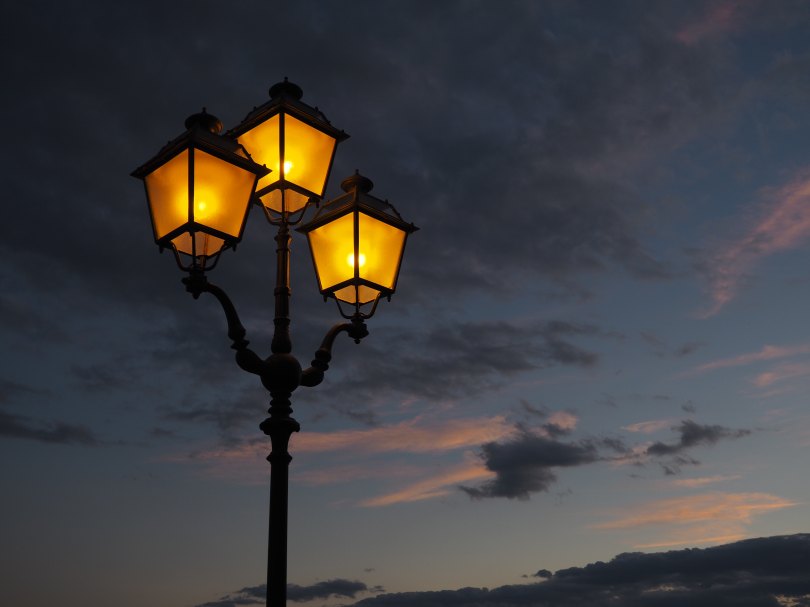
che quando la tendina gialla si strappa
quando il gatto balza inferocito
quando il vecchio barista si appoggia al bancone
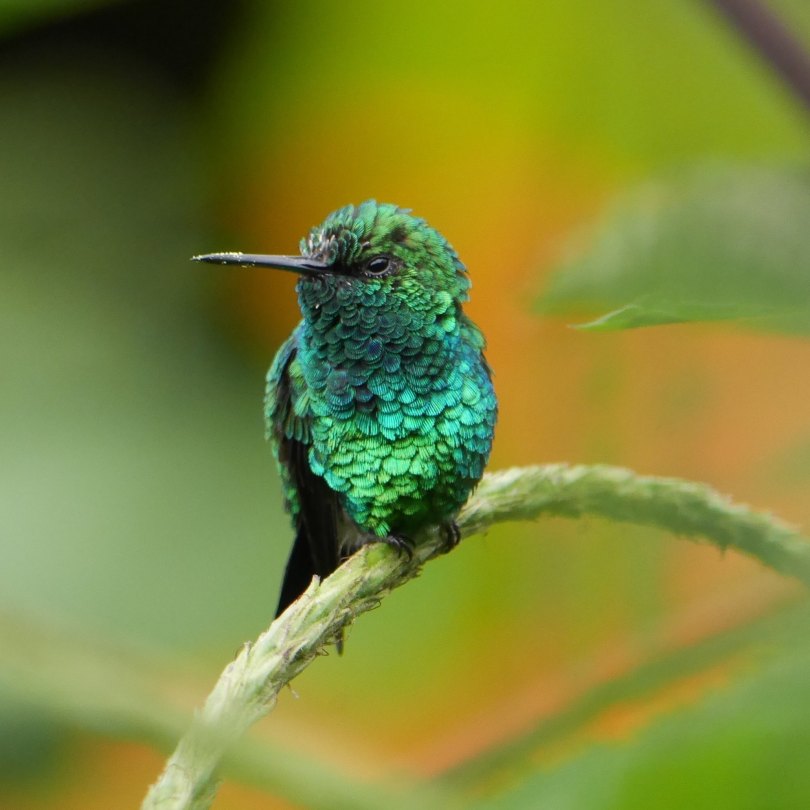
quando il colibrì dorme
voi sapete e io so e tu sai
quando i carri armati si esercitano su finti campi di battaglia
quando lasci correre le gomme in autostrada
quando il nano ubriaco di bourbon a buon mercato la notte
piange solo
quando i tori vengono allevati con cura per i matador
quando l’erba ti guarda e gli alberi ti guardano
quando il mare racchiude creature immense e vere
voi sapete e io so e tu sai
la tristezza e la gloria di due pantofole sotto un letto
la danza del tuo cuore che balla col tuo sangue
le fanciulle amorose che prima o poi odieranno gli specchi
fare gli straordinari all’inferno
pranzare con un’insalata andata a male
voi sapete e io so e tu sai
la fine per come la conosciamo adesso
sembra uno squallido imbroglio dopo una squallida agonia ma
voi sapete e io so e tu sai
la gioia che a volte spunta da non si sa dove
sorgendo come un falco che vaga nell’impossibilità
voi sapete e io so e tu sai
la strabica pazzia dell’euforia assoluta
sappiamo che alla fine non siamo stati truffati
voi sapete e io so e tu sai
quando guardiamo le nostre mani i nostri piedi le nostre vite
-la nostra strada
il colibrì addormentato
la morte assassinata dagli eserciti
il sole che ti mangia mentre lo guardi
voi sapete e io so e tu sai
sconfiggeremo la morte.

You Know and I Know and Thee Know

that as the yellow shade rips
as the cat leaps wild-eyed
as the old bartender leans on the wood
as the hummingbird sleeps

you know and I know and thee know

as the tanks practice on false battlefields
as your tires work the freeway
as the midget drunk on cheap bourbon cries alone at night
as the bulls are carefully bred for the matadors
as the grass watches you
and the trees watch you
as the sea holds creatures vast and true

you know and I know and thee know

the sadness and the glory of two slippers under a bed
the ballet of your heart dancing with your blood
young girls of love who will someday hate their mirrors
overtime in hell
lunch with sick salad

you know and I know and thee know

the end as we know it now it seems such a lousy trick
after the lousy agony but

you know and I know and thee know

the joy that sometimes comes along out of nowhere
rising like a falcon moon across the impossibility

you know and I know and thee know

the cross-eyed craziness of total elation
we know we finally have not been cheated

you know and I know and thee know

as we look at our hands our feet our lives our way
the sleeping hummingbird
the murdered dead of armies
the sun that eats you as you face it

you know and I know and thee know

we will defeat death.

Lo scoubidou, da “The Trouble with Poetry” (2005), Billy Collins

L’altro giorno mentre rimbalzavo lentamente
tra le pareti azzurre di questa stanza,
saltando dalla macchina da scrivere al piano,
dalla libreria a una busta caduta sul pavimento,
mi sono trovato nella sezione S del dizionario
dove i miei occhi sono caduti sulla parola Scoubidou.

Nessun biscotto sgranocchiato da un romanziere francese
avrebbe spedito qualcuno più in fretta nel passato –
un passato dove io stavo seduto a un tavolo in un campeggio
accanto a un lago profondo dell’Adirondack
e imparavo a intrecciare con strisce sottili di plastica
uno scoubidou, un regalo per mia madre.

Non avevo mai visto nessuno usare uno scoubidou
né indossarne uno, se è così che si usano,
ma questo non mi trattenne dall’incrociare
filo con filo, e poi di nuovo,
fino a farne uno scoubidou
quadrato, bianco e rosso, per mia madre.

Lei mi diede la vita e il latte dal seno,
io le diedi uno scoubidou.
Si prendeva cura di me, quand’ero a letto ammalato:
mi avvicinava alle labbra cucchiai di medicine,
mi appoggiava alla fronte freddi panni bagnati,
poi mi portava fuori alla luce delicata;

e mi insegnò a camminare e nuotare,
io in cambio le regalai uno scoubidou.
Ecco qui migliaia di pasti, disse,
ed ecco i vestiti e una buona scuola.
Ed ecco il tuo scoubidou, le risposi,
che ho fatto con l’aiuto dell’istruttore.

Ecco un corpo che respira e un cuore che batte,
gambe, ossa, denti forti,
e due occhi chiari per leggere il mondo, sussurrò.
Ed ecco, dissi, lo scoubidou, che ho fatto in campeggio.
Ed ecco, vorrei dirle ora,
un dono più piccolo: non l’antica verità

che non si può mai ripagare una madre,
ma la triste confessione che quando lei prese
lo scoubidou a due colori dalle mie mani,
ero certo come certo può essere un bambino
che quell’oggetto inutile e senza valore, che avevo intrecciato
per pura noia, bastava per pareggiare i conti.

(Traduzione di Franco Nasi)

The Lanyard

The other day as I was ricocheting slowly
off the pale blue walls of this room,
bouncing from typewriter to piano,
from bookshelf to an envelope lying on the floor,
I found myself in the L section of the dictionary
where my eyes fell upon the word lanyard.

No cookie nibbled by a French novelist
could send one more suddenly into the past —
a past where I sat at a workbench at a camp
by a deep Adirondack lake
learning how to braid thin plastic strips
into a lanyard, a gift for my mother.

I had never seen anyone use a lanyard
or wear one, if that’s what you did with them,
but that did not keep me from crossing
strand over strand again and again
until I had made a boxy
red and white lanyard for my mother.

She gave me life and milk from her breasts,
and I gave her a lanyard.
She nursed me in many a sickroom,
lifted teaspoons of medicine to my lips,
set cold face-cloths on my forehead,
and then led me out into the airy light

and taught me to walk and swim,
and I, in turn, presented her with a lanyard.
Here are thousands of meals, she said,
and here is clothing and a good education.
And here is your lanyard, I replied,
which I made with a little help from a counselor.

Here is a breathing body and a beating heart,
strong legs, bones and teeth,
and two clear eyes to read the world, she whispered,
and here, I said, is the lanyard I made at camp.
And here, I wish to say to her now,
is a smaller gift-not the archaic truth

that you can never repay your mother,
but the rueful admission that when she took
the two-tone lanyard from my hands,
I was as sure as a boy could be
that this useless, worthless thing I wove
out of boredom would be enough to make us even.

Luce, da “Poesie sparse” (1917/1936), Federico Garcia Lorca

È la magica ora intensa del tramonto.
Il monte si dissangua. La luce è bionda. Io
cammino sul sentiero con aria distrutta,
la fronte bassa e il cuore rosso.

Il poeta è l’ombra luminosa che cammina
con la pretesa di collegare gli uomini a Dio,
senza considerare che l’azzurro è un Sogno che vive
e la Terra un altro sogno che da tempo è morto.

L’azzurro che ammiriamo possiede la gran tristezza
di non prevedere mai dov’è la propria fine,
e Dio è la tristezza suprema ed impossibile
dal momento che il suo perché profondo neanche può parlare.

Il segreto di tutto non esiste. Le stelle
sono anime che vollero dare la scalata al mistero.
L’essenza del mistero le rese luce di pietra,
ma non riuscirono a introdursi nella sua Pace.

(Traduzione di Claudio Rendina)

Luz

Es la mágica hora sentida del ocaso.
El monte se desangra. La luz es rubia. Yo
marcho por el sendero con aire de fracaso,
apagada la frente y rojo el corazón.

El poeta es la sombra luminosa que marcha
pretendiendo enlazar a los hombres con Dios,
sin notar que el azul es un Sueño que vive
y la Tierra otro sueño que hace tiempo murió.

El azul que miramos tiene la gran tristeza
de no presentir nunca donde su fin está,
y Dios es la tristeza suprema e imposible
pues su porqué profundo tampoco puede hablar.

El secreto de todo no existe. Las estrellas
son almas que al misterio quisieron escalar.
La esencia del misterio las hizo luz de piedra,
pero no consiguieron internarse en su Paz.

La vita tranquilla, da “L’uomo che cammina un passo avanti al buio”, Mark Strand

Sei in piedi alla finestra.
C’è una nube di vetro a forma di cuore.
I sospiri del vento sono caverne in ciò che dici.
Sei il fantasma sull’albero lì fuori.

La strada è muta.
Il clima, come il domani, come la tua vita,
è in parte qui, in parte per aria.
Non puoi farci niente.

La vita tranquilla non dà preavvisi.
Consuma i climi dello sconforto
e compare, a piedi, non riconosciuta, senza offrire nulla,
e tu sei lì.

(Traduzione di Damiano Abeni)

The Good Life

You stand at the window.
There is a glass cloud in the shape of a heart.
There are the wind’s sighs that are like caves in your speech.

You are the ghost in the tree outside.
The street is quiet.
The weather, like tomorrow, like your life,
is partially here, partially up in the air.

There is nothing you can do.
The good life gives no warning.
It weathers the climates of despair
and appears, on foot, unrecognized, offering nothing,
and you are there.

From “Darker: poems”, Atheneum, 1970

Quando i bimbi giocano, Fernando Pessoa

Quando i bimbi giocano
e li odo giocare,
qualcosa nella mia anima
comincia a rallegrarsi

e tutta quell’infanzia
che non ebbi mi viene
in un’onda di allegria
che non fu di nessuno.

Se chi fui è un enigma,
e chi sarò visione,
chi sono almeno questo
senta nel cuore.

(Da “Poesie scelte” Fernando Pessoa – Passigli Editori – Traduzione Luigi Panarese)

Quando as crianças brincam

Quando as crianças brincam
E eu as oiço brincar,
Qualquer coisa em minha alma
Começa a se alegrar

E toda aquela infância
Que não tive me vem,
Numa onda de alegria
Que não foi de ninguém.

Se quem fui é enigma,
E quem serei visão,
Quem sou ao menos sinta
Isto no coração.

Autotomia, da “Ogni caso” (1972), Wislawa Szymborska

Alla memoria di Halina Poświatowska

In caso di pericolo, l’oloturia si divide in due:
dà un sé in pasto al mondo,
e con l’altro fugge.

Si scinde d’un colpo in rovina e salvezza,
in ammenda e premio, in ciò che è stato e ciò che sarà.

Nel mezzo del suo corpo si apre un abisso
con due sponde subito estranee.

Su una la morte, sull’altra la vita.
Qui la disperazione, là la fiducia.

Se esiste una bilancia, ha piatti immobili.
Se c’è una giustizia, eccola.

Morire quanto necessario, senza eccedere.
Ricrescere quanto occorre da ciò che si è salvato.

Già, anche noi sappiamo dividerci in due.
Ma solo in corpo e sussurro interrotto.
In corpo e poesia.

Da un lato la gola, il riso dall’altro,
un riso leggero, di già soffocato.

Qui il cuore pesante, là non omnis moriar,
tre piccole parole, soltanto, tre piume d’un volo.

L’abisso non ci divide.
L’abisso circonda.

(Traduzione di Pietro Marchesani)

Autotomy

In memoriam Halina Poświatowska

In danger, the holothurian cuts itself in two.
It abandons one self to a hungry world
and with the other self it flees.

It violently divides into doom and salvation,
retribution and reward, what has been and what will be.

An abyss appears in the middle of its body
between what instantly become two foreign shores.

Life on one shore, death on the other.
Here hope and there despair.

If there are scales, the pans don’t move.
If there is justice, this is it.

To die just as required, without excess.
To grow back just what’s needed from what’s left.

We, too, can divide ourselves, it’s true.
But only into flesh and a broken whisper.
Into flesh and poetry.

The throat on one side, laughter on the other,
quiet, quickly dying out.

Here the heavy heart, there non omnis moriar—
just three little words, like a flight’s three feathers.

The abyss doesn’t divide us.
The abyss surrounds us.

(Translated from Polish by Stanislaw Baranczak and Clare Cavanagh)

Qualunque musica, Fernando Pessoa

Qualunque musica, ah, qualunque,
che mi sciolga subito dall’anima
questa incertezza che vuole
qualunque impossibile calma!

Qualunque musica: chitarra,
viola, armonio, organetto…
Un canto che si smarrisce…
Un sogno in cui non vedo nulla…

Qualunque cosa, non vita!
Jota, fado, confusione
dell’ultima danza vissuta…
Che io non senta il cuore!

(Traduzione di Luigi Panarese, da “Poesias”  in Poesie scelte, Passigli Editore)

Qualquer música

Qualquer música, ah, qualquer,
Logo que me tire da alma
Esta incerteza que quer
Qualquer impossível calma!

Qualquer música — guitarra,
Viola, harmónio, realejo…
Um canto que se desgarra…
Um sonho em que nada vejo…

Qualquer coisa que não vida!
Jota, fado, a confusão
Da última dança vivida…
Que eu não sinta o coração!

Buongiorno – Mezzanotte -, Emily Dickinson

Buongiorno – Mezzanotte –
Sto tornando a Casa –
Il Giorno – si è stancato di Me –
Come potrei Io – di Lui?

La luce del sole era un dolce luogo –
Mi piaceva starci –
Ma il Mattino – non mi voleva – ormai –
Così – Buonanotte – Giorno!

Posso guardare – dai –
Quando è Rosso ad Oriente?
Le Colline – hanno un aspetto – allora –
Che fa traboccare – il Cuore –

Tu – non sei così bella – Mezzanotte –
Io scelsi – il Giorno –
Ma – per favore prendi una Ragazzina –
Che Lui ha cacciato via!

(Traduzione di Giuseppe Ierolli)

Good Morning – Midnight –

Good Morning – Midnight –
I’m coming Home –
Day – got tired of Me –
How could I – of Him?
Sunshine was a sweet place –
I liked to stay –
But Morn – did’nt want me – now –
So – Goodnight – Day!

I can look – cant I –
When the East is Red?
The Hills – have a way – then –
That puts the Heart – abroad –

You – are not so fair – Midnight –
I chose – Day –
But – please take a little Girl –
He turned away!

Il cigno, Mary Oliver

L’hai visto, vagabondare, tutta notte, sul fiume scuro?
L’hai visto la mattina, sollevarsi nell’aria argentata –
Una profusione di fiori bianchi,
un perfetto parapiglia di seta e lino come piegato
nella schiavitù delle sue ali; un cumulo di neve, un mucchio di gigli,
battendo l’aria con il suo becco nero?
L’hai sentito, acuto e fischiettante
una musica tetra e stridula – come la pioggia a dirotto sui rami – come una cascata
passare come una lama giù per le sponde buie?
E l’hai visto, infine, proprio sotto le nubi –
Una croce bianca svolazzante attraversare il cielo, le sue zampe
come foglie annerite, le sue ali come la luce allargata del fiume?
E l’hai sentito, nel tuo cuore, quanto sia parte di ogni cosa?
E hai infine compreso anche tu, lo scopo della bellezza?
E hai cambiato la tua vita?

The Swan

Did you too see it, drifting, all night, on the black river?
Did you see it in the morning, rising into the silvery air –
An armful of white blossoms,
A perfect commotion of silk and linen as it leaned
into the bondage of its wings; a snowbank, a bank of lilies,
Biting the air with its black beak?
Did you hear it, fluting and whistling
A shrill dark music – like the rain pelting the trees – like a waterfall
Knifing down the black ledges?
And did you see it, finally, just under the clouds –
A white cross Streaming across the sky, its feet
Like black leaves, its wings Like the stretching light of the river?
And did you feel it, in your heart, how it pertained to everything?
And have you too finally figured out what beauty is for?
And have you changed your life?

Canzone d’autunno, da “Poèmes saturniens”, Paul Verlaine

Singhiozzi lunghi
dai violini
dell’autunno
mordono il cuore
con monotono
languore.

Ecco ansimando
e smorto, quando
suona l’ora,
io mi ricordo
gli antichi giorni
e piango;

e me ne vado
nel vento ingrato
che mi porta
di qua di là
come fa la
foglia morta.

(in Poesie, trad. di L. Frezza, Rizzoli,
Milano, 1974)

Chanson d’automne

Les sanglots longs
Des violons
De l’automne
Blessent mon coeur
D’une langueur
Monotone.

Tout suffocant
Et blême, quand
Sonne l’heure,
Je me souviens
Des jours anciens
Et je pleure,

Et je m’en vais
Au vent mauvais
Qui m’emporte
Deçà, delà,
Pareil à la
Feuille morte.

Autumn Song

The long sighs
Of the violins
Of autumn
Hurt my heart
With a languor
Of sameness.

All stifling
And pale, when
The hour sounds,
I remember
Days of once
And I weep.

And I let myself go
With the evil wind
Which carries me
Here, beyond,
Like the leaf
Which has died.

(By Paul Verlaine, translation by Eli Siegel)