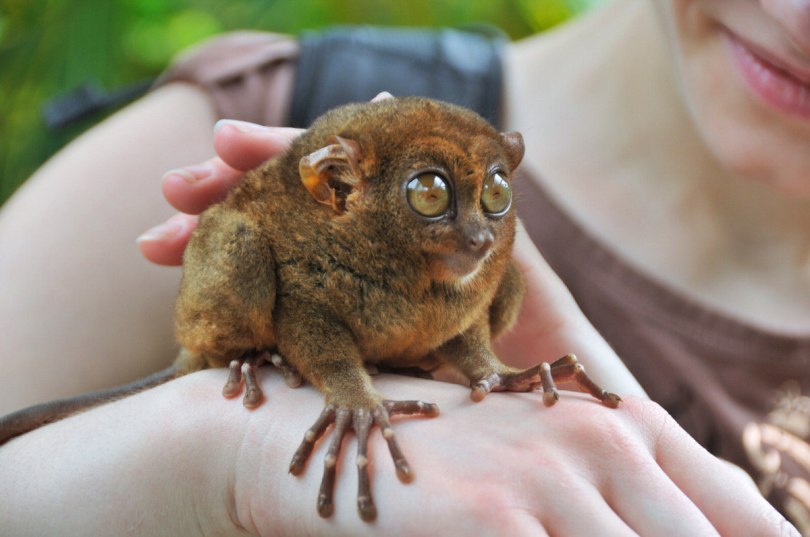
Tarsio, da “Poems New and Collected”, Wislawa Szymborska

Io, tarsio, figlio di tarsio
nipote e pronipote di tarsio,
piccola bestiola, fatta di due pupille
e d’un resto di stretta necessità;
scampato per miracolo ad altre trasformazioni,
perché come leccornia non valgo niente,
per i colli di pelliccia ce n’è di più grandi,
le mie ghiandole non portano fortuna,
i concerti si tengono senza le mie budella;
io, tarsio,
siedo vivo sul dito di un uomo.

Buongiorno, mio signore,
che cosa mi darai
per non dovermi togliere nulla?
Per la tua magnanimità con che mi premierai?
Che prezzo darai a me, che non ho prezzo,
per le pose che assumo per farti sorridere?

Il mio signore è buono –
il mio signore è benigno –
chi ne darebbe testimonianza, se non ci fossero
animali immeritevoli di morte?
Voi stessi, forse?
Ma ciò che già sapete di voi
basterà per una notte insonne da stella a stella.

E solo noi, pochi, non spogliati della pelliccia,
non staccati dalle ossa, non privati delle piume,
rispettati in aculei, scaglie, corna, zanne,
e in ogni altra cosa che ci venga
dall’ingegnosa proteina,
siamo – mio signore – il tuo sogno
che ti assolve per un breve istante.

Io, tarsio, padre e nonno di tarsio,
piccola bestiola, quasi metà di qualcosa,
il che comunque è un tutto non peggiore di altri;
così lieve che i rametti si sollevano sotto di me
e da tempo avrebbero potuto portarmi in cielo,
se non dovessi ancora e ancora
cadere come una pietra dai cuori
ah, inteneriti;
io, tarsio,
so bene quanto occorra essere un tarsio.

Tarsier

I am a tarsier and a tarsier’s son,
the grandson and great-grandson of tarsiers,
a tiny creature, made up of two pupils
and whatever simply could not be left out;
miraculously saved from further alterations—
since I’m no one’s idea of a treat,
my coat’s too small for a fur collar,
my glands provide no bliss,
and concerts go on without my gut—
I, a tarsier,
sit living on a human fingertip.

Good morning, lord and master,
what will you give me
for not taking anything from me?
How will you reward me for your own magnanimity?
What price will you set on my priceless head
for the poses I strike to make you smile?

My good lord is gracious,
my good lord is kind.
Who else could bear such witness if there were
no creatures unworthy of death?
You yourselves, perhaps?
But what you’ve come to know about yourselves
will serve for a sleepless night from star to star.

And only we few who remain unstripped of fur,
untorn from bone, unplucked of soaring feathers,
esteemed in all our quills, scales, tusks, and horns,
and in whatever else that ingenious protein
has seen fit to clothe us with,
we, my lord, are your dream,
which finds you innocent for now.

I am a tarsier—the father and grandfather of tarsiers
a tiny creature, nearly half of something,
yet nonetheless a whole no less than others,
so light that twigs spring up beneath my weight
and might have lifted me to heaven long ago
if I hadn’t had to fall
time and again
like a stone lifted from hearts
grown oh so sentimental:
I, a tarsier,
know well how essential it is to be a tarsier.

(Trans. by Stanislaw Baranczak and Clare Cavanagh)
Nella moltitudine, Wislawa Szymborska

Sono quella che sono.
Un caso inconcepibile
come ogni caso.
In fondo avrei potuto avere
altri antenati;
e così avrei preso il volo
da un altro nido;
così da sotto un altro tronco
sarei strisciata fuori in squame.

Nel guardaroba della natura
c’è un mucchio di costumi:
di ragno, gabbiano, topo campagnolo.
Ognuno calza subito a pennello
e docilmente è indossato
finché non si consuma.

Anch’io non ho scelto,
ma non mi lamento.
Potevo essere qualcuno
molto meno a parte.
Qualcuno d’un formicaio, banco, sciame ronzante,
una scheggia di paesaggio sbattuta dal vento.

Qualcuno molto meno fortunato,
allevato per farne una pelliccia,
per il pranzo della festa,
qualcosa che nuota sotto un vetrino.

Un albero conficcato nella terra,
a cui si avvicina un incendio.

Un filo d’erba calpestato
dal corso di incomprensibili eventi.

Uno nato sotto una cattiva stella,
buona per altri.

E se nella gente destassi spavento,
o solo avversione,
o solo pietà?

Se al mondo fossi venuta
nella tribù sbagliata
e avessi tutte le strade precluse?

La sorte, finora,
mi è stata benigna.

Poteva non essermi dato
il ricordo dei momenti lieti.

Poteva essermi tolta
l’inclinazione a confrontare.

Potevo essere me stessa – ma senza stupore,
e ciò vorrebbe dire
qualcuno di totalmente diverso.

(Traduzione di Pietro Marchesani)

Among the Multitudes

I am who I am.
A coincidence no less unthinkable
than any other.

I could have different
ancestors, after all.
I could have fluttered
from another nest
or crawled bescaled
from another tree.

Nature’s wardrobe
holds a fair
supply of costumes:
Spider, seagull, field mouse.
Each fits perfectly right off
and is dutifully worn
into shreds.

I didn’t get a choice either,
but I can’t complain.
I could have been someone
much less separate.
Someone from an anthill, shoal, or buzzing swarm,
an inch of landscape ruffled by the wind.

Someone much less fortunate,
bred for my fur
or Christmas dinner,
something swimming under a square of glass.

A tree rooted to the ground
as the fire draws near.

A grass blade trampled by a stampede
of incomprehensible events.

A shady type whose darkness
dazzled some.

What if I’d prompted only fear,
Loathing,
or pity?

If I’d been born
in the wrong tribe
with all roads closed before me?

Fate has been kind
to me thus far.

I might never have been given
the memory of happy moments.

My yen for comparison
might have been taken away.

I might have been myself minus amazement,
that is,
someone completely different.

(Poems New and Collected 1957-1997, trans. by Stanislaw Baranczak and Clare Cavanagh)

Conversazione con una pietra, da “Sale”, Wislawa Szymborska

Busso alla porta della pietra
– Sono io, fammi entrare.
Voglio venirti dentro,
dare un’occhiata,
respirarti come l’aria.

– Vattene – dice la pietra.
Sono ermeticamente chiusa.
Anche fatte a pezzi
saremo chiuse ermeticamente.
Anche ridotte in polvere
non faremo entrare nessuno.

Busso alla porta della pietra.
– Sono io, fammi entrare.
Vengo per pura curiosità.
La vita è la sua unica occasione.
Vorrei girare per il tuo palazzo,
e visitare poi anche la foglia e la goccia d’acqua.
Ho poco tempo per farlo.
La mia mortalità dovrebbe commuoverti.

– Sono di pietra – dice la pietra
– E devo restare seria per forza.
Vattene via.
Non ho i muscoli per ridere.

Busso alla porta della pietra.
– Sono io, fammi entrare.
Dicono che in te ci sono grandi sale vuote,
mai viste, belle invano,
sorde, senza l’eco di alcun passo.
Ammetti che tu stessa ne sai poco.

– Sale grandi e vuote – dice la pietra
ma in esse non c’è spazio.
Belle, può darsi, ma al di là del gusto
dei tuoi poveri sensi.
Puoi conoscermi, però mai fino in fondo.
Con tutta la superficie mi rivolgo a te,
ma tutto il mio interno è girato altrove.

Busso alla porta della pietra
– Sono io, fammi entrare.
Non cerco in te un rifugio per l’eternità.
Non sono infelice.
Non sono senza casa.
Il mio mondo è degno di ritorno.
Entrerò e uscirò a mani vuote.
E come prova d’esserci davvero stata
porterò solo parole,
a cui nessuno presterà fede.

– Non entrerai – dice la pietra.-
Ti manca il senso del partecipare.
Nessun senso ti sostituirà quello del partecipare.
Anche una vista affilata fino all’onniveggenza
a nulla ti servirà senza il senso del partecipare.
Non entrerai, non hai che un senso di quel senso,
appena un germe, solo una parvenza.

Busso alla porta della pietra.
– Sono io, fammi entrare.
Non posso attendere duemila secoli
per entrare sotto il tuo tetto.

– Se non mi credi – dice la pietra –
rivolgiti alla foglia, dirà la stessa cosa.
Chiedi a una goccia d’acqua, dirà come la foglia.
Chiedi infine a un capello della tua testa.
Scoppio dal ridere, d’una immensa risata
che non so far scoppiare.

Busso alla porta della pietra.
– Sono io, fammi entrare.
– Non ho porta – dice la pietra.

(Traduzione di Pietro Marchesani)

Conversation with a Stone

I knock at the stone’s front door.
It’s only me, let me come in.
I want to enter your insides,
have a look round,
breathe my fill of you.”

“Go away, ” says the stone.
“I’m shut tight.
Even if you break me to pieces,
we’ll all still be closed.
You can grind us to sand,
we still won’t let you in.”

I knock at the stone’s front door.
“It’s only me, let me come in.
I’ve come out of pure curiosity.
Only life can quench it.
I mean to stroll through your palace,
then go calling on a leaf, a drop of water.
I don’t have much time.
My mortality should touch you.”

“I’m made of stone, ” says the stone,
“and must therefore keep a straight face.
Go away.
I don’t have the muscles to laugh.”

I knock at the stone’s front door.
“It’s only me, let me come in.
I hear you have great empty halls inside you,
unseen, their beauty in vain,
soundless, not echoing anyone’s steps.
Admit you don’t know them well yourself.”

“Great and empty, true enough, ” says the stone,
“But there isn’t any room.
Beautiful, perhaps, but not to the taste
of your poor senses.
You may get to know me, but you’ll never know me through.
My whole surface is turned toward you,
all my insides turned away.”

I knock at the stone’s front door.
“It’s only me, let me come in.
I don’t seek refuge for eternity.
I’m not unhappy.
I’m not homeless.
My world is worth returning to.
I’ll enter and exit empty-handed.
And my proof I was there
will be only words,
which no one will believe.”

“You shall not enter, ” says the stone.
“You lack the sense of taking part.
No other sense can make up for your missing sense of taking part.
Even site heightened to become all-seeing
will do you no good without a sense of taking part.
You shall not enter, you have only a sense of what that sense should be,
only its seed, imagination.”

I knock at the stone’s front door.
“It’s only me, let me come in.
I haven’t got two thousand centuries,
so let me come under your roof.”

“If you don’t believe me, ” says the stone,
“just ask the leaf, it will tell you the same.
Ask a drop of water, it will tell you what the leaf has said.
And, finally, ask a hair from your own head.
I am bursting with laughter, yes, vast laughter,
although I don’t know how to laugh.”

I knock at the stone’s front door.
“It’s only me, let me come in.”

“I don’t have a door, ” says the stone.

(Translated from Polish by Stanislaw Baranczak and Clare Cavanagh)

Nulla due volte, da “Appello allo yeti” (1957), Wislawa Szymborska

Nulla due volte accade
Né accadrà. Per tal ragione
Nasciamo senza esperienza,
moriamo senza assuefazione.

Anche agli alunni più ottusi
Della scuola del pianeta
Di ripeter non è dato
Le stagioni del passato.

Non c’è giorno che ritorni,
non due notti uguali uguali,
né due baci somiglianti,
né due sguardi tali e quali.

Ieri, quando il tuo nome
Qualcuno ha pronunciato,
mi è parso che una rosa
sbocciasse sul selciato.

Oggi che stiamo insieme,
ho rivolto gli occhi altrove.
Una rosa? Ma cos’è?
Forse pietra, o forse fiore?

Perché tu, ora malvagia,
dài paura e incertezza?
Ci sei – perciò devi passare.
Passerai – e in ciò sta la bellezza.

Cercheremo un’armonia,
sorridenti, fra le braccia,
anche se siamo diversi
come due gocce d’acqua.

(Traduzione di Pietro Marchesani)

Nothing twice

Nothing can ever happen twice.
In consequence, the sorry fact is
that we arrive here improvised
and leave without the chance to practice.

Even if there is no one dumber,
if you’re the planet’s biggest dunce,
you can’t repeat the class in summer:
this course is only offered once.

No day copies yesterday,
no two nights will teach what bliss is
in precisely the same way,
with precisely the same kisses.

One day, perhaps some idle tongue
mentions your name by accident:
I feel as if a rose were flung
into the room, all hue and scent.

The next day, though you’re here with me,
I can’t help looking at the clock:
A rose? A rose? What could that be?
Is it a flower or a rock?

Why do we treat the fleeting day
with so much needless fear and sorrow?
It’s in its nature not to stay:
Today is always gone tomorrow.

With smiles and kisses, we prefer
to seek accord beneath our star,
although we’re different (we concur)
just as two drops of water are.

(Translated by Clare Cavanagh and Stanislaw Baranczak)

Sulla morte, senza esagerare, da “Gente sul ponte” (1986), Wislawa Szymborska

Non s’intende di scherzi,
stelle, ponti,
tessitura, miniere, lavoro dei campi,
costruzione di navi e cottura di dolci.

Quando conversiamo del domani
intromette la sua ultima parola
a sproposito.

Non sa fare neppure ciò
che attiene al suo mestiere:
né scavare una fossa,
né mettere insieme una bara,
né rassettare il disordine che lascia.

Occupata a uccidere,
lo fa in modo maldestro,
senza metodo né abilità.
Come se con ognuno di noi stesse imparando.

Vada per i trionfi,
ma quante disfatte,
colpi a vuoto
e tentativi ripetuti da capo!

A volte le manca la forza
di far cadere una mosca in volo.
Più di un bruco
la batte in velocità.

Tutti quei bulbi, baccelli,
antenne, pinne, trachee,
piumaggi nuziali e pelame invernale
testimoniano i ritardi
del suo svogliato lavoro.

La cattiva volontà non basta
e perfino il nostro aiuto con guerre e rivoluzioni
è, almeno fin ora, insufficiente.

I cuori battono nelle uova.
Crescono gli scheletri dei neonati.
Dai semi spuntano le prime due foglioline,
e spesso anche grandi alberi all’orizzonte.

Chi ne afferma l’onnipotenza
è lui stesso la prova vivente
che essa onnipotente non è.

Non c’è vita
che almeno per un attimo
non sia immortale.

La morte
è sempre in ritardo di quell’attimo.

Invano scuote la maniglia
d’una porta invisibile.
A nessuno può sottrarre
il tempo raggiunto.

(Traduzione di Pietro Marchesani)

On Death, without Exaggeration

It can’t take a joke,
find a star, make a bridge.
It knows nothing about weaving, mining, farming,
building ships, or baking cakes.

In our planning for tomorrow,
it has the final word,
which is always beside the point.

It can’t even get the things done
that are part of its trade:
dig a grave,
make a coffin,
clean up after itself.

Preoccupied with killing,
it does the job awkwardly,
without system or skill.
As though each of us were its first kill.

Oh, it has its triumphs,
but look at its countless defeats,
missed blows,
and repeat attempts!

Sometimes it isn’t strong enough
to swat a fly from the air.
Many are the caterpillars
that have outcrawled it.

All those bulbs, pods,
tentacles, fins, tracheae,
nuptial plumage, and winter fur
show that it has fallen behind
with its halfhearted work.

Ill will won’t help
and even our lending a hand with wars and coups d’etat
is so far not enough.

Hearts beat inside eggs.
Babies’ skeletons grow.
Seeds, hard at work, sprout their first tiny pair of leaves
and sometimes even tall trees fall away.

Whoever claims that it’s omnipotent
is himself living proof
that it’s not.

There’s no life
that couldn’t be immortal
if only for a moment.

Death
always arrives by that very moment too late.

In vain it tugs at the knob
of the invisible door.
As far as you’ve come
can’t be undone.

(Translated from Polish by S. Baranczak & C. Cavanagh)

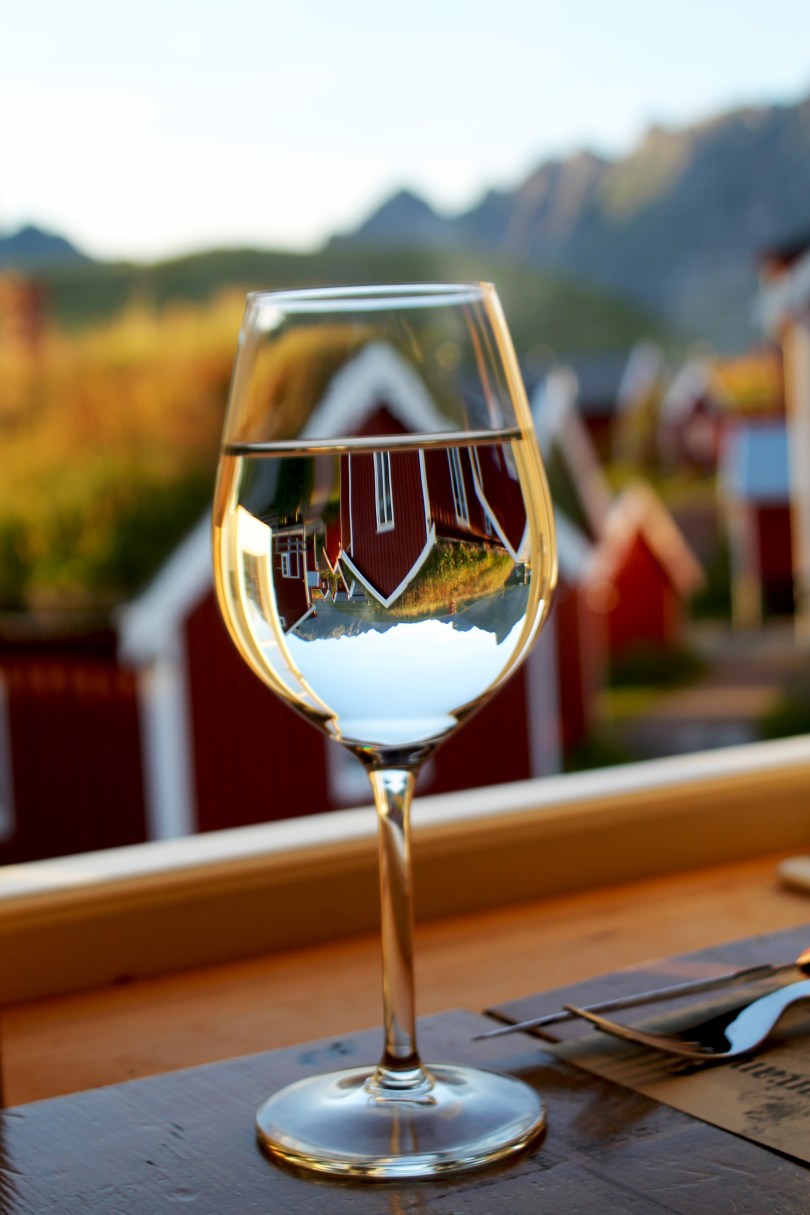
Accanto a un bicchiere di vino, da “Sale”, Wislawa Szymborska

Con uno sguardo mi ha resa più bella,
e io questa bellezza l’ho fatta mia.
Felice, ho inghiottito una stella.

Ho lasciato che mi immaginasse
a somiglianza del mio riflesso
nei suoi occhi. Io ballo, io ballo
nel battito di ali improvvise.

Il tavolo è tavolo, il vino è vino
nel bicchiere che è un bicchiere
e sta lì dritto sul tavolo.
Io invece sono immaginaria,
incredibilmente immaginaria,
immaginaria fino al midollo.

Gli parlo di tutto ciò che vuole:
delle formiche morenti d’amore
sotto la costellazione del soffione.
Gli giuro che una rosa bianca,
se viene spruzzata di vino, canta.

Mi metto a ridere, inclino il capo
con prudenza, come per controllare
un’invenzione. E ballo, ballo
nella pelle stupita, nell’abbraccio
che mi crea.

Eva dalla costola, Venere dall’onda,
Minerva dalla testa di Giove
erano più reali.

Quando lui non mi guarda,
cerco la mia immagine
sul muro. E vedo solo
un chiodo, senza il quadro.

(Traduzione di Pietro Marchesani)

Drinking Wine

He looked, and gave me beauty,
and I took it as if mine.
Happy, I swallowed a star.

I allowed myself to be
invented in the likeness
of the reflection in his eyes.
I am dancing, dancing
in the flutter of sudden wings.

A table is a table.
Wine is wine in a glass
that is just a glass and stands
standing on a table. While
I am imaginary
to the point of no belief,
imaginary
to the point of blood.

I am telling him
what he want to hear: ants
dying of love under
the constellation of the dandelion.
I swear that a white rose,
sprinkled with wine, sings.

I am laughing, tilting
my head carefully
as if checking an invention
I am dancing, dancing
in astonished skin, in
an embrace that creates me.

Eve from a rib, Venus from sea-foam,
Minerva from Jove’s head––
all were more real than I.

When he stops looking at me
I search for my reflection
on a wall. I see only
a nail from which a picture
has been removed

(Translated from Polish by Graźyna Drabik and Sharon Olds)

Foglietto illustrativo, da “Elogio dei Sogni”, Wislawa Szymborska

Sono un tranquillante,
Agisco in casa,
funziono in ufficio,
affronto gli esami,
mi presento all’udienza,
incollo con cura le tazze rotte –
devi solo prendermi,
farmi sciogliere sotto la lingua,
devi solo mandarmi giù
con un sorso d’acqua.

So come trattare l’infelicità,
come sopportare una cattiva notizia,
ridurre l’ingiustizia,
rischiarare l’assenza di Dio,
scegliere un bel cappellino da lutto.
Che cosa aspetti –
fidati della pietà chimica.

Sei un uomo (una donna) ancora giovane,
dovresti sistemarti in qualche modo.
Chi ha detto che la vita va vissuta con coraggio?
Consegnami il tuo abisso –
lo imbottirò di sonno.
Mi sarai grato (grata) per la caduta in piedi.

Vendimi la tua anima.
Un altro acquirente non capiterà.
Un altro diavolo non c’è più.

(Traduzione di Pietro Marchesani)

Advertisement

I’m a tranquilizer.
I’m effective at home.
I work in the office.
I can take exams
on the witness stand.
I mend broken cups with care.
All you have to do is take me,
let me melt beneath your tongue,
just gulp me
with a glass of water.

I know how to handle misfortune,
how to take bad news.
I can minimize injustice,
lighten up God’s absence,
or pick the widow’s veil that suits your face.
What are you waiting for—
have faith in my chemical compassion.

You’re still a young man/woman.
It’s not too late to learn how to unwind.
Who said
you have to take it on the chin?

Let me have your abyss.
I’ll cushion it with sleep.
You’ll thank me for giving you
four paws to fall on.

Sell me your soul.
There are no other takers.

There is no other devil anymore.

(Translated by Stanisław Barańczak)

L’odio, da “La fine e l’inizio” (1993), Wislawa Szymborska

Guardate com’è sempre efficiente,
come si mantiene in forma
nel nostro secolo l’odio.
Con quanta facilità supera gli ostacoli.
Come gli è facile avventarsi, agguantare.

Non è come gli altri sentimenti.
Insieme più vecchio e più giovane di loro.
Da solo genera le cause
che lo fanno nascere.
Se si addormenta, il suo non è mai un sonno eterno.
L’insonnia non lo indebolisce, ma lo rafforza.

Religione o non religione –
purché ci si inginocchi per il via.
Patria o no –
purché si scatti alla partenza.
Anche la giustizia va bene all’inizio.
Poi corre tutto solo.
L’odio. L’odio.
Una smorfia di estasi amorosa
gli deforma il viso.

Oh, quegli altri sentimenti –
malaticci e fiacchi.
Da quando la fratellanza
può contare sulle folle?
La compassione è mai
giunta prima al traguardo?
Il dubbio quanti volenterosi trascina?
Lui solo trascina, che sa il fatto suo.

Capace, sveglio, molto laborioso.
Occorre dire quante canzoni ha composto?
Quante pagine ha scritto nei libri di storia?
Quanti tappeti umani ha disteso
su quante piazze, stadi?

Diciamoci la verità:
sa creare bellezza.
Splendidi i suoi bagliori nella notte nera.
Magnifiche le nubi degli scoppi nell’alba rosata.
Innegabile è il pathos delle rovine
e l’umorismo grasso
della colonna che vigorosa le sovrasta.

È un maestro del contrasto
tra fracasso e silenzio,
tra sangue rosso e neve bianca.
E soprattutto non lo annoia mai
il motivo del lindo carnefice
sopra la vittima insozzata.

In ogni istante è pronto a nuovi compiti.
Se deve aspettare aspetterà.
Lo dicono cieco. Cieco?
Ha la vista acuta del cecchino
e guarda risoluto al futuro.
– lui solo.

(Traduzione di Pietro Marchesani)

Hatred

See how efficient it still is,
how it keeps itself in shape—
our century’s hatred.
How easily it vaults the tallest obstacles.
How rapidly it pounces, tracks us down.

It’s not like other feelings.
At once both older and younger.
It gives birth itself to the reasons
that give it life.
When it sleeps, it’s never eternal rest.
And sleeplessness won’t sap its strength; it feeds it.

One religion or another –
whatever gets it ready, in position.
One fatherland or another –
whatever helps it get a running start.
Justice also works well at the outset
until hate gets its own momentum going.
Hatred. Hatred.
Its face twisted in a grimace
of erotic ecstasy…

Hatred is a master of contrast-
between explosions and dead quiet,
red blood and white snow.
Above all, it never tires
of its leitmotif – the impeccable executioner
towering over its soiled victim.

It’s always ready for new challenges.
If it has to wait awhile, it will.
They say it’s blind. Blind?
It has a sniper’s keen sight
and gazes unflinchingly at the future
as only it can.

(Translated by Stanislaw Baranczak and Clare Cavanagh)

Reciprocità, Wislawa Szymborska

Ci sono cataloghi di cataloghi.
Poesie su poesie.
Ci sono drammi su attori recitati da attori.
Lettere in risposta a lettere.
Parole che spiegano parole.
Cervelli impegnati a studiare il cervello.
Ci sono tristezze contagiose come il riso.
Carte nate da carte macerate.
Sguardi veduti.
Casi declinati da casi.
Fiumi grandi per il copioso contributo di piccoli.
Foreste infestate da foreste.
Macchine destinate a produrre macchine.
Sogni che all’improvviso ci destano da sogni.
Una salute di ferro necessaria a riacquistare la salute.
Scale che portano giù come portano su.
Occhiali per cercare occhiali.
L’inspirazione e l’espirazione del respiro.
E ci sia anche, almeno di tanto in tanto,
l’odio dell’odio.
Perchè alla fin fine
c’è l’ignoranza dell’ignoranza
E mani ingaggiate per lavarsene le mani.

(Trad. Giovanna Tomassucci)

Reciprocity

There are catalogues of catalogues.
There are poems about poems.
There are plays about actors played by actors.
Letters due to letters.
Words used to clarify words.
Brains occupied with studying brains.
There are griefs as infectious as laughter.
Papers emerging from waste papers.
Seen glances.
Conditions conditioned by the conditional.
Large rivers with major contributions from small ones.
Forests grown over and above by forests.
Machines designed to make machines.
Dreams that wake us suddenly from dreams.
Health needed for regaining health.
Stairs leading as much up as down.
Glasses for finding glasses.
Inspiration born of expiration.
And even if only from time to timehatred of hatred.
All in all,
ignorance of ignorance
and hands employed to wash hands.

(Translated from Polish by Clare Cavanagh)

Nuvole, da “Elogio dei sogni”, Wislawa Szymborska

Dovrei essere molto veloce
nel descrivere le nuvole –
già dopo una frazione di secondo
non sono più quelle, stanno diventando altre.

La loro caratteristica è
non ripetersi mai
in forme, sfumature, pose, disposizione.

Non gravate della memoria di nulla,
si librano senza sforzo sui fatti.

Ma quali testimoni di alcunché –
si disperdono all’istante da tutte le parti.

In confronto alle nuvole
la vita sembra solida,
pressoché duratura e quasi eterna.

Di fronte alle nuvole
perfino un sasso sembra un fratello
su cui si può contare,
loro invece sono solo cugine lontane e volubili.

Gli uomini esistano pure, se vogliono,
e poi uno dopo l’altro muoiano,
loro, le nuvole,
non hanno niente a che vedere
con tutta questa faccenda
molto strana.
Al di sopra di tutta la tua vita
e della mia, ancora incompleta,
sfilano fastose così come già sfilavano.

Non devono insieme a noi morire,
né devono essere viste per fluttuare.

(Traduzione di Pietro Marchesani)

Clouds

I’d have to be really quick
to describe clouds –
a split second’s enough
for them to start being something else.

Their trademark:
they don’t repeat a single
shape, shade, pose, arrangement.

Unburdened by memory of any kind,
they float easily over the facts.

What on earth could they bear witness to?
They scatter whenever something happens.

Compared to clouds,
life rests on solid ground,
practically permanent, almost eternal.

Next to clouds
even a stone seems like a brother,
someone you can trust,
while they’re just distant, flighty cousins.

Let people exist if they want,
and then die, one after another:
clouds simply don’t care
what they’re up to
down there.

And so their haughty fleet
cruises smoothly over your whole life
and mine, still incomplete.

They aren’t obliged to vanish when we’re gone.
They don’t have to be seen while sailing on.

(Translated from Polish by Stanislaw Baranczak and Clare Cavanagh)