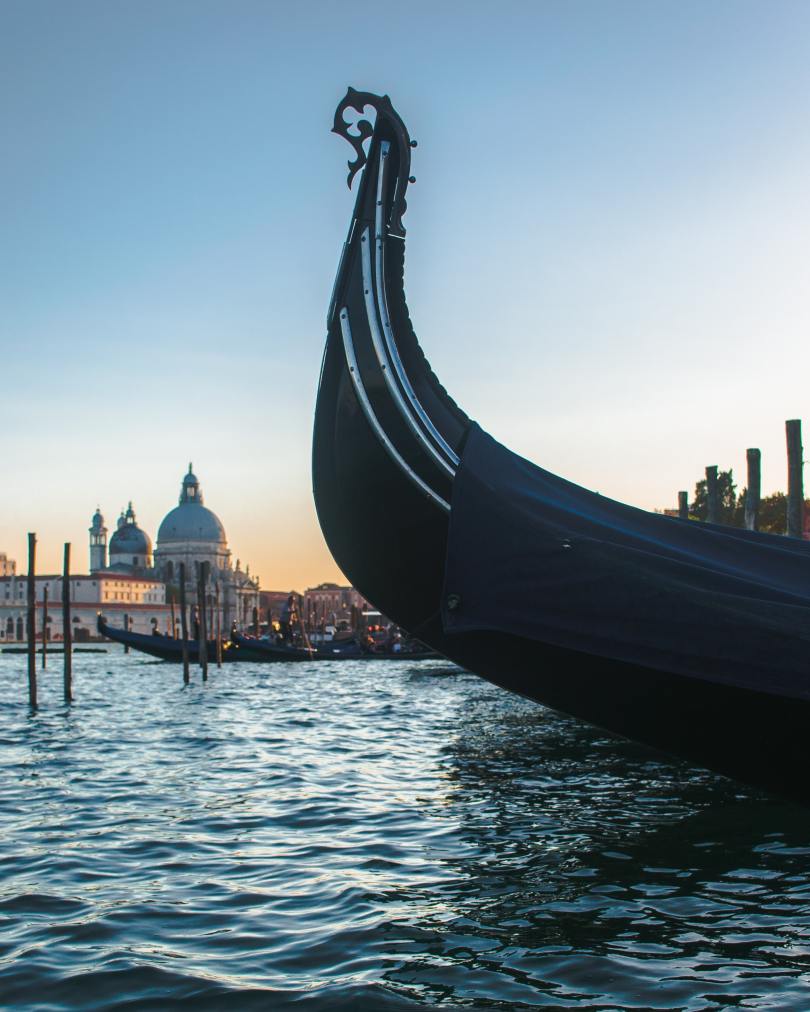
Colombaia dorata sull’acqua, tenera e verde struggente, e una brezza marina che spazza la scia sottile delle barche nere.
Che dolci, strani volti tra la folla, nelle botteghe lucenti balocchi: un leone col libro su un cuscino a ricami, un leone col libro su una colonna di marmo.
Come su di un’antica tela scolorita, il cielo azzurro fioco si rapprende… ma non si è stretti in quest’angustia, e non opprimono l’umido e l’afa.
Венеция
Золотая голубятня у воды, Ласковой и млеюще-зеленой;2 Заметает ветерок соленый Черных лодок узкие следы.
Сколько нежных, странных лиц в толпе. В каждой лавке яркие игрушки: С книгой лев на вышитой подушке, С книгой лев на мраморном столбе.
Как на древнем, выцветшем холсте, Стынет небо тускло-голубое… Но не тесно в этой тесноте И не душно в сырости и зное.
Август 1912
Venice
Gold dovecote by waters, Tender and dazzlingly green; A salt-breeze sweeps away The gondola’s narrow wake.
Such sensitive, strange eyes in the streets, The bright toys in the shops: A lion with a book, on a lace pillow, A lion with a book, on a marble pillar.
As in an ancient, faded canvas, The sky is a cool, dull blue… But one’s not crushed in the crowd, Nor stifled in this damp heat.
Ci dev’essere un colore da scoprire, un’unione nascosta di parole, ci dev’essere una chiave per aprire la porta di questo muro smisurato.
Ci dev’essere un’isola più a sud, una corda più tesa e risonante, un altro mare che nuoti un altro azzurro, un altro tono di voce per cantare.
Poesia tardiva che non riesci a dire neppure la metà di quel che sai: non taci quando puoi e non rinneghi questo corpo casuale in cui non trovi posto.
(Traduzione di Fernanda Toriello)
Há-de haver
Há-de haver uma cor por descobrir, Um juntar de palavras escondido, Há de haver uma chave para abrir A porta deste muro desmedido.
Há-de haver uma ilha mais ao sul, Uma corda mais tensa e ressoante, Outro mar que nade noutro azul, Outra altura de voz que melhor cante.
Poesia tardia que não chegas A dizer nem metade do que saber: Não calas, quando podes, nem renegas Este corpo de acaso em que não cabes.
_________________________________
Dimash Kudaibergen – S.O.S d’un terrien en détresse / Live dans Les Années Bonheur
Dimash Kudaibergen è un cantante kazako, cantautore e polistrumentista nato ad Aktobe il 24 Maggio 1994. Ha effettuato studi universitari sia in musica classica sia in musica contemporanea; dotato di orecchio assoluto, si distingue per la precisione nell’attacco delle note, la flessibilità nella dinamica e per il suo registro musicale che si estende per sei ottave e cinque semitoni. Sebbene gli fosse stata offerta una posizione all’Opera di Astana ha preferito una carriera nel panorama musicale contemporaneo, incorporando elementi di musica classica, musica tradizionale kazaka e musica pop. La definitiva esplosione a livello internazionale la si deve soprattutto alla fortunata partecipazione come ospite straniero al concorso televisivo cinese The Singer 2017, mostrando al mondo intero le sue immense capacità, che saranno definite in seguito dagli esperti stile Crossover (Alien), fin dalla prima puntata dando una nuova vita alla storica canzone francese di Daniel Balavoine “S.O.S. d’un terrien en détresse” definita dai critici una tra le 5 canzoni più difficili al mondo. (dal sito Dimash Italia)
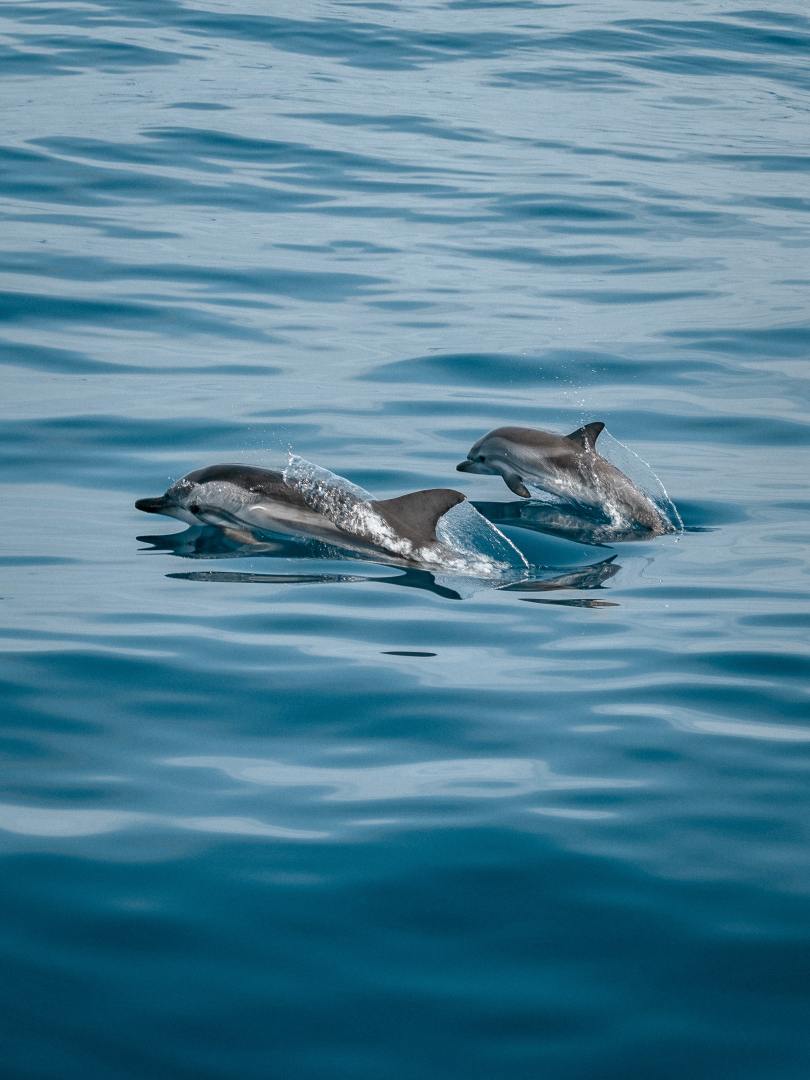
Il giorno della fine del mondo L’ape gira sul fiore del nasturzio, il pescatore ripara la rete luccicante. Nel mare saltano allegri delfini, Giovani passeri si appoggiano alle grondaie E il serpente ha la pelle dorata che ci si aspetta.
Il giorno della fine del mondo Le donne vanno per i campi sotto l’ombrello, L’ubriaco si addormenta sul ciglio dell’aiuola, I fruttivendoli gridano in strada E la barca dalla vela gialla si accosta all’isola, Il suono del violino si prolunga nell’aria E disserra la notte stellata.
E chi si aspettava folgori e lampi, Rimane deluso. E chi si aspettava segni e trombe di arcangeli, Non crede che già stia avvenendo. Finché il sole e la luna sono su in alto, Finché il calabrone visita la rosa, Finché nascono rosei bambini, Nessuno crede che già stia avvenendo.
Solo un vecchietto canuto, che sarebbe un profeta, Ma profeta non è, perché ha altro da fare, Dice legando i pomodori: Non ci sarà altra fine del mondo, Non ci sarà altra fine del mondo.
(Traduzione di Pietro Marchesani)
Piosenka o końcu świata
W dzień końca świata Pszczoła krąży nad kwiatem nasturcji, Rybak naprawia błyszczącą sieć. Skaczą w morzu wesołe delfiny, Młode wróble czepiają się rynny I wąż ma złotą skórę, jak powinien mieć.
W dzień końca świata Kobiety idą polem pod parasolkami, Pijak zasypia na brzegu trawnika, Nawołują na ulicy sprzedawcy warzywa I łódka z żółtym żaglem do wyspy podpływa, Dźwięk skrzypiec w powietrzu trwa I noc gwiaździstą odmyka.
A którzy czekali błyskawic i gromów, Są zawiedzeni. A którzy czekali znaków i archanielskich trąb, Nie wierzą, że staje się już. Dopóki słońce i księżyc są w górze, Dopóki trzmiel nawiedza różę, Dopóki dzieci różowe się rodzą, Nikt nie wierzy, że staje się już.
Tylko siwy staruszek, który byłby prorokiem, Ale nie jest prorokiem, bo ma inne zajęcie, Powiada przewiązując pomidory: Innego końca świata nie będzie, Innego końca świata nie będzie.
A Song on the End of the World
On the day the world ends A bee circles a clover, A fisherman mends a glimmering net. Happy porpoises jump in the sea, By the rainspout young sparrows are playing And the snake is gold-skinned as it should always be.
On the day the world ends Women walk through the fields under their umbrellas, A drunkard grows sleepy at the edge of a lawn, Vegetable peddlers shout in the street And a yellow-sailed boat comes nearer the island, The voice of a violin lasts in the air And leads into a starry night.
And those who expected lightning and thunder Are disappointed. And those who expected signs and archangels’ trumps Do not believe it is happening now. As long as the sun and the moon are above, As long as the bumblebee visits a rose, As long as rosy infants are born No one believes it is happening now.
Only a white-haired old man, who would be a prophet Yet is not a prophet, for he’s much too busy, Repeats while he binds his tomatoes: There will be no other end of the world, There will be no other end of the world.
Warsaw, 1944
(Translated by Anthony Miłosz)
________________________________
Aria sulla Quarta Corda, J S. Bach – Anastasiya Petryshak, Violino – Milano, Basilica di Sant’Ambrogio – 18 dicembre 2015
Doveva essere migliore degli altri il nostro ventesimo secolo. Non farà più in tempo a dimostrarlo, ha gli anni contati, il passo malfermo, il fiato corto.
Sono ormai successe troppe cose che non dovevano succedere, e quel che doveva arrivare non è arrivato.
Ci si doveva avviare verso la primavera e la felicità, tra l’altro.
La paura doveva abbandonare i monti e le valli. La verità doveva raggiungere la meta prima della menzogna.
Alcune sciagure non dovevano più accadere, ad esempio la guerra e la fame, e così via.
Doveva essere rispettata l’inermità degli inermi, la fiducia e via dicendo.
Chi voleva gioire del mondo si trova di fronte a un’impresa impossibile.
La stupidità non è ridicola. La saggezza non è allegra. La speranza non è più quella giovane ragazza et cetera, purtroppo.
Dio doveva finalmente credere nell’uomo buono e forte, ma il buono e il forte restano due esseri distinti.
Come vivere? – mi ha scritto qualcuno a cui io intendevo fare la stessa domanda.
Da capo, e allo stesso modo di sempre, come si è visto sopra, non ci sono domande più pressanti delle domande ingenue.
(Traduzione di Pietro Marchesani)
The Century’s Decline
Our twentieth century was going to improve on the others. It will never prove it now, now that its years are numbered, its gait is shaky, its breath is short.
Too many things have happened that weren’t supposed to happen, and what was supposed to come about has not.
Happiness and spring, among other things, were supposed to be getting closer.
Fear was expected to leave the mountains and the valleys. Truth was supposed to hit home before a lie.
A couple of problems weren’t going to come up anymore: humger, for example, and war, and so forth.
There was going to be respect for helpless people’s helplessness, trust, that kind of stuff.
Anyone who planned to enjoy the world is now faced with a hopeless task.
Stupidity isn’t funny. Wisdom isn’t gay. Hope isn’t that young girl anymore, et cetera, alas.
God was finally going to believe in a man both good and strong, but good and strong are still two different men.
“How should we live?” someone asked me in a letter. I had meant to ask him the same question.
Again, and as ever, as may be seen above, the most pressing questions are naïve ones.
(Translated from Polish by Stanislaw Baranczak and Clare Cavanagh)
Perché amo gli animali? Perché io sono uno di loro. Perché io sono la cifra indecifrabile dell’erba, il panico del cervo che scappa, sono il tuo oceano grande e sono il più piccolo degli insetti. E conosco tutte le tue creature: sono perfette in questo amore che corre sulla terra per arrivare a te.
______________________________
Yuja Wang & David Fung: Saint-Saëns Carnival of the Animals – At Hollywood Bowl, Los Angeles Philharmonic conducted by Gustavo Dudamel, March 5, 2021 (4:45 V. The Elephant – 7:00 VII. Aquarium – 15:35 XIII. The Swan)
La mia vita non è quest’ora ripida che mi vedi scalare in fretta. Sono un albero innanzi all’orizzonte, una delle mie molte bocche, e la prima a chiudersi.
Sono l’attimo tra due suoni che male s’accordano perché il suono morte vuole emergere.
Ma nella pausa buia si riconciliano entrambi tremando. E bello resta il canto.
(Traduzione di Lorenzo Gobbi)
Mein Leben ist nicht diese steile Stunde
Mein Leben ist nicht diese steile Stunde, darin du mich so eilen siehst. Ich bin ein Baum vor meinem Hintergrunde, ich bin nur einer meiner vielen Munde und jener, welcher sich am frühsten schließt.
Ich bin die Ruhe zwischen zweien Tönen, die sich nur schlecht aneinander gewöhnen: denn der Ton Tod will sich erhöhn –
Aber im dunklen Intervall versöhnen sich beide zitternd. Und das Lied bleibt schön.
__________________________________
Handel Dixit Dominus / musicAeterna and Teodor Currentzis – 22 dic 2011
Sono uscita di notte, da sola; Il sangue giovane che scorreva al di là del mare Sembrava aver infradiciato le ali del mio spirito – Duramente sopportavo il mio dolore.
Ma quando ho sollevato la testa Dalle ombre tremanti sulla neve, Ho visto Orione, verso est, Brillare costante come un tempo.
Dalle finestre della casa di mio padre, Sognando i miei sogni nelle notti d’inverno, Guardavo Orione quand’ero bambina Al di sopra delle luci di un’altra città.
Passano gli anni, passano i sogni, passa anche la giovinezza Il cuore del mondo sotto il peso delle sue guerre si spezza, Tutto è cambiato, tranne, verso est, La fedele bellezza delle stelle.
Winter Stars
I went out at night alone; The young blood flowing beyond the sea Seemed to have drenched my spirit’s wings— I bore my sorrow heavily.
But when I lifted up my head From shadows shaken on the snow, I saw Orion in the east Burn steadily as long ago.
From windows in my father’s house, Dreaming my dreams on winter nights, I watched Orion as a girl Above another city’s lights.
Years go, dreams go, and youth goes too, The world’s heart breaks beneath its wars, All things are changed, save in the east The faithful beauty of the stars.
_____________________________
Dutch harpist and composer Remy van Kesteren performs Nils Frahm’s “Hammers” from his album “Tomorrow Eyes” live at Yellow Lounge in Berlin, April 2019
Per essere grande, sii intero: niente di te esagera o escludi. Sii completo in ogni cosa. Poni quanto sei nel minimo che fai. Così in ogni lago la luna intera splende, perché alta vive.
14-2-1933 Fernando Pessoa, da Odi e poesie di Ricardo Reis, in Un’affollata solitudine – Poesie eteronime, a cura di Pietro Ceccucci, Bur, 2012
Para ser grande, sê inteiro…
Para ser grande, sê inteiro: nada Teu exagera ou exclui. Sê todo em cada coisa. Põe quanto és No mínimo que fazes. Assim em cada lago a lua toda Brilha, porque alta vive.
To be great, be whole
To be great, be whole; exclude Nothing, exaggerate nothing that is you. Be whole in everything. Put all you are Into the smallest thing you do. The whole moon gleams in every pool, It rides so high.
From “Poems of Fernando Pessoa,” translated and edited by Edwin Honig and Susan M. Brown
____________________________
Alexandre Kantorow plays Rachmaninov’s Sonata No. 1 in D Minor, Op. 28 – Verbier Festival 2021
Crocchiante la neve brillante sussurrava, scricchiolando sotto i nostri piedi; Dietro di noi mentre camminavamo lungo la strada panoramica, le nostre ombre danzavano, forme fantastiche in un blu vivido. Attraverso il lago i pattinatori volavano avanti e indietro, con curve strette tessendo una fragile rete invisibile. In estasi la terra bevve la luce argentea del sole; In estasi i pattinatori bevvero il vino della velocità; In estasi ridevamo Bevendo il vino dell’amore. La musica della nostra gioia non aveva forse suonato la sua nota più alta? Ma no, perché all’improvviso, con gli occhi alzati, hai detto: “Oh guarda!” Là, sul nero ramo di un acero macchiato di neve, impavido e allegro come il nostro amore, Una ghiandaia azzurra ha alzato la cresta! Oh chi può dire la portata della gioia O definire i limiti della bellezza?
A Winter Bluejay
Crisply the bright snow whispered, Crunching beneath our feet; Behind us as we walked along the parkway, Our shadows danced, Fantastic shapes in vivid blue. Across the lake the skaters Flew to and fro, With sharp turns weaving A frail invisible net. In ecstacy the earth Drank the silver sunlight; In ecstacy the skaters Drank the wine of speed; In ecstacy we laughed Drinking the wine of love. Had not the music of our joy Sounded its highest note? But no, For suddenly, with lifted eyes you said, “Oh look!” There, on the black bough of a snow flecked maple, Fearless and gay as our love, A bluejay cocked his crest! Oh who can tell the range of joy Or set the bounds of beauty?
Mai Prigioniero sarai – Ove la Libertà – Abiti – in Te –
(Traduzione di Giuseppe Ierolli)
No Prisoner be –
No Prisoner be – Where Liberty – Himself – abide with Thee –
_____________________________________
Gina Alice is a piano virtuoso who’s also married to superstar pianist Lang Lang. She plays Rachmaninov’s exquisite Prelude in G at London’s Steinway Hall.





 nonsolobiancoenero