I kookaburra, Mary Oliver

In ogni cuore c’è un codardo e un procrastinatore.
In ogni cuore c’è un dio dei fiori che aspetta solo
di venir fuori dalla nuvola e alzare le ali.
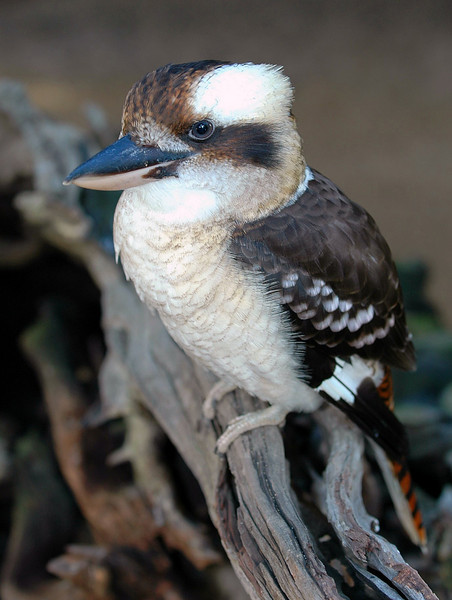
I kookaburra, martin pescatori, schiacciati contro il bordo della gabbia, mi chiesero di aprire lo sportello.
Dopo anni, mi sveglio la notte e mi ricordo di come dissi loro, No, e me ne andai.
Avevano gli occhi bruni dei cani di buon cuore.
Non volevano niente di speciale, solo rincasare volando al loro fiume.
Ora suppongo che la grande oscurità li abbia avvolti.
Quanto a me, ancora non sono nemmeno un dio dei fiori più pallidi.
E nient’altro è cambiato.
Qualcuno getta le loro ossa bianche sul mucchio di letame.
Il sole scintilla sul chiavistello della gabbia.
Giaccio nel buio, il cuore che martella.

The Kookaburras

In every heart there is a coward and a procrastinator.
In every heart there is a god of flowers, just waiting
to stride out of a cloud and lift its wings.
The kookaburras, pressed against the edge of their cage,
asked me to open the door.
Years later I remember how I didn’t do it,
how instead I walked away.
They had the brown eyes of soft-hearted dogs.
They didn’t want to do anything so extraordinary, only to fly
home to their river.
By now I suppose the great darkness has covered them.
As for myself, I am not yet a god of even the palest flowers.
Nothing else has changed either.
Someone tosses their white bones to the dung-heap.
The sun shines on the latch of their cage.
I lie in the dark, my heart pounding.

Completamente, da “Viole nere”, Tess Gallagher

A quei tempi il mio spirito un’ape –
il mondo, un gigantesco ronzio che sbavava
dolcezza. Dolce da scoppiare.
Amore davanti. Amore sotto di me.

Ma soprattutto, l’estasi contraria
mi rimbalzava dentro – lo sterile fracasso
che l’amore alla fine fa mentre s’avvia al silenzio.

Completamente – esser distrutta nel regno
dei fiori. Completamente fradicia, trafitta
in un vuoto di pace.
Senza ricordare carezza esterna
o tenera occhiata.

È così che succede scontrandosi con l’essenza
senza volto del cuore. Non ci sono contorni. Solo
un invivibile carminio. Solo l’affollato braille
di un’impavida premonizione
che porge goffa l’altra guancia.

(Traduzione di Francesco Duranti)

Utterly

My spirit was a bee in those days –
the world one gigantic buzz, drooling
sweetness. Sweet unto bursting.
Love ahead. Love under me.

But most of all, that contrary ecstasy
ricocheting inside – the barren racket
love finally makes on its way to silence.

Utterly – to be destroyed in the kingdom
of flowers. Utterly sodden, sundered
into a blank of peace.
Not to remember outside caress
or tender look.

It’s like that against the facelessness
of the heart. No contours. Only
unlivable crimson. Only the clustered braille
of a fearless premonition
fumbling the turned cheek.

Pioggia, Federico Garcia Lorca

La pioggia ha un vago segreto di tenerezza
una sonnolenza rassegnata e amabile,
una musica umile si sveglia con lei
e fa vibrare l’anima addormentata del paesaggio.

È un bacio azzurro che riceve la Terra,
il mito primitivo che si rinnova.
Il freddo contatto di cielo e terra vecchi
con una pace da lunghe sere.

È l’aurora del frutto. Quella che ci porta i fiori
e ci unge con lo spirito santo dei mari.
Quella che sparge la vita sui seminati
e nell’anima tristezza di ciò che non sappiamo.

La nostalgia terribile di una vita perduta,
il fatale sentimento di esser nati tardi,
o l’illusione inquieta di un domani impossibile
con l’inquietudine vicina del color della carne.

L’amore si sveglia nel grigio del suo ritmo,
il nostro cielo interiore ha un trionfo di sangue,
ma il nostro ottimismo si muta in tristezza
nel contemplare le gocce morte sui vetri.

E son le gocce: occhi d’infinito che guardano
il bianco infinito che le generò.

Ogni goccia di pioggia trema sul vetro sporco
e vi lascia divine ferite di diamante.
Sono poeti dell’acqua che hanno visto e meditano
ciò che la folla dei fiumi ignora.

O pioggia silenziosa; senza burrasca, senza vento,
pioggia tranquilla e serena di campani e di dolce luce,
pioggia buona e pacifica, vera pioggia,
quando amorosa e triste cadi sopra le cose!

O pioggia francescana che porti in ogni goccia
anime di fonti chiare e di umili sorgenti!
Quando scendi sui campi lentamente
le rose del mio petto apri con i tuoi suoni.

Il canto primitivo che dici al silenzio
e la storia sonora che racconti ai rami
il mio cuore deserto li commenta
in un nero e profondo pentagramma senza chiave.

La mia anima ha la tristezza della pioggia serena,
tristezza rassegnata di cosa irrealizzabile,
ho all’orizzonte una stella accesa
e il cuore mi impedisce di contemplarla.

O pioggia silenziosa che gli alberi amano
e sei al piano dolcezza emozionante:
da’ all’anima le stesse nebbie e risonanze
che lasci nell’anima addormentata del paesaggio!

(Traduzione di Claudio Rendina)

Lluvia

La lluvia tiene un vago secreto de ternura,
algo de soñolencia resignada y amable,
una música humilde se despierta con ella
que hace vibrar el alma dormida del paisaje.

Es un besar azul que recibe la Tierra,
el mito primitivo que vuelve a realizarse.
El contacto ya frío de cielo y tierra viejos
con una mansedumbre de atardecer constante.

Es la aurora del fruto. La que nos trae las flores
y nos unge de espíritu santo de los mares.
La que derrama vida sobre las sementeras
y en el alma tristeza de lo que no se sabe.

La nostalgia terrible de una vida perdida,
el fatal sentimiento de haber nacido tarde,
o la ilusión inquieta de un mañana imposible
con la inquietud cercana del color de la carne.

El amor se despierta en el gris de su ritmo,
nuestro cielo interior tiene un triunfo de sangre,
pero nuestro optimismo se convierte en tristeza
al contemplar las gotas muertas en los cristales.

Y son las gotas: ojos de infinito que miran
al infinito blanco que les sirvió de madre.

Cada gota de lluvia tiembla en el cristal turbio
y le dejan divinas heridas de diamante.
Son poetas del agua que han visto y que meditan
lo que la muchedumbre de los ríos no sabe.

¡Oh lluvia silenciosa, sin tormentas ni vientos,
lluvia mansa y serena de esquila y luz suave,
lluvia buena y pacifica que eres la verdadera,
la que llorosa y triste sobre las cosas caes!

¡Oh lluvia franciscana que llevas a tus gotas
almas de fuentes claras y humildes manantiales!
Cuando sobre los campos desciendes lentamente
las rosas de mi pecho con tus sonidos abres.

El canto primitivo que dices al silencio
y la historia sonora que cuentas al ramaje
los comenta llorando mi corazón desierto
en un negro y profundo pentágrama sin clave.

Mi alma tiene tristeza de la lluvia serena,
tristeza resignada de cosa irrealizable,
tengo en el horizonte un lucero encendido
y el corazón me impide que corra a contemplarte.

¡Oh lluvia silenciosa que los árboles aman
y eres sobre el piano dulzura emocionante;
das al alma las mismas nieblas y resonancias
que pones en el alma dormida del paisaje!

Enero de 1919 – Granada

Rain

The rain has a vague secret of tenderness,
something resignedly and amiably somnolent.
With it there awakes a humble music
that makes the sleeping soul of the landscape vibrate.

It is a blue kiss that the Earth receives,
the primal myth that once again comes true.
The already cold contact of the old sky and earth
with a gentleness like that of a perpetual coming of evening.

It is the dawn of the fruit. The dawn brought to us by the flowers,
anointing us with the holy spirit of the seas.
The dawn that sheds life upon the sown fields
and, in our soul, the sadness of the unknown.

The dreadful nostalgia for a wasted life,
the fatal feeling that you were born too late,
or the restless hope for an impossible morning
with the nearby restlessness of the flesh’s ache.

Love awakens in the gray of its rhythm,
our inner sky enjoys a triumph of blood,
but our optimism is changed to sadness
when we observe the dead drops on the panes.

And the drops are eyes of infinity which gaze
at the white infinity which served them as mother.

Each raindrop trembles on the clouded glass,
leaving behind on it divine diamond-scratches.
They are watery poets who have seen, and meditate on,
that which the multitude of rivers doesn’t know.

O silent rain without tempests or winds,
gentle, calm rain, like sheep bells and soft light,
good, peaceful rain – the real kind –
which falls on every object lovingly and sadly!

O Franciscan rain, carryig in your drops
the souls of bright fountains and humble springs!
When you descend slowly onto the fields
you open the roses of my breast with your sounds.

The primal song you sing to the silence
and the sonorous story you narrate to the boughs
are commented on tearfully by my barren heart
in a black, deep stave of music without a key.

My soul has the sadness of the calm rain,
a resigned sadness for something unattainable;
on my horizon I have a blazing star
but my heart keeps me from running to gaze at it.

O silent rain which the trees love,
you that are sweet execitement on the piano,
you lend my soul the same mist and resonances
which you give to the sleeping soul of the landscape!

(Translated by Stanley Appelbaum)
Tristezze della luna, da “Les fleurs du mal”, Charles Baudelaire

Più pigra sogna la luna stasera.
Come bellezza, su molli cuscini,
che accarezza distratta e leggera,
prima del sonno, le curve dei seni,

sul dorso serico delle valanghe,
morente, manda estenuati sospiri,
sperde il suo sguardo in visioni bianche
fluttuanti nell’azzurro come fiori.

Quando languida, oziosa, una furtiva
lacrima lascia che quaggiù arrivi,
un poeta, devoto, veglia, e afferra

nella sua mano quella goccia pallida,
iridata come scheggia d’opale,
lungi dal sole in sé la sotterra.

(Traduzione di Antonio Prete)

Tristesses de la lune

Ce soir, la lune rêve avec plus de paresse;
Ainsi qu’une beauté, sur de nombreux coussins,
Qui d’une main distraite et légère caresse
Avant de s’endormir le contour de ses seins,

Sur le dos satiné des molles avalanches,
Mourante, elle se livre aux longues pâmoisons,
Et promène ses yeux sur les visions blanches
Qui montent dans l’azur comme des floraisons.

Quand parfois sur ce globe, en sa langueur oisive,
Elle laisse filer une larme furtive,
Un poète pieux, ennemi du sommeil,

Dans le creux de sa main prend cette larme pâle,
Aux reflets irisés comme un fragment d’opale,
Et la met dans son coeur loin des yeux du soleil.

Sadness of the Moon

Tonight the moon dreams with more indolence,
Like a lovely woman on a bed of cushions
Who fondles with a light and listless hand
The contour of her breasts before falling asleep;

On the satiny back of the billowing clouds,
Languishing, she lets herself fall into long swoons
And casts her eyes over the white phantoms
That rise in the azure like blossoming flowers.

When, in her lazy listlessness,
She sometimes sheds a furtive tear upon this globe,
A pious poet, enemy of sleep,

In the hollow of his hand catches this pale tear,
With the iridescent reflections of opal,
And hides it in his heart afar from the sun’s eyes.

— William Aggeler, The Flowers of Evil (Fresno, CA: Academy Library Guild, 1954)

Sarà estate – prima o poi, Emily Dickinson

Sarà estate – prima o poi.
Donne – con parasoli –
uomini a passeggio – con canne d’India –
E bambine – con bambole –

Coloreranno il paesaggio pallido –
come un luminoso mazzo di fiori –
per quanto sommerso di pario –
il paese si stenda – oggi –

I lillà – piegati da molti anni –
dondoleranno carichi di violetto –
le api – non disprezzeranno il motivo –
che i loro avi – cantarono –

La rosa selvatica – arrosserà lo stagno –
l’aster – sulla collina
detterà – la sua moda perenne –
e le genziane pasquali – crinoline –

finché l’estate ripiegherà il suo miracolo –
come una donna la gonna –
o i sacerdoti – ripongono i simboli –
quando il sacramento – è finito –

(Traduzione di Massimo Bacigalupo)

It will be Summer – eventually

It will be Summer – eventually.
Ladies – with parasols –
Sauntering Gentlemen – with Canes –
And little Girls – with Dolls –
Will tint the pallid landscape –
As ‘twere a bright Boquet –
Tho’ drifted deep, in Parian –
The Village lies – today –

The Lilacs – bending many a year –
Will sway with purple load –
The Bees – will not despise the tune –
Their Forefathers – have hummed –

The Wild Rose – redden in the Bog –
The Aster – on the Hill
Her everlasting fashion – set –
And Covenant Gentians – frill –

Till Summer folds her miracle –
As Women – do – their Gown –
Of Priests – adjust the Symbols –
When Sacrament – is done –

Attimo, da “Attimo” (2002), Wislawa Szymborska

Cammino sul pendio d’una collina verde.
Erba, tra l’erba fiori
come in un quadretto per bambini.
Il cielo annebbiato, già tinto d’azzurro.
La vista si distende in silenzio sui colli intorno.

Come se qui mai ci fossero stati cambriano e siluriano,
rocce ringhianti l’una all’altra,
abissi gonfiati,
notti fiammeggianti
e giorni nei turbini dell’oscurità.

Come se di qua non si fossero spostate le pianure
in preda a febbri maligne,
brividi glaciali.

Come se solo altrove fossero ribolliti i mari
e si fossero rotte le sponde degli orizzonti.

Sono le nove e trenta, ora locale.
Tutto è al suo posto e in garbata concordia.
Nella valletta un piccolo torrente in quanto tale.
Un sentiero in forma di sentiero da sempre a sempre.
Un bosco dal sembiante di bosco pei secoli dei secoli, amen,
e in alto uccelli in volo nel ruolo di uccelli in volo.

Fin dove si stende la vista, qui regna l’attimo.
Uno di quegli attimi terreni
che sono pregati di durare.

(Traduzione di Pietro Marchesani)

Moment

I walk on the slope of a hill gone green.
Grass, little flowers in the grass,
as in a children’s illustration.
The misty sky’s already turning blue.
A view of other hills unfolds in silence.

As if there’d never been any Cambrians, Silurians,
rocks snarling at crags,
upturned abysses,
no nights in flames
and days in clouds of darkness.

As if plains hadn’t pushed their way here
in malignant fevers,
icy shivers.

As if seas had seethed only elsewhere,
shredding the shores of the horizons.

It’s nine-thirty local time.
Everything’s in its place and in polite agreement.
In the valley a little brook cast as a little brook.
A path in the role of a path from always to ever.
Woods disguised as woods alive without end,
and above them birds in flight play birds in flight.

This moment reigns as far as the eye can reach.
One of those earthly moments
invited to linger.

(Translated from Polish by Stanisław Barańczak and Clare Cavanagh)

Carpe diem, da “Balistica” (2011), Billy Collins

Forse erano le nuvole che si spostavano in fretta
o i fiori di primavera che fremevano fra le foglie secche
ma ero certo di essere nato proprio per cogliere questo giorno –

non solo un’altra carta nel mazzo dell’anno,
ma proprio il 19 marzo,
che appare chiaro e fresco come il dieci di quadri.

Vivere la vita appieno è l’unico modo,
pensavo mentre sedevo accanto a un finestrone
e picchiettavo con la matita la cupola di un fermacarte di vetro.

Bere fino all’ultima goccia dal calice della vita
era un consiglio irresistibile,
dicevo a me stesso mentre guardavo le date di qualcuno

nel Dizionario Biografico Nazionale
e poco dopo, mentre scrivevo alcune parole
sul retro di una cartolina.

Passare sfondando i cancelli di ferro della vita,
si tratta solo di questo,
avevo concluso mentre mi sdraiavo sulla moquette

con le mani intrecciate dietro la testa,
e riflettevo su quanto fosse unico questo giorno
e quanto io fossi diverso dagli uomini

del hara-kiri per i quali è un disonore
finire sdraiati sulla schiena.
Meglio, pensano, essere trovati a faccia in giù

con una camicia intrisa di sangue,
che essere scoperti con lo sguardo senza vita
fisso in alto sull’elegante soffitto di teak,

e ora posso quasi udire il silenzio
delle campane del tempio e il silenzio più leggero
degli uccelli che si nascondono nel buio di una siepe.

(Traduzione di Franco Nasi)

Carpe Diem

Maybe it was the fast-moving clouds
or the spring flowers quivering among the dead leaves,
but I knew this was one day I was born to seize –

not just another card in the deck of a year,
but March 19th itself,
looking as clear and fresh as the ten of diamonds.

Living life to the fullest is the only way,
I thought as I sat by a tall window
and tapped my pencil on the dome of a glass paperweight.

To drain the cup of life to the dregs
was a piece of irresistible advice,
I averred as I checked someone’s dates

in the Dictionary of National Biography
and later, as I scribbled a few words
on the back of a picture postcard.

Crashing through the iron gates of life
is what it is all about,
I decided as I lay down on the carpet,

locked my hands behind my head,
and considered how unique this day was
and how different I was from the men

of hari-kari for whom it is disgraceful
to end up lying on your back.
Better, they think, to be found facedown

in a blood-soaked shirt
than to be discovered with lifeless eyes
fixed on the elegant teak ceiling above you,

and now I can almost hear the silence
of the temple bells and the lighter silence
of the birds hiding in the darkness of a hedge.

____________________________________________

«E il corollario del carpe diem è la gratitudine, la gratitudine per essere semplicemente vivi, per avere un giorno da cogliere.
La presa del respiro, il battito del cuore. Gratitudine per il mondo naturale che ci circonda – le nuvole che si ammassano, l’ibis bianco vicino alla riva.
A Barcellona si tiene ogni anno un concorso di poesia. Ci sono tre premi: il terzo premio è una rosa d’argento, il secondo premio è una rosa d’oro e il primo premio: una rosa. Una vera rosa. Il fiore stesso.
Pensate a ciò la prossima volta che sentite il termine “priorità”.»

Dalla cerimonia di apertura a cui è intervenuto Billy Collins (Poeta Laureato 2001-2003) presso il Colorado College, 19 maggio 2008.

Noi due, quanto a lungo fummo ingannati, da “Foglie d’erba” (1855), Walt Whitman

Noi due, quanto a lungo fummo ingannati,
ora metamorfosati fuggiamo veloci come fa la Natura,
noi siamo Natura, a lungo siamo mancati, ma ora torniamo,
diventiamo piante, tronchi, fogliame, radici, corteccia,
siamo incassati nel terreno, siamo rocce,
siamo querce, cresciamo fianco a fianco nelle radure,
bruchiamo, due tra la mandria selvaggia, spontanei come chiunque,
siamo due pesci che nuotano insieme nel mare,
siamo ciò che i fiori di robinia sono, spandiamo profumi
nei sentieri intorno i mattini e le sere,
siamo anche sterco di bestie, vegetali, minerali,
siamo due falchi, due predatori, ci libriamo in alto nell’aria e guardiamo sotto,
siamo due soli splendenti, siamo noi che ci bilanciamo
sferici, stellari, siamo come due comete,
vaghiamo con due zanne e quattro zampe nei boschi, ci lanciamo sulla preda,
siamo due nuvole che mattina e pomeriggio avanzano in alto,
siamo mari che si mescolano, siamo due di quelle felici
onde che rotolano una sull’altra e si spruzzano l’un l’altra,
siamo ciò che l’atmosfera è, trasparente, ricettiva, pervia, impervia,
siamo neve, pioggia, freddo, buio, siamo ogni prodotto, ogni influenza del globo,
abbiamo ruotato e ruotato sinché siamo arrivati di nuovo a casa, noi due
abbiamo abrogato tutto fuorché la libertà, tutto fuorché la gioia.

(Traduzione di Giuseppe Conte)

We Two, How Long We Were Fool’d

We two, how long we were fool’d,
Now transmuted, we swiftly escape as Nature escapes,
We are Nature, long have we been absent, but now we return,
We become plants, trunks, foliage, roots, bark,
We are bedded in the ground, we are rocks,
We are oaks, we grow in the openings side by side,
We browse, we are two among the wild herds spontaneous as any,
We are two fishes swimming in the sea together,
We are what locust blossoms are, we drop scent around lanes mornings and evenings,
We are also the coarse smut of beasts, vegetables, minerals,
We are two predatory hawks, we soar above and look down,
We are two resplendent suns, we it is who balance ourselves orbic and stellar, we are as two comets,
We prowl fang’d and four-footed in the woods, we spring on prey,
We are two clouds forenoons and afternoons driving overhead,
We are seas mingling, we are two of those cheerful waves rolling over each other and interwetting each other,
We are what the atmosphere is, transparent, receptive, pervious, impervious,
We are snow, rain, cold, darkness, we are each product and influence of the globe,
We have circled and circled till we have arrived home again, we two,
We have voided all but freedom and all but our own joy.

Barchette di carta, da “Tagore Poesie d’Amore”, Rabindranath Tagore

Ogni giorno faccio galleggiare
le mie barche di carta a una a una
giù per la corrente del fiume.
Su di esse scrivo il mio nome
e il nome del villaggio dove vivo
in grandi lettere nere.
Io spero che un giorno qualcuno
in qualche paese straniero
le trovi, e sappia chi sono.
Carico le mie barchette con fiori
di shiuli, colti dal nostro giardino,
e spero che quei fiori del mattino
sian portati nel paese della notte.
Io varo le mie barchette di carta
e osservo nel cielo le nuvolette
che spiegano le loro bianche vele.
Non so quale mio compagno di giochi
su in cielo le mandi giù per l’aria
a gareggiare con le mie barchette!
Quando scende la notte affondo la faccia
nelle braccia, e comincio a sognare
che le mie barchette di carta
galleggiano sotto le stelle.
In esse viaggian le fate del sonno,
e il carico è cesti pieni di sogni.

(Traduzione di Girolamo Mancuso)

Paper Boats

Day by day I float my paper boats one by one down the running
stream.
In big black letters I write my name on them and the name of
the village where I live.
I hope that someone in some strange land will find them and
know who I am.
I load my little boats with shiuli flower from our garden, and
hope that these blooms of the dawn will be carried safely to land
in the night.
I launch my paper boats and look up into the sky and see the
little clouds setting thee white bulging sails.
I know not what playmate of mine in the sky sends them down
the air to race with my boats!
When night comes I bury my face in my arms and dream that my
paper boats float on and on under the midnight stars.
The fairies of sleep are sailing in them, and the lading ins
their baskets full of dreams.

Il cigno, Mary Oliver

L’hai visto, vagabondare, tutta notte, sul fiume scuro?
L’hai visto la mattina, sollevarsi nell’aria argentata –
Una profusione di fiori bianchi,
un perfetto parapiglia di seta e lino come piegato
nella schiavitù delle sue ali; un cumulo di neve, un mucchio di gigli,
battendo l’aria con il suo becco nero?
L’hai sentito, acuto e fischiettante
una musica tetra e stridula – come la pioggia a dirotto sui rami – come una cascata
passare come una lama giù per le sponde buie?
E l’hai visto, infine, proprio sotto le nubi –
Una croce bianca svolazzante attraversare il cielo, le sue zampe
come foglie annerite, le sue ali come la luce allargata del fiume?
E l’hai sentito, nel tuo cuore, quanto sia parte di ogni cosa?
E hai infine compreso anche tu, lo scopo della bellezza?
E hai cambiato la tua vita?

The Swan

Did you too see it, drifting, all night, on the black river?
Did you see it in the morning, rising into the silvery air –
An armful of white blossoms,
A perfect commotion of silk and linen as it leaned
into the bondage of its wings; a snowbank, a bank of lilies,
Biting the air with its black beak?
Did you hear it, fluting and whistling
A shrill dark music – like the rain pelting the trees – like a waterfall
Knifing down the black ledges?
And did you see it, finally, just under the clouds –
A white cross Streaming across the sky, its feet
Like black leaves, its wings Like the stretching light of the river?
And did you feel it, in your heart, how it pertained to everything?
And have you too finally figured out what beauty is for?
And have you changed your life?