Consiglio amichevole a molti giovani uomini, Charles Bukowski

Andate in Tibet.
Cavalcate un cammello.
Leggete la bibbia.
Tingetevi le scarpe di blu.
Fatevi crescere la barba.
Fate il giro del mondo in una canoa fatta di carta.
Abbonatevi al Saturday Evening Post.
Masticate soltanto dalla parte sinistra della bocca.
Sposate una donna con una gamba sola e fatevi la barba con un rasoio a lama.
E incidete il vostro nome sul suo braccio.

Lavatevi i denti con la benzina.
Dormite tutto il giorno e arrampicatevi sugli alberi la notte.
Fatevi monaci e bevete pallettoni e birra.
Tenete la testa sott’acqua e suonate il violino.
Fate la danza del ventre davanti a candele rosa.
Uccidete il vostro cane.
Candidatevi a sindaco.
Vivete in una botte.
Rompetevi la testa con un’accetta.
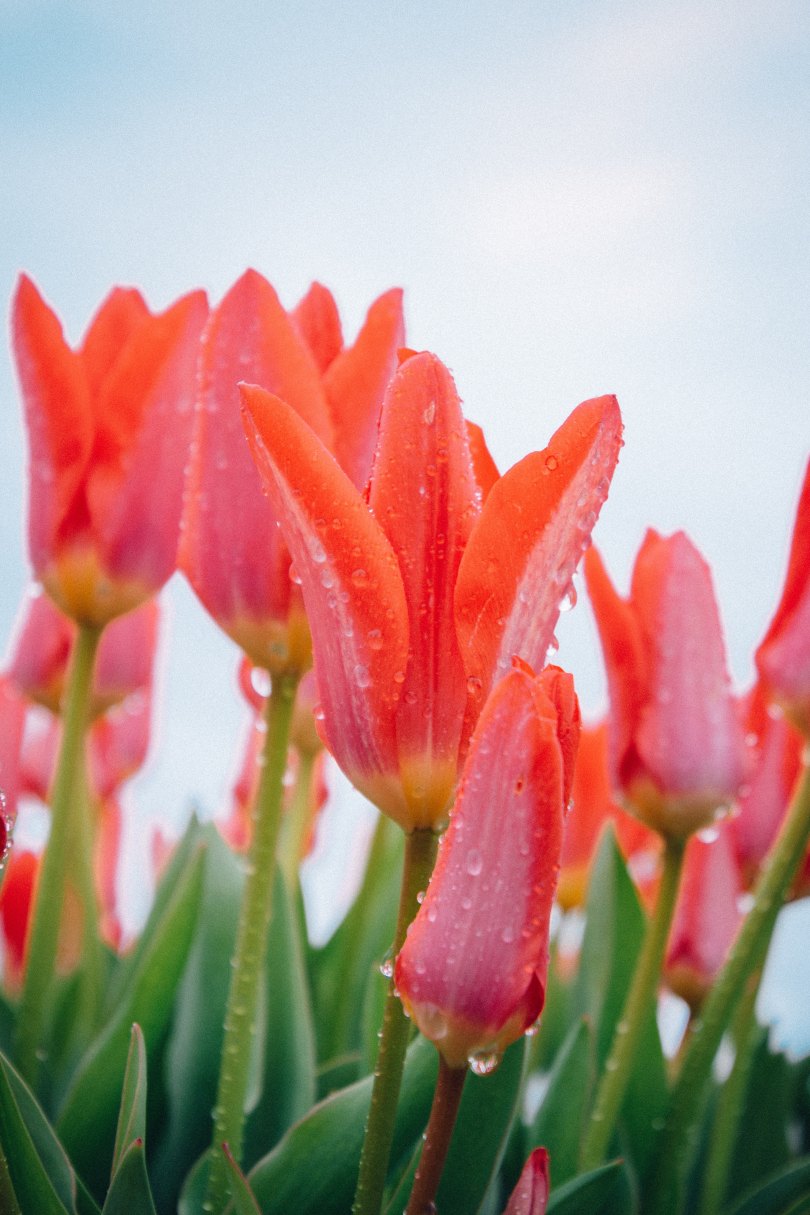
Piantate tulipani nella pioggia.

Ma non scrivete poesie.

Friendly advice to a lot of young men

Go to Tibet.
Ride a camel.
Read the Bible.
Dye your shoes blue.
Grow a Beard.
Circle the world in a paper canoe.
Subscribe to “The Saturday Evening Post.”
Chew on the left side of your mouth only.
Marry a woman with one leg and shave with a straight razor.
And carve your name in her arm.

Brush your teeth with gasoline.
Sleep all day and climb trees at night.
Be a monk and drink buckshot and beer.
Hold your head under water and play the violin.
Do a belly dance before pink candles.
Kill your dog.
Run for mayor.
Live in a barrel.
Break your head with a hatchet.
Plant tulips in the rain.

But don’t write poetry.

From “The Roominghouse Madrigals: Early Selected Poems 1946-1966”

Stanchezza, da “Poesie di Álvaro de Campos”, Fernando Pessoa

Quello che c’è in me è soprattutto stanchezza
non di questo o di quello
e neppure di tutto o di niente:
stanchezza semplicemente, in sé,
stanchezza.
La sottigliezza delle sensazioni inutili,
le violente passioni per nulla,
gli amori intensi per ciò che si suppone in qualcuno,
tutte queste cose –
queste e ciò che manca in esse eternamente –
tutto ciò produce stanchezza,
questa stanchezza,
stanchezza.
C’è senza dubbio chi ama l’infinito,
c’è senza dubbio chi desidera l’impossibile,
c’è senza dubbio chi non vuole niente –
tre tipi di idealisti, e io nessuno di questi:
perché io amo infinitamente il finito,
perché io desidero impossibilmente il possibile,
perché voglio tutto, o ancora di più, se può essere,
o anche se non può essere…
E il risultato?
Per loro la vita vissuta o sognata,
per loro il sogno sognato o vissuto,
per loro la media fra tutto e niente, cioè la vita…
Per me solo una grande, una profonda,
e, ah, con quale felicità, infeconda stanchezza,
una supremissima stanchezza,
issima, issima, issima,
stanchezza…

(Traduzione di Antonio Tabucchi)

O que há em mim é sobretudo cansaço —

O que há em mim é sobretudo cansaço —
Não disto nem daquilo,
Nem sequer de tudo ou de nada:
Cansaço assim mesmo, ele mesmo,
Cansaço.
A subtileza das sensações inúteis,
As paixões violentas por coisa nenhuma,
Os amores intensos por o suposto em alguém,
Essas coisas todas —
Essas e o que falta nelas eternamente —;
Tudo isso faz um cansaço,
Este cansaço,
Cansaço.
Há sem dúvida quem ame o infinito,
Há sem dúvida quem deseje o impossível,
Há sem dúvida quem não queira nada —
Três tipos de idealistas, e eu nenhum deles:
Porque eu amo infinitamente o finito,
Porque eu desejo impossivelmente o possível,
Porque quero tudo, ou um pouco mais, se puder ser,
Ou até se não puder ser…
E o resultado?
Para eles a vida vivida ou sonhada,
Para eles o sonho sonhado ou vivido,
Para eles a média entre tudo e nada, isto é, isto…
Para mim só um grande, um profundo,
E, ah com que felicidade infecundo, cansaço,
Um supremíssimo cansaço,
Íssimo, íssimo, íssimo,
Cansaço…

9-10-1934
(Poesias de Álvaro de Campos. Fernando Pessoa. Lisboa: Ática, 1944)

Familiarità, da “Poesie” (1923-1976), Jorge Luis Borges

A Haydée Lange

Si apre il cancello del giardino
con la docilità della pagina
che una frequente devozione interroga
e, dentro, gli sguardi
non hanno bisogno di fare caso agli oggetti
che sono già precisamente nella memoria.
Conosco le abitudini e gli animi
e quel dialetto di allusioni
che ogni raggruppamento umano ordisce.
Non ho bisogno di parlare
né di mentire privilegi;
bene mi conoscono coloro che qui mi circondano,
bene sanno le mie angosce e la mia debolezza.
Questo è raggiungere ciò che è più alto,
ciò che forse ci darà il Cielo:
non ammirazione né vittorie
ma semplicemente essere ammessi
come parte di una Realtà innegabile,
come le pietre e gli alberi.

(Traduzione di Livio Bacchi Wilcock)

Llaneza *

A Haydée Lange

Se abre la verja del jardín
con la docilidad de la página
que una frecuente devoción interroga
y adentro las miradas
no precisan fijarse en los objetos
que ya están cabalmente en la memoria.
Conozco las costumbres y las almas
y ese dialecto de alusiones
que toda agrupación humana va urdiendo.
No necesito hablar
ni mentir privilegios;
bien me conocen quienes aquí me rodean
bien saben mi congoja y mi flaqueza.
Eso es alcanzar lo más alto,
lo que tal vez nos dará el Cielo:
no admiraciones ni victorias
sino sencillamente ser admitidos
como parte de una Realidad innegable,
como las piedras y los árboles.

En Fervor de Buenos Aires (1923)

* Borges se inspiró en la casa de los Lange, para escribir este poema. Estaba ubicada en ese momento, en la calle Tronador 1746, entre La Pampa y Virrey del Pino.

Simplicity

It opens, the gate to the garden
with the docility of a page
that frequent devotion questions
and inside, my gaze
has no need to fix on objects
that already exist, exact, in memory.
I know the customs and souls
and that dialect of allusions
that every human gathering goes weaving.
I’ve no need to speak
nor claim false privilege;
they know me well who surround me here,
know well my afflictions and weakness.
This is to reach the highest thing,
that Heaven perhaps will grant us:
not admiration or victory
but simply to be accepted
as part of an undeniable Reality,
like stones and trees.

Translated by A. S. Kline © 2008

Le tue mani, da “Poesie d’amore” (1997), Pablo Neruda

Quando le tue mani vengono,
amore, verso le mie,
cosa mi recano volando?
Perché si son fermate
sulla mia bocca, d’improvviso.
Perché le riconosco
come se allora, anzi,
le avessi toccate,
come se prima d’essere
avessero percorso
la mia fronte, il mio fianco?

La loro morbidezza veniva
volando sopra il tempo,
sopra il mare, sopra il fumo,
sopra la primavera,
e quando tu posasti
le tue mani sul mio petto,
riconobbi quelle ali
di colomba dorata,
riconobbi quella creta
e quel colore di frumento.

Gli anni della mia vita
camminai cercandole.
Salii le scale,
attraversai le scogliere,
mi portarono i treni,
le acque mi condussero,
e nella pelle dell’uva
mi sembrò di toccarti.

Il legno d’improvviso
mi recò il tuo contatto,
la mandorla m’annunciava
la tua morbidezza concreta,
finché si chiusero le tue mani sul mio petto
e lì come due ali
terminarono il loro viaggio.

(Traduzione di Giuseppe Bellini)

Tus Manos

Cuando tus manos salen,
y amor, hacia las mías,
qué me traen volando?
Por qué se detuvieron en mi boca,
de pronto,
por qué las reconozco
como si entonces antes,
las hubiera tocado,
como si antes de ser
hubieran recorrido
mi frente, mi cintura?

Su suavidad venía
volando sobre el tiempo,
sobre el mar, sobre el humo,
sobre la primavera,
y cuando tú pusiste
tus manos en mi pecho,
reconocí esas alas
de paloma dorada,
reconocí esa greda
y ese color de trigo.

Los años de mi vida
yo caminé buscándolas.
Subí las escaleras,
crucé los arrecifes,
me llevaron los trenes,
las aguas me trajeron,
y en la piel de las uvas
me pareció tocarte.
La madera de pronto
me trajo tu contacto,
la almendra me anunciaba
tu suavidad secreta,
hasta que se cerraron
tus manos en mi pecho
y allí como dos alas
terminaron su viaje.

Pablo Neruda, Los versos del Capitán

Your Hands

When your hands go out,
love, toward mine,
what do they bring me flying?
Why do they stop
at my mouth, suddenly,
why do I recognize them
as if then, before,
I had touched them,
as if before they existed
they had passed over
my forehead, my waist?

Their softness came
flying over time,
over the sea, over the smoke,
over the spring,
and when you placed
your hands on my chest,
I recognized those golden
dove wings,
I recognized that clay
and that color of wheat.

All the years of my life
I walked around looking for them.
I went up the stairs,
I crossed the roads,
trains carried me,
waters brought me,
and in the skin of the grapes
I thought I touched you.
The wood suddenly
brought me your touch,
the almond announced to me
your secret softness,
until your hands
closed on my chest
and there like two wings
they ended their journey.

Translated by Donald D. Walsh

Studioso di nuvole, da “A vela in solitaria intorno alla stanza” (2013), Billy Collins

L’emozione va trovata nelle nuvole,
non nelle masse verdi di colline digradanti
e neppure nelle firme grigie dei fiumi,
secondo Constable, che era uno studioso delle nuvole,
e riempiva scaffali di quaderni con schizzi del loro moto,
del loro nobile aspetto e dei bruschi effetti del tempo.

All’aperto, deve avere guardato in su migliaia di volte,
con la matita che cercava di tenere il passo del loro alto viaggiare
e il silenzioso turbinio del loro fluire e rifluire.
Le nubi muovendosi internamente, facendo capriole nel proprio centro,
ruotando nei margini in fiamme fino a farsi vapore,
uscivano dai contorni disegnati
fino a dissiparsi nell’azzurro universale del cielo.

Ora con le fotografie possiamo fermare questo movimento
abbastanza a lungo per etichettarle con nomi latini.
Cirrus, nimbus, stratocumulus –
vertiginose, romantiche, autoritarie –
esibiscono i loro titoli alle scuole sottostanti
dove le loro forme e i loro significati sono mandati a memoria.

(Traduzione di Franco Nasi)

Student of Clouds

The emotion is to be found in the clouds
not in the green solids of the sloping hills
or even in the gray signatures of rivers,
according to Constable,who was a student of clouds
and filled shelves of notebooks with their motion,
their lofty gesturing and sudden implication of weather.

Outdoor, he must have looked up thousands of times,
his pencil trying to keep pace with their high voyaging
and the silent commotion of the eddying and flow.
Clouds would move beyond the outlines he would draw
as they moved within themselves, tumbling into their centers
and swirling off at the burning edges in vapors
to dissipate into the universal blue of the sky.

In photographs we can stop all this movement now
long enough to tag them with their Latin names.
Cirrus, nimbus, stratocumulus –
dizzying, romantic, authoritarian –
they bear their titles over the schoolhouses below
where their shapes and meanings are memorized.

High on the soft blue canvases of Constable
they are stuck in pigment but his clouds appear
to be moving still in the wind of his brush,
inching out of England and the nineteenth century
and sailing over these meadows where I am walking,
bareheaded beneath the cupola of motion,
my thoughts arranged like paint on a high blue ceiling.

____________________________________

Ludovico Einaudi, Nuvole bianche

Verranno le dolci piogge, da “Fiamma e ombra” (1920), Sara Teasdale

Verranno le dolci piogge e l’odore di terra,
e le rondini che volano in circolo con le loro strida scintillanti;

e le rane negli stagni che cantano di notte,
e gli alberi di susino selvatico che fremono di bianco;

i pettirossi vestiranno il loro piumaggio infuocato,
fischiettando le loro fantasie su una bassa recinzione in rete metallica;

e nessuno saprà della guerra,
nessuno presterà attenzione infine quando sarà avvenuto;

nessuno baderebbe, né uccello né albero,
se l’umanità scomparisse completamente;

e la Primavera stessa, al suo risveglio all’alba,
si renderebbe conto appena che noi ce ne siamo andati.

There Will Come Soft Rains

There will come soft rains and the smell of the ground,
And swallows circling with their shimmering sound;

And frogs in the pool singing at night,
And wild plum trees in tremulous white;

Robins will wear their feathery fire,
Whistling their whims on a low fence-wire;

And not one will know of the war, not one
Will care at last when it is done.

Not one would mind, neither bird nor tree,
If mankind perished utterly;

And Spring herself when she woke at dawn
Would scarcely know that we were gone.

Poem first published in Flame and Shadow, by Sara Teasdale, 1920

______________________________________
There Will Come Soft Rains  è una delle poesie più conosciute di Sara Teasdale nella quale immagina un mondo post-apocalittico idilliaco in cui la natura continua pacificamente, meravigliosamente e indifferentemente dopo l’estinzione del genere umano. Ha ispirato il racconto breve di Ray Bradbury con lo stesso nome, incluso nella raccolta “Cronache marziane”.

Giappone, da “A vela, in solitaria, intorno alla stanza” (2013), Billy Collins

Oggi passo il tempo a leggere
uno dei miei haiku preferiti,
a ripeterne e ripeterne le parole.

Sembra di mangiare
e tornare a mangiare
lo stesso piccolo, perfetto chicco d’uva.

Cammino per la casa recitandolo
e lascio che le sue lettere cadano
nell’aria di ogni stanza.

Sto accanto al grande silenzio del pianoforte e lo dico.
Lo dico davanti a un quadro del mare.
Batto il suo ritmo su uno scaffale vuoto.

Mi ascolto mentre lo dico,
poi lo dico senza ascoltarmi,
poi lo ascolto senza dirlo.

E quando il cane guarda in su verso di me,
mi inginocchio sul pavimento
e lo sussurro in ciascuna delle sue lunghe orecchie bianche.

È quello sulla campana del tempio
di una tonnellata
con la falena che dorme sulla sua superficie,

e ogni volta che lo dico, sento l’atroce
pressione della falena
sulla superficie della campana di ferro.

Quando lo dico alla finestra,
la campana è il mondo
e io sono la falena che lì si riposa.

Quando lo dico allo specchio,
io sono la campana pesante
e la falena è la vita con le sue ali di carta.

E più tardi, quando te lo dico al buio,
tu sei la campana,
e io sono il batacchio della campana, che ti fa suonare,

e la falena è volata via
dal suo verso
e si muove sul nostro letto come un cardine nell’aria.

(Traduzione di Franco Nasi)

Japan

Today I pass the time reading
a favorite haiku,
saying the few words over and over.

It feels like eating
the same small, perfect grape
again and again.

I walk through the house reciting it
and leave its letters falling
through the air of every room.

I stand by the big silence of the piano and say it.
I say it in front of a painting of the sea.
I tap out its rhythm on an empty shelf.

I listen to myself saying it,
then I say it without listening,
then I hear it without saying it.

And when the dog looks up at me,
I kneel down on the floor
and whisper it into each of his long white ears.

It’s the one about the one-ton temple bell
with the moth sleeping on its surface,

and every time I say it, I feel the excruciating
pressure of the moth
on the surface of the iron bell.

When I say it at the window,
the bell is the world
and I am the moth resting there.

When I say it at the mirror,
I am the heavy bell
and the moth is life with its papery wings.

And later, when I say it to you in the dark,
you are the bell,
and I am the tongue of the bell, ringing you,

and the moth has flown
from its line
and moves like a hinge in the air above our bed.

_______________________________________
By the Japanese poet and painter Buson (1715 – 1783):
“On the one-ton temple bell
A moon-moth, folded into sleep,
sits still.”
(Translated by XJ Kennedy)
From: “The Norton Anthology of Poetry”, page 1190

Saggio pennello, fiore…, da “Sui gatti” (2015), Charles Bukowski

saggio pennello, fiore
addormentato, mi sveglio

il cacciatore va alla mia finestra
4 piedi inchiodati nella luminosa immobilità di una notte
gialla e blu.

stranezza crudele la fa da padrona nelle guerre, nei giardini –
la notte gialla e blu esplode dinanzi a
me, atomica, chirurgica,
piena di stellati diavoli
salmastri…
poi il gatto salta sulla
staccionata, un grasso gatto spaventato,
stupido, solitario…
baffi come una vecchia nel
supermercato
e nudo come la luna.

ne sono fugacemente
deliziato.

(Traduzione di Simona Viciani)

sensible brush, sleeping…

sensible brush, sleeping
flower, I awaken

the hunter goes by my window
4 feet locked in the bright stillness of a
yellow and blue
night.

cruel strangeness takes hold in wars, in
gardens–
the yellow and blue night explodes before
me, atomic,
surgical,
full of starlit salty
devils…
then the cat leaps up on the
fence, a tubby dismay,
stupid, lonely…
whiskers like an old lady in the
supermarket
and naked as the
moon.

I am temporarily
delighted.

_________________________________
Poesia senza titolo pubblicata nella Hiram Poetry Review 1, autunno-inverno 1966; pubblicata in The Days Run Away Like Wilde Horses Over the Hills.

Il clochard, da “Sale” (1962), Wislawa Szymborska

A Parigi, in un giorno mattutino fino al crepuscolo,
a Parigi come –
a Parigi che –
(o santa ingenuità della descrizione, aiutami!)
nel giardino accanto alla cattedrale di pietra
(non costruita, oh no,
ma suonata su un liuto)
un clochard, un monaco laico, un rinunciante,
si è addormentato in una posa da sarcofago.

Se ha mai avuto qualcosa, l’ha perduta,
e, perdutala, non desidera riaverla.
Gli spetta ancora la sua paga per la conquista della Gallia —
si è rassegnato, non ci tiene più.
Non è stato pagato nel quindicesimo secolo
per aver posato da ladrone alla sinistra di Cristo —
l’ha dimenticato, ha ormai smesso di attendere.

Guadagna il suo vino rosso
tosando i cani della zona.
Dorme con l’aria d’un inventore di sogni,
e la sua barba sciama verso il sole.

Le grigie chimere (volatti, nanocchi,
babbuoni e falenidi, ranarri,
repenti, cefalopodi, multiformità,
gotico allegro vivace) si depietrificano

e lo guardano con una curiosità
che non hanno per nessuno di noi,
o assennato Pietro,
operoso Michele,
intraprendente Eva,
Barbara, Clara.

(Traduzione di Pietro Marchesani)

Clochard

W Paryżu, w dzień poranny aż do zmierzchu,
w Paryżu jak
w Paryżu, który
(o święta naiwności opisu, wspomóż mnie!),
w ogrodzie koło kamiennej katedry
(nie zbudowano jej, o nie,
zagrano ją na lutni)
zasnął w sarkofagowej pozie
clochard, mnich świecki, wyrzeczeniec.

Jeżeli nawet miał coś – to utracił,
a utraciwszy, nie pragnie odzyskać.
Należy mu się jeszcze żołd za podbój Galii –
przebolał już, nie stoi o to.
Nie zapłacono mu w piętnastym wieku
za pozowanie do lewego łotra –
zapomniał, przestał czekać już.

Zarabia na czerwone wino
strzyżeniem okolicznych psów.
Śpi z miną wynalazcy snów
do słońca wyroiwszy brodę.

Odkamieniają się szare chimery
(fruwalne, niżły, małpierze i ćmięta,
grzaby, znienacki, głowy samonogie,
wieloractwo, gotyckie allegro vivace)

i przyglądaja mu się z ciekawością,
jakiej nie mają dla nikogo z nas,
roztropny Piotrze,
czynny Michale,
zaradna Ewo,
Barbaro, Klaro.

Clochard

In Paris, on a day that stayed morning until dusk,
in a Paris like –
in a Paris which –
(save me, scred folly of description!)
in a garden by a stone cathedral
(bit built, no, rather
played upon a lute)
a clochard, a lay monk, a naysayer
sleeps sprawled like a knight in effigy.

If he ever owned anything, he has lost it,
and having lost it doesn’t want it back.
He’s still owed soldier’s pay for the conquest of Gaul –
but he’s got over that, it doesn’t matter.
And they never paid him in the fifteenth century
for posing as the thief on Christ’s left hand –
he has forgottenall about it, he’s not waiting.

He earns his red wine
by trimming the neighborhood dogs.
He sleeps with the air of an inventorof dreams,
his thick beard swarming towards the sun.

The gray chimeras (to wit, bulldogryphons,
hellephants, hippopotoads, croakodilloes, rhinocerberuses,
behemammoths, and demonopods,
that omnibestial Gothic allegro vivace)
unpetrify

and examine him with a curiosity
they never turn on me or you,
prudent Peter,
zealous Michael,
enterprising Eve,
Barbara, Clare.

(Translated from Polish by Stanislaw Baranczak and Clare Cavanagh)
Tutto ci dona il mondo, Fernando Pessoa

Tutto ci dona il mondo,
dagli ermi remoti astri a noi.
E a tutto, estranei, ci aggreghiamo,
pensando e interpretando.
La prossima erba che non giunge basta,
quel che c’è è il meglio.

(Da “Poesie Scelte” a cura di Luigi Panarese, Passigli Editori 2006)

Tudo, desde ermos astros afastados

Tudo, desde ermos astros afastados
A nós, nos dá o mundo.
E a tudo, alheios, nos acrescentamos,
Pensando e interpretando.
A próxima erva a que não chega basta,
O que há é o melhor.

10/12/1931
Ricardo Reis, in “Odes”
Heterónimo de Fernando Pessoa