Chinare la testa, da “Evidence: Poems”, Mary Oliver

Davvero, viviamo con misteri troppo prodigiosi
per essere compresi.

Come l’erba possa essere nutrimento nella
bocca degli agnelli.
Come fiumi e pietre siano per sempre
devoti alla gravità
mentre noi sogniamo di elevarci.
Come due mani si tocchino e i legami
non siano mai spezzati.
Come le persone si avvicinino, per delizia o per
le cicatrici del danno,
al conforto di una poesia.

Lasciami prendere le distanze, sempre, da chi
pensa di avere le risposte.

Lascia che io faccia compagnia sempre a chi dice
“Guarda!” e ride di stupore,
e china la testa.

Mysteries, Yes

Truly, we live with mysteries too marvelous
to be understood.

How grass can be nourishing in the
mouths of the lambs.
How rivers and stones are forever
in allegiance with gravity
while we ourselves dream of rising.
How two hands touch and the bonds
will never be broken.
How people come, from delight or the
scars of damage,
to the comfort of a poem.

Let me keep my distance, always, from those
who think they have the answers.

Let me keep company always with those who say
“Look!” and laugh in astonishment,
and bow their heads.

Poesia spericolata, Mary Oliver

Anche oggi sono a malapena me stessa.
Capita di continuo.
E’ una condizione mandata dal cielo.

Mi scorre attraverso
come l’onda blu.
Foglie verdi – puoi crederci o no –
sono una o due volte
emerse dalla punta delle mie dita

da qualche parte
nel fitto del bosco,
nella spericolata conquista della primavera.

Tuttavia, ovviamente, conosco anche quell’altra canzone,
la dolce passione dell’unicità.

Proprio ieri ho osservato una formica che attraversava un sentiero,
arrancava attraverso gli aghi di pino caduti.
E ho pensato: non vivrà mai altra vita se non questa.
E ho pensato: se vive la propria vita con tutte le sue forze
non è magnifica e saggia?
E ho continuato risalendo la miracolosa piramide di tutte le cose
finché non sono giunta a me stessa.

E ancora, anche in questi boschi del nord, su queste colline di sabbia,
sono volata dall’altra finestra di me stessa
per diventare airone bianco, balena blu,
volpe rossa, porcospino.
Oh, a volte di già il mio corpo si è sentito come il corpo di un fiore!
A volte di già il mio cuore è un pappagallo rosso, appollaiato
tra strani, scuri alberi, che agita le ali e urla.

(Traduzione di Alessandra Marchesi)

Reckless Poem

Today again I am hardly myself.
It happens over and over.
It is heaven-sent.

It flows through me
like the blue wave.
Green leaves — you may believe this or not —
have once or twice
emerged from the tips of my fingers

somewhere
deep in the woods,
in the reckless seizure of spring.

Though, of course, I also know that other song,
the sweet passion of one-ness.

Just yesterday I watched an ant crossing a path, through the
tumbled pine needles she toiled.
And I thought: she will never live another life but this one.
And I thought: if she lives her life with all her strength
is she not wonderful and wise?
And I continued this up the miraculous pyramid of everything
until I came to myself.

And still, even in these northern woods, on these hills of sand,
I have flown from the other window of myself
to become white heron, blue whale,
red fox, hedgehog.
Oh, sometimes already my body has felt like the body of a flower!
Sometimes already my heart is a red parrot, perched
among strange, dark trees, flapping and screaming.

Solitari, bianchi campi, Mary Oliver

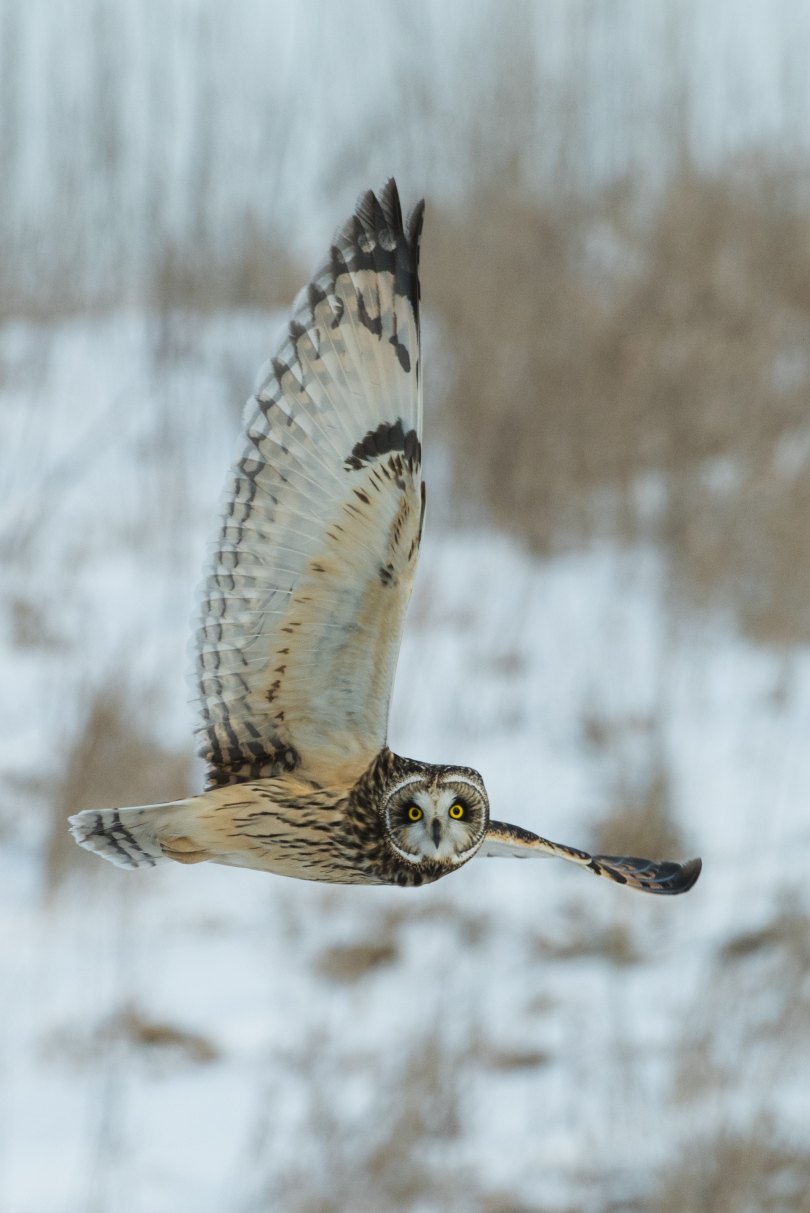
Ogni notte
il gufo
con la sua scimmiesca faccia selvaggia
lancia il suo richiamo di tra i rami neri,
e i topi hanno freddo
e i conigli rabbriviscono
nei campi innevati –
e allora si apre la lunga, profonda valle del silenzio
quando egli smette il suo canto e si lancia
in aria.
Io non so
quale sia della morte lo scopo
ultimo, ma penso
questo: chiunque sogni di tenere la sua
vita in pugno
anno dopo anno per centinaia di anni
non ha mai considerato il gufo –
come egli viene, esausto,
attraverso la neve,
attraverso gli alberi ibernati,
superati tronchi e piante,
tirandosi fuori da stalle e campanili,
girando per questa e quella via
attraverso le maglie di qualunque ostacolo –
fermato da nulla –
riempiendosi momento dopo momento
di una gioia rossa e digeribile,
lanciandosi a falce dai campi solitari e bianchi –
e come al mattino,
come se ogni cosa fosse
come deve essere, i campi
si fanno intensi di luce rosa,
il gufo scompare
allontanandosi tra i rami,
la neve va a cadere
fiocco dopo perfetto fiocco.

Lonely, White Fields

Every night
the owl
with his wild monkey-face
calls through the black branches,
and the mice freeze
and the rabbits shiver
in the snowy fields-
and then there is the long, deep trough of silence
when he stops singing, and steps
into the air.
I don’t know
what death’s ultimate
purpose is, but I think
this: whoever dreams of holding his
life in his fist
year after year into the hundreds of years
has never considered the owl-
how he comes, exhausted,
through the snow,
through the icy trees,
past snags and vines, wheeling
out of barns and church steeples,
turning this way and that way
through the mesh of every obstacle-
undeterred by anything-
filling himself time and time again
with a red and digestible joy
sickled up from the lonely, white fields-
and how at daybreak,
as though everything had been done
that must be done, the fields
swell with a rosy light,
the owl fades
back into the branches,
the snow goes on falling
flake after perfect flake.

L’utilità della sofferenza, da “Thirst”, Mary Oliver

(Mentre dormivo ho sognato questi versi)

Una persona che amavo mi ha dato una volta
una scatola piena di buio.

Ci sono voluti anni perché capissi
che anche quello era un dono.

The uses of sorrow

(In my sleep I dreamed this poem)

Someone I loved once gave me
a box full of darkness.

It took me years to understand
that this, too, was a gift.

Il viaggio, Mary Oliver

Un giorno, finalmente, hai capito
quel che dovevi fare, e hai cominciato,
anche se le voci intorno a te
continuavano a gridare
i loro cattivi consigli –
anche se la casa intera
si era messa a tremare
e sentissi le vecchie catene
tirarti le caviglie.
“Sistema la mia vita!”,
gridava ogni voce.
Ma non ti fermasti.
Sapevi quel che andava fatto,
anche se il vento frugava
con le sue dita rigide
giù fino alle fondamenta,
anche se la loro malinconia
era terribile.
Era già piuttosto tardi,
una notte tempestosa,
la strada era piena di sassi e rami spezzati.
Ma poco a poco,
mentre ti lasciavi alle spalle le loro voci,
le stelle si sono messe a brillare
attraverso gli strati di nubi
e poi c’era una nuova voce
che pian piano
hai riconosciuto come la tua,
che ti teneva compagnia
mentre procedevi a grandi passi,
sempre più nel mondo,
determinata a fare
l’unica cosa che potevi fare –
determinata a salvare
l’unica vita che potevi salvare.

The Journey

One day you finally knew
what you had to do, and began,
though the voices around you
kept shouting
their bad advice —
though the whole house
began to tremble
and you felt the old tug
at your ankles.
“Mend my life!”
each voice cried.
But you didn’t stop.
You knew what you had to do,
though the wind pried
with its stiff fingers
at the very foundations,
though their melancholy
was terrible.
It was already late
enough, and a wild night,
and the road full of fallen
branches and stones.
But little by little,
as you left their voices behind,
the stars began to burn
through the sheets of clouds,
and there was a new voice
which you slowly
recognized as your own,
that kept you company
as you strode deeper and deeper
into the world,
determined to do
the only thing you could do —
determined to save
the only life you could save.

Il cigno, Mary Oliver

L’hai visto, vagabondare, tutta notte, sul fiume scuro?
L’hai visto la mattina, sollevarsi nell’aria argentata –
Una profusione di fiori bianchi,
un perfetto parapiglia di seta e lino come piegato
nella schiavitù delle sue ali; un cumulo di neve, un mucchio di gigli,
battendo l’aria con il suo becco nero?
L’hai sentito, acuto e fischiettante
una musica tetra e stridula – come la pioggia a dirotto sui rami – come una cascata
passare come una lama giù per le sponde buie?
E l’hai visto, infine, proprio sotto le nubi –
Una croce bianca svolazzante attraversare il cielo, le sue zampe
come foglie annerite, le sue ali come la luce allargata del fiume?
E l’hai sentito, nel tuo cuore, quanto sia parte di ogni cosa?
E hai infine compreso anche tu, lo scopo della bellezza?
E hai cambiato la tua vita?

The Swan

Did you too see it, drifting, all night, on the black river?
Did you see it in the morning, rising into the silvery air –
An armful of white blossoms,
A perfect commotion of silk and linen as it leaned
into the bondage of its wings; a snowbank, a bank of lilies,
Biting the air with its black beak?
Did you hear it, fluting and whistling
A shrill dark music – like the rain pelting the trees – like a waterfall
Knifing down the black ledges?
And did you see it, finally, just under the clouds –
A white cross Streaming across the sky, its feet
Like black leaves, its wings Like the stretching light of the river?
And did you feel it, in your heart, how it pertained to everything?
And have you too finally figured out what beauty is for?
And have you changed your life?

Dichiara pace, Mary Oliver

Dichiara pace con il tuo respiro.
Inspira uomini d’arme e d’attrito, espira edifici interi e stormi di merli dalle ali rosse.
Inspira terroristi ed espira bambini che dormono e campi appena falciati.
Inspira confusione ed espira alberi di acero.
Inspira quanto è caduto ed espira amicizie di tutta una vita ancora intatte.
Dichiara pace con il tuo ascolto: quando senti sirene, prega ad alta voce.
Ricorda quali sono i tuoi strumenti: semi di fiori, spilli da vestiti, fiumi puliti.
Prepara una minestra.
Fai musica, impara come si dice grazie in tre lingue diverse.
Impara a fare la maglia, e fai un cappello.
Pensa al caos come mirtilli che danzano,
immagina il dolore come l’espirazione della bellezza o il gesto del pesce.
Nuota per andare dall’altra parte.
Dichiara pace.
Il mondo non è mai apparso così nuovo e prezioso.
Bevi una tazza di tè e rallegrati.
Agisci come se l’armistizio fosse già arrivato.
Non aspettare un altro minuto.

Wage peace

Wage peace with your breath.
Breathe in firemen and rubble, breathe out whole buildings and flocks of redwing blackbirds.
Breathe in terrorists and breathe out sleeping children and freshly mown fields.
Breath in confusion and breathe out maple trees.
Breathe in the fallen and breathe out lifelong friendships intact.
Wage peace with your listening: hearing sirens, pray loud.
Remember your tools: flower seeds,clothes pins,clean rivers.
Make soup.
Play music,learn the word for thank you in three languages.
Learn to knit and make a hat.
Think of chaos as dancing raspberries,
imagine grief as the outbreath of beauty or the gesture of fish.
Swim for the other side.
Wage peace.
Never has the world seemed so fresh and precious.
Have a cup of tea and rejoice.
Act as if armistice has already arrived.
Don’t wait another minute.

Oche selvatiche, Mary Oliver

Non devi essere buono.
Non devi trascinarti ginocchioni,
pentito, per cento miglia attraverso il deserto.
Devi soltanto permettere a quel mite animale, al tuo corpo, di amare ciò che ama.
Parlami della tua disperazione, io ti racconterò la mia.
Intanto, il mondo va avanti.
Intanto, il sole e gli splendenti sassolini della pioggia
attraversano i paesaggi,
passano sopra le praterie e gli alberi dalle profonde radici,
sopra le montagne e i fiumi.
Intanto, le oche selvatiche, alte nel limpido azzurro,
fanno nuovamente ritorno a casa.
Chiunque tu sia, per quanto tu possa essere solo,
il mondo si offre alla tua immaginazione,
ti manda il suo richiamo come le oche selvatiche, aspro ed eccitante:
annuncia incessantemente la tua appartenenza
alla famiglia delle cose.

Wild Geese

You do not have to be good.
You do not have to walk on your knees
For a hundred miles through the desert, repenting.
You only have to let the soft animal of your body
love what it loves.
Tell me about despair, yours, and I will tell you mine.
Meanwhile the world goes on.
Meanwhile the sun and the clear pebbles of the rain
are moving across the landscapes,
over the prairies and the deep trees,
the mountains and the rivers.
Meanwhile the wild geese, high in the clean blue air,
are heading home again.
Whoever you are, no matter how lonely,
the world offers itself to your imagination,
calls to you like the wild geese, harsh and exciting —
over and over announcing your place
in the family of things.