Mela di mare, Juan Vicente Piqueras

Io sarei il maschio e tu la femmina
vestita di tormenta.
Dormiresti
nel palmo del mare più impensato,
diadema di altra luce nei tuoi capelli,
e nelle mani remote
la sabbia fuggitiva
di noi due, deserti e felici.
Vivremmo lontano, dimentichi
del tempo, ora, in cui fummo schiavi
della nostra paura e di questo mondo
sicario assurdo al soldo della morte.
L’isola è in noi
in attesa
che la rabbia maturi e ci porti via.
Io sarei il maschio e tu la femmina.
La memoria sarebbe una mela.

(Traduzione di Raffaella Marzano)

Manzana de mar

Yo sería un varon e tú una hembra
vestida de tormenta.
Dormirías
en la palma del mar menos pensado,
diadema de otra luz en tus cabellos,
y en las manos remotas
la arena fugitiva
de nosotros, desiertos y felices.
Viviríamos lejos, olvidados
Del tempo, ahora, en que éramos esclavos,
de nuestro proprio miedo y de este absurdo
mundo, sicario a sueldo de la muerte.
La isla está en nosotros
Guardando
Que la rabia madure y se nos lleve.
Yo sería el varón y tú la hembra.
La memoria sería una manzana.

Una luce c’è in primavera, Emily Dickinson

Una luce c’è in primavera
non presente nel resto dell’anno
in qualsiasi altra stagione –
Quando marzo è appena arrivato

un colore appare fuori
sui campi solitari
che la scienza non può sorpassare
ma la natura umana sente.

Indugia sopra il prato,
delinea l’albero più lontano
sul più lontano pendio che tu sappia
quasi sembra parlarti.

Poi come orizzonti arretrano
o il mezzogiorno trascorre,
senza formula di suono
esso passa e noi restiamo –

e una qualità di perdita
tocca il nostro sentimento
come se a un tratto il guadagno
profanasse un sacramento.

(Traduzione di Massimo Bacigalupo)

A Light exists in Spring

A Light exists in Spring
Not present on the Year
At any other period —
When March is scarcely here

A Color stands abroad
On Solitary Fields
That Science cannot overtake
But Human Nature feels.

It waits upon the Lawn,
It shows the furthest Tree
Upon the furthest Slope you know
It almost speaks to you.

Then as Horizons step
Or Noons report away
Without the Formula of sound
It passes and we stay —

A quality of loss
Affecting our Content
As Trade had suddenly encroached
Upon a Sacrament.

Trema in luce l’acqua, Fernando Pessoa

Trema in luce l’acqua.
Mal vedo. Mi sembra
che una aliena pena
nella mia anima scende –

pena erma di qualcuno
di alcun altro mondo
dove il dolore è un bene
e l’amore è profondo,

e solo punge vedere,
in lontananza, illusa,
la vita che muore
il sogno della vita.

(Da “Poesie scelte” Fernando Pessoa – Passigli Editori – Traduzione Luigi Panarese)

Treme em luz a água

Treme em luz a água.
Mal vejo. Parece
Que uma alheia mágoa
Na minha alma desce –

Mágoa erma de alguém
De algum outro mundo
Onde a dor é um bem
E o amor é profundo,

E só punge ver,
Ao longe, iludida,
A vida a morrer
O sonho da vida.

Solitari, bianchi campi, Mary Oliver

Ogni notte
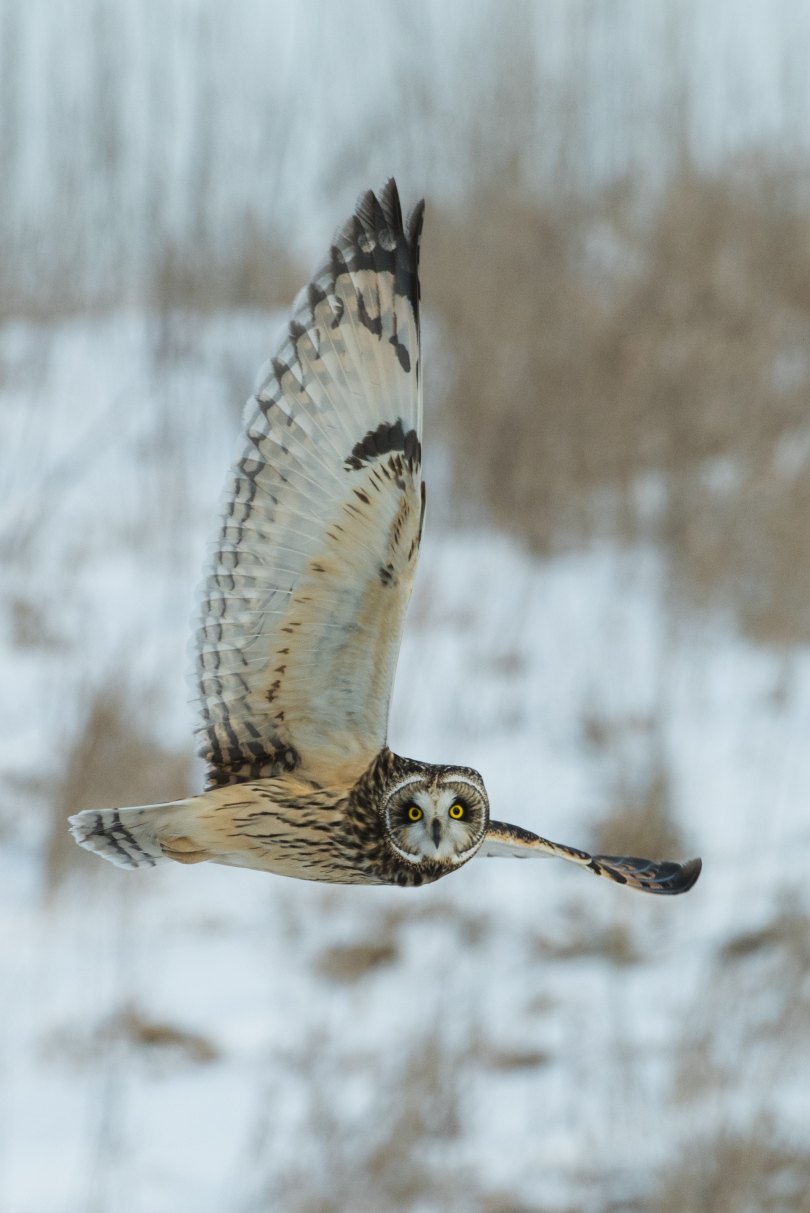
il gufo
con la sua scimmiesca faccia selvaggia
lancia il suo richiamo di tra i rami neri,
e i topi hanno freddo
e i conigli rabbriviscono
nei campi innevati –
e allora si apre la lunga, profonda valle del silenzio
quando egli smette il suo canto e si lancia
in aria.
Io non so
quale sia della morte lo scopo
ultimo, ma penso
questo: chiunque sogni di tenere la sua
vita in pugno
anno dopo anno per centinaia di anni
non ha mai considerato il gufo –
come egli viene, esausto,
attraverso la neve,
attraverso gli alberi ibernati,
superati tronchi e piante,
tirandosi fuori da stalle e campanili,
girando per questa e quella via
attraverso le maglie di qualunque ostacolo –
fermato da nulla –
riempiendosi momento dopo momento
di una gioia rossa e digeribile,
lanciandosi a falce dai campi solitari e bianchi –
e come al mattino,
come se ogni cosa fosse
come deve essere, i campi
si fanno intensi di luce rosa,
il gufo scompare
allontanandosi tra i rami,
la neve va a cadere
fiocco dopo perfetto fiocco.

Lonely, White Fields

Every night
the owl
with his wild monkey-face
calls through the black branches,
and the mice freeze
and the rabbits shiver
in the snowy fields-
and then there is the long, deep trough of silence
when he stops singing, and steps
into the air.
I don’t know
what death’s ultimate
purpose is, but I think
this: whoever dreams of holding his
life in his fist
year after year into the hundreds of years
has never considered the owl-
how he comes, exhausted,
through the snow,
through the icy trees,
past snags and vines, wheeling
out of barns and church steeples,
turning this way and that way
through the mesh of every obstacle-
undeterred by anything-
filling himself time and time again
with a red and digestible joy
sickled up from the lonely, white fields-
and how at daybreak,
as though everything had been done
that must be done, the fields
swell with a rosy light,
the owl fades
back into the branches,
the snow goes on falling
flake after perfect flake.

Giorno di dicembre, Sara Teasdale

L’alba ha acceso il suo cuscino viola
– E tardi, tardi è arrivato il giorno d’inverno,
la neve era curva fino ai rami del salice.
– Il mondo senza sole era bianco e grigio.

A mezzogiorno abbiamo sentito una ghiandaia azzurra gracchiare,
– Alle cinque si era persa l’ultima fievole luce
Da finestre coperte di neve che sorreggevano debolmente
– La piumata filigrana di brina.

December Day

Dawn turned on her purple pillow
— And late, late came the winter day,
Snow was curved to the boughs of the willow.
— The sunless world was white and grey.

At noon we heard a blue-jay scolding,
— At five the last thin light was lost
From snow-banked windows faintly holding
— The feathery filigree of frost.

Giovane, da “All My Pretty Ones”, Anne Sexton

Mille porte fa
quando ero una ragazzina solitaria
in un’enorme casa con quattro
garage e se ben ricordo
era estate,
di notte mi sdraiavo in giardino,
il trifoglio raggrinzito sotto di me,
le sagge stelle distese sopra di me,
la finestra di mia madre un imbuto
da cui usciva un calore giallo,
la finestra di mio padre, socchiusa,
un occhio dove passa chi dorme,
e le assi della casa
erano lisce e bianche come cera
e probabilmente milioni di foglie
navigavano come vele sui loro strani gambi
mentre i grilli ticchettavano all’unisono
e io, nel mio corpo nuovo di zecca,
non ancora di donna,
facevo domande alle stelle
e credevo che Dio potesse veramente vedere
il calore e la luce colorata,
i gomiti, le ginocchia, i sogni, la buonanotte.

Young

A thousand doors ago,
when I was a lonely kid
in a big house with four
garages and it was summer
as long as I could remember,
I lay on the lawn at night,
clover wrinkling under me,
the wise stars bedding over me,
my mother’s window a funnel
of yellow heat running out,
my father’s window, half shut,
an eye where sleepers pass,
and the boards of the house
were smooth and white as wax
and probably a million leaves
sailed on their strange stalks
as the crickets ticked together
and I, in my brand new body,
which was not a woman’s yet,
told the stars my questions
and thought God could really see
the heat and the painted light,
elbows, knees, dreams, goodnight.

All Our Yesterdays (Tutti i nostri ieri), da “La rosa profonda”, Jorge Luis Borges

Voglio sapere di chi è il mio passato.
Quale degli io che fui? Del ginevrino
che sgorbiò qualche esametro latino
che i lavacri e i lustri han cancellato?
Di quel ragazzo che cercò nell’intera
biblioteca del padre le puntuali
curve del mappamondo, e le midiciali
forme che son la tigre e la pantera?
O di quell’altro che spinse una porta
dietro la quale un uomo moriva
per sempre, e baciò alla luce viva
la faccia agonizzante e quella morta?
Io sono quel che non sono già più. Inutilmente
sono nella sera quella perduta gente.

(Walter Siti, “La voce verticale”)

All Our Yesterdays

Quiero saber de quién es mi pasado.
¿De cuál de los que fui? ¿Del ginebrino
que trazó algún hexámetro latino
que los lustrales años han borrado?

¿Es de aquel niño que buscó en la entera
biblioteca del padre las puntuales
curvaturas del mapa y las ferales
formas que son el tigre y la pantera?

¿O de aquel otro que empujó una puerta
detrás de la que un hombre se moría
para siempre, y besó en el blanco día

la cara que se va y la cara muerta?
Soy los que ya no son. Inútilmente
soy en la tarde esa perdida gente.

All Our Yesterdays

I need to know who lays claim to my past.
Who, of all those I was? The Geneva boy
Who learned some Latin hexameters with joy,
Lines that the years and decades have erased?
That child who searched his father’s library for
Exact details, the round-cheeked cherub storms
Of the old maps, or else the savage forms
That are the panther and the jaguar?
Or the one who opened a door and looked upon
A man as he lay drawing his last breath,
Leaving forever, and kissed in the white dawn
The face that stiffens away, the face in death?
I am those that are no more. For no good reason
I am, in the evening sun, those vanished persons.

(Translated by Robert Mezey)

Buongiorno – Mezzanotte -, Emily Dickinson

Buongiorno – Mezzanotte –
Sto tornando a Casa –
Il Giorno – si è stancato di Me –
Come potrei Io – di Lui?

La luce del sole era un dolce luogo –
Mi piaceva starci –
Ma il Mattino – non mi voleva – ormai –
Così – Buonanotte – Giorno!

Posso guardare – dai –
Quando è Rosso ad Oriente?
Le Colline – hanno un aspetto – allora –
Che fa traboccare – il Cuore –

Tu – non sei così bella – Mezzanotte –
Io scelsi – il Giorno –
Ma – per favore prendi una Ragazzina –
Che Lui ha cacciato via!

(Traduzione di Giuseppe Ierolli)

Good Morning – Midnight –

Good Morning – Midnight –
I’m coming Home –
Day – got tired of Me –
How could I – of Him?
Sunshine was a sweet place –
I liked to stay –
But Morn – did’nt want me – now –
So – Goodnight – Day!

I can look – cant I –
When the East is Red?
The Hills – have a way – then –
That puts the Heart – abroad –

You – are not so fair – Midnight –
I chose – Day –
But – please take a little Girl –
He turned away!

Il cigno, Mary Oliver

L’hai visto, vagabondare, tutta notte, sul fiume scuro?
L’hai visto la mattina, sollevarsi nell’aria argentata –
Una profusione di fiori bianchi,
un perfetto parapiglia di seta e lino come piegato
nella schiavitù delle sue ali; un cumulo di neve, un mucchio di gigli,
battendo l’aria con il suo becco nero?
L’hai sentito, acuto e fischiettante
una musica tetra e stridula – come la pioggia a dirotto sui rami – come una cascata
passare come una lama giù per le sponde buie?
E l’hai visto, infine, proprio sotto le nubi –
Una croce bianca svolazzante attraversare il cielo, le sue zampe
come foglie annerite, le sue ali come la luce allargata del fiume?
E l’hai sentito, nel tuo cuore, quanto sia parte di ogni cosa?
E hai infine compreso anche tu, lo scopo della bellezza?
E hai cambiato la tua vita?

The Swan

Did you too see it, drifting, all night, on the black river?
Did you see it in the morning, rising into the silvery air –
An armful of white blossoms,
A perfect commotion of silk and linen as it leaned
into the bondage of its wings; a snowbank, a bank of lilies,
Biting the air with its black beak?
Did you hear it, fluting and whistling
A shrill dark music – like the rain pelting the trees – like a waterfall
Knifing down the black ledges?
And did you see it, finally, just under the clouds –
A white cross Streaming across the sky, its feet
Like black leaves, its wings Like the stretching light of the river?
And did you feel it, in your heart, how it pertained to everything?
And have you too finally figured out what beauty is for?
And have you changed your life?

Afterglow, da “Fervor de Buenos Aires” (1923), Jorge Luis Borges

Sempre è commovente il tramonto
per indigente o sgargiante che sia,
ma più commovente ancora
è quel brillìo disperato e finale
che arrugginisce la pianura
quando il sole ultimo si è sprofondato.
Ci duole sostenere quella luce tesa e diversa,
quella allucinazione che impone allo spazio
l’unanime paura dell’ombra
e che cessa di colpo
quando notiamo la sua falsità,
come cessano i sogni
quando sappiamo di sognare.

Afterglow

Siempre es conmovedor el ocaso
por indigente o charro que sea,
pero más conmovedor todavía
es aquel brillo desesperado y final
que herrumbra la llanura
cuando el sol último se ha hundido.
Nos duele sostener esa luz tirante y distinta,
esa alucinación que impone al espacio
el unánime miedo de la sombra
y que cesa de golpe
cuando notamos su falsía,
como cesan los sueños
cuando sabemos que soñamos.